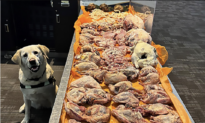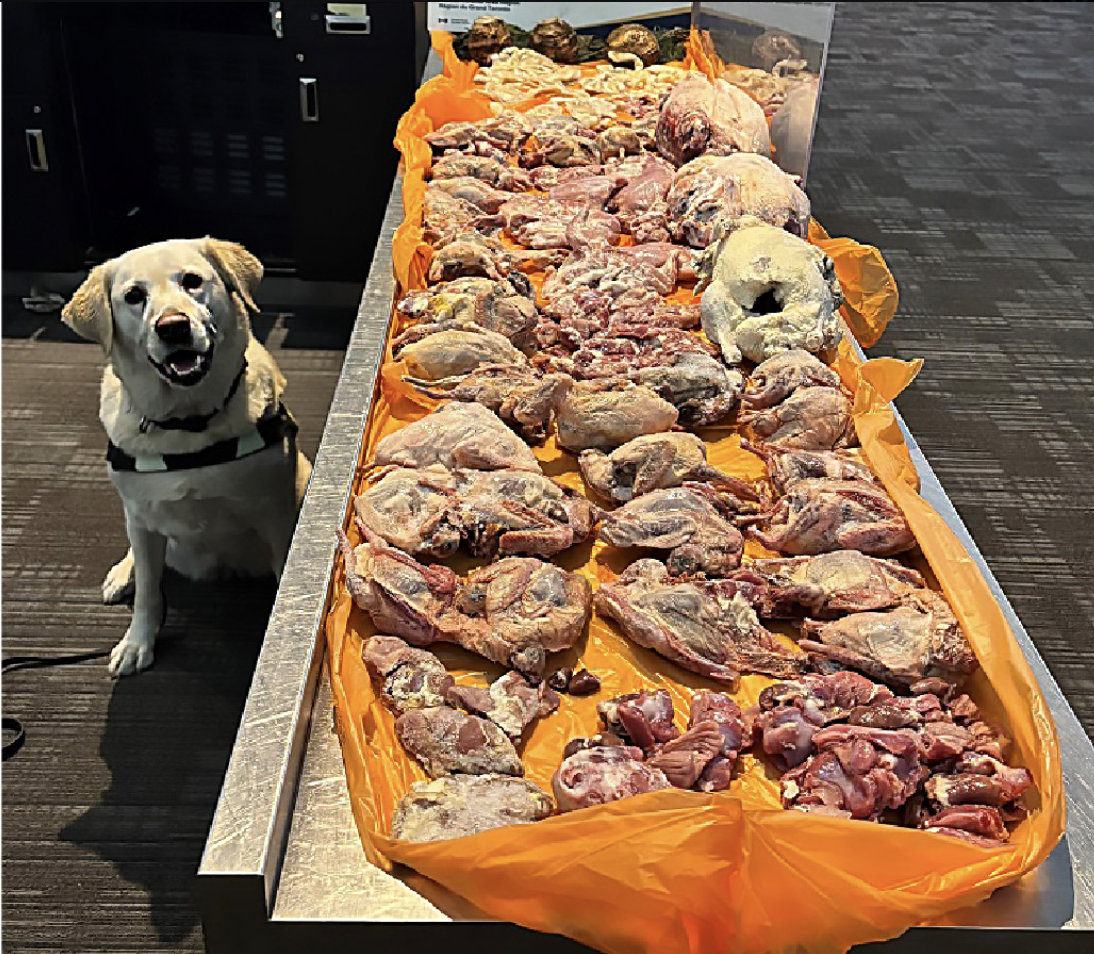

A detector dog at Toronto Pearson Airport made an unusual discovery earlier this month. Dharla, a yellow lab, sniffed out 22.5 kilograms of raw meat that border officials then seized from the luggage of a traveller arriving from Egypt on March 8.
The Canada Border Service Agency (CBSA) posted a picture to social media on March 16 of Dharla sitting proudly next to her find—dozens of cuts of raw duck, pigeon, chicken, and rabbit.
A CBSA communications officer told The Epoch Times the meat was properly declared so no enforcement action was taken against the unnamed traveller.
“For these types of seizures, the goods are typically seized and destroyed,” the CBSA spokesperson said in an email.
Travellers should consult the Automated Import Reference System on the Canadian Food Inspection Agency (CFIA) website to see what items they can bring into Canada, the spokesperson said, adding that travellers are expected to declare “any food, plant, and animal products.”
This includes live animals and animal-derived products, such as cooked or raw meats, hides, skins, trophies, milk, fat, butter, cheese, eggs, fish, and seafood. It also covers plant products, including fruits, vegetables, seeds, nuts, trees, houseplants, wood and wood products like furniture, carvings, and bark, firewood, roots, vines, herbs, flowers, insects, bulbs, and soil.
“Some regulated commodities require certain documents or registrations before they will be allowed into Canada,” the spokesperson said. “Imports that do not meet CFIA requirements will be refused entry to Canada.”
Neglecting to declare products or failing to present required permits or certificates could result in the seizure of the products, a fine of up to $1,300, and possibly prosecution, the CBSA said.
Inadmissible goods can be either disposed of or mandated to be removed from Canada. Travellers could be held liable for any expenses associated with the disposal, quarantine, treatment, or removal of the items, the agency said on its website.
Travellers often neglect to declare items such as processed or canned foods, homemade dishes, handmade crafts—including wooden products—firewood, cooked or cured meats, soil, bait for recreational fishing, plants intended for homeopathic or medicinal use, and dairy products like butter, yogurt, kefir, as well as fruits and vegetables, the CBSA said.
“These products may carry invasive species and diseases and may cause risks to Canada’s food supply, economy, environment and our health,” the agency said.
 Friends Read Free
Copy
Facebook
Tweet
Friends Read Free
Copy
Facebook
Tweet