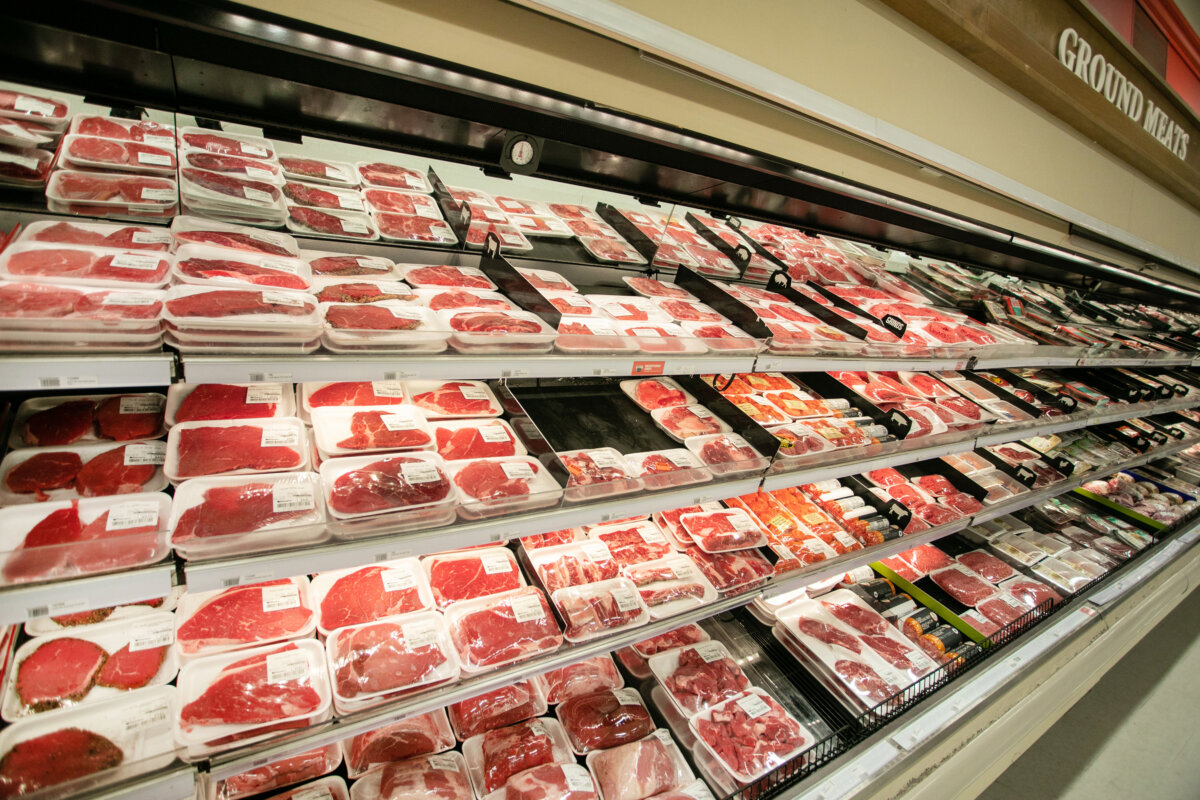

Rising meat prices in Canada are driving changes in consumer behaviour, from increased shoplifting and meat smuggling to backyard chicken farming and bargain hunting.
Police and retailers across Canada are reporting increased meat thefts, while cargo theft investigators say organized gangs are increasingly targeting shipments of beef and other food products. Feed sales also suggest growing interest in backyard chickens as consumers search for cheaper ways to secure animal protein.
Statistics Canada data shows meat prices have risen sharply over the past five years. The average price of beef striploin rose from $22.87 per kilogram in April 2021 to $42.42 in April 2026, while ground beef climbed from $9.19 to $15.59 over the same period.
Chicken breast prices rose 14.4 percent in that time, while bacon increased 15.3 percent, salmon climbed 21.5 percent, and pork loin prices rose 8.5 percent.
The increases coincide with rising food and consumer prices across Canada, further squeezing household budgets. StatCan’s consumer price index rose roughly 20 percent in the five years through April 2026, while grocery staples such as tomatoes, lettuce, and onions posted even larger increases.
Economists say supply-chain disruptions, labour costs, drought conditions affecting cattle herds and feed supplies, and other inflationary pressures have all contributed to sustained increases in meat prices, even as overall inflation has eased from post-pandemic highs.
“We’ve got low supplies and excellent demand, so that doesn’t get any more complicated than that,” livestock and meat market analyst Kevin Grier told The Epoch Times.
Grier said many consumers are increasingly searching for bargains and adjusting spending habits to continue buying meat products.
“Canadians are more focused on the flyer now than ever,” he said. “People are cutting back on things so they can eat beef.”
Rising Demand, Limited Supply
Experts say growing interest in high-protein diets, such as the keto and carnivore diets, has coincided with historically low cattle supplies in North America.
Mike von Massow, a professor of food agriculture and resource economics at the University of Guelph, said North American beef cattle herds are at generational lows.
“We have fewer beef cows now than we’ve had for almost 40 years,” he said.
“What we’re also seeing is that protein is cool again, and protein consumption is going up, so the higher beef prices are pulling some of the other prices along too,” he said.
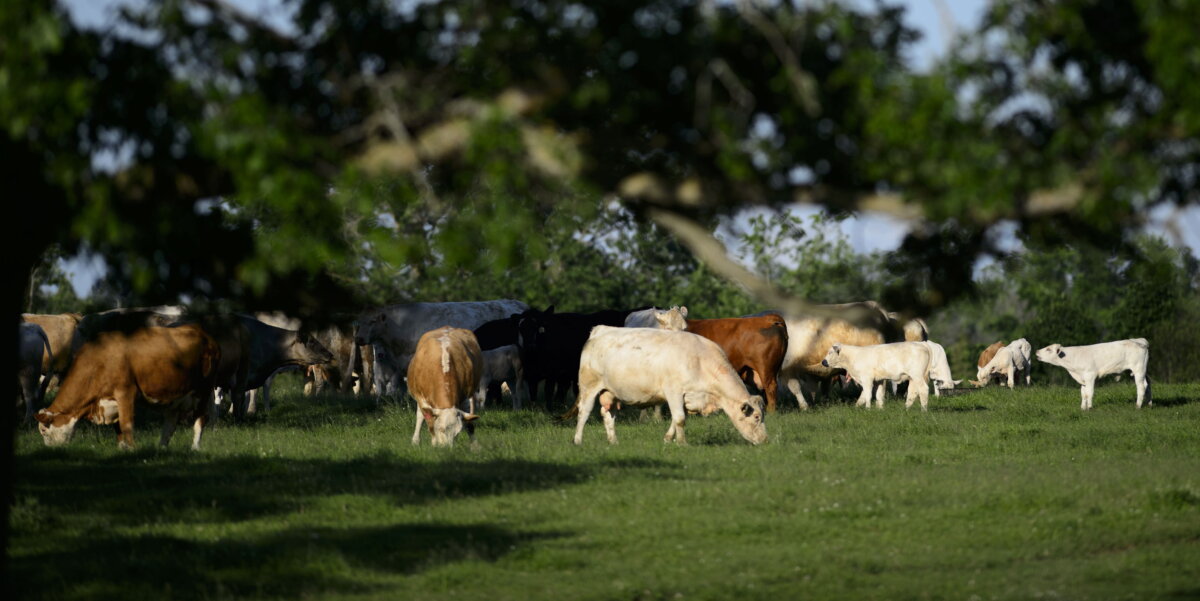
Grier said ranchers are increasingly keeping female cattle to expand their herds instead of selling them to feedlots for slaughter.
“The rancher is the guy that’s trying to decide, ‘should I sell that female and get a huge amount of money for her as meat, or should I hold her back on the farm and turn her into a cow, so she gives birth,’” he said, adding that calves can fetch up to $4,000 each.
Von Massow said some households are reducing portion sizes, buying directly from farms and wholesalers, or substituting cheaper proteins because of the rising costs.
He added that backyard farming appears to be growing more in poultry and egg production than large-scale meat production, though interest in self-sufficiency has increased.
He said backyard farming leans more toward egg-laying hens, but noted that some small-scale farmers are taking advantage of exemptions that allow them to raise up to 2,500 chickens for meat and sell directly to consumers.
Canada’s backyard poultry feed market is projected to grow from roughly US$99 million in 2025 to US$129 million by 2030, according to an analysis by Mordor Intelligence.
Beef the New Lobster?
Al Mussell, research lead at Agri-Food Economic Systems and a fellow at the C.D. Howe Institute and Canadian Agri-Food Policy Institute, cautioned that grocery stores are also under pressure to keep meat affordable while maintaining profits.
“You would hate beef to become the new lobster,” he said.
Mussell also said new weight-loss drugs such as Ozempic may be reinforcing demand for protein-rich foods.
“What they do eat, they want to be very nutrient dense, and the primary issue is protein,” Mussell said of people using GLP-1 medications such as Ozempic.
The rise in meat cost has also coincided with a sharp rise in meat heists by organized criminal groups and shoplifters, as retailers and stores struggle to crack down, according to several experts contacted by The Epoch Times.
Von Massow said that meat has become an attractive target because it is both valuable and relatively easy to conceal or resell.
“Meat not only is expensive, but it’s compact and dense, so it’s easier to steal,” he said. “It’s easier to hide a steak in your pants than a loaf of bread.”
He added that cargo thefts involving entire truckloads of meat point to organized criminal activity rather than opportunistic theft.
“If you look at the scale of stealing a tractor trailer full of meat, that’s organized crime,” von Massow said.
In March, police in Richmond, B.C., reported 39 meat thefts over a three-month period and said several incidents appeared linked to organized resale networks.
“While some thefts are believed to be opportunistic, the pattern and volume of thefts suggest potential organized activity, where police believe product may be stolen for resale,” RCMP said in a statement.
Duck, Rabbit Smuggling
Authorities have also reported international meat smuggling and cargo thefts.
Earlier this year, customs officials at Toronto Pearson International Airport seized more than 40 kilograms of undeclared raw beef and chicken from a passenger arriving from Nigeria.
Another passenger arriving from Egypt had more than 22 kilograms of duck, pigeon, rabbit, and other meats confiscated.
And last year, thieves stole a semi-trailer containing roughly 530 boxes of boneless beef chuck roast from a parking lot in Windsor, Ont. Police estimated the shipment was worth roughly $220,000.
Von Massow said a refrigerated truck holding a full capacity of 45,000 to 50,000 pounds of striploin beef, for example, could be worth up to $1.4 million at full resale price, while ground beef could be valued at around $500,000.
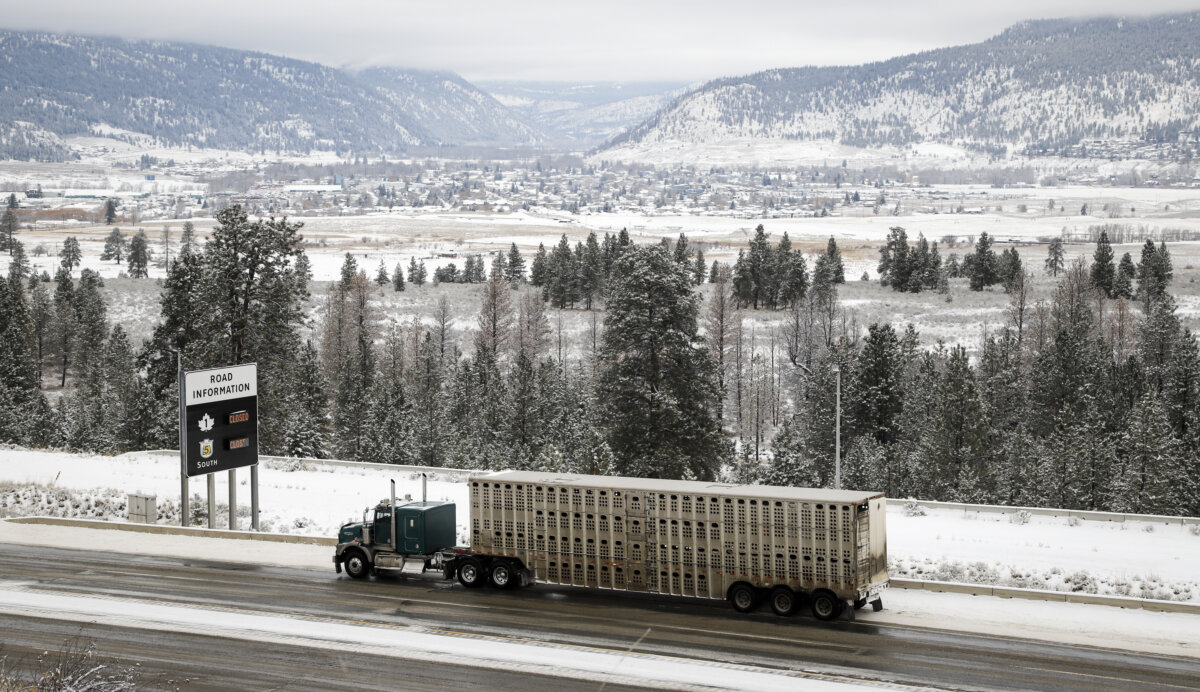
Although specific national statistics on meat theft are unavailable, these high-profile thefts have risen in tandem with shoplifing in recent years.
There were 182,361 shoplifting incidents of goods under $5,000 in 2024, marking a 14 percent rise from 2023 and a 66 percent jump from 2014, according to Statistics Canada, while the Retail Council of Canada said retailers experienced roughly $9 billion in lost sales in 2024 due to theft.
In terms of cargo theft, Verisk CargoNet said there were 3,625 cargo thefts in Canada and the United States in 2024, up 27 percent from the year before. It noted that cargo theft of food, including many seafood items, was especially common because it was relatively easy to resell and hard to trace.
Von Massow pointed to the organized nature of many food cargo thefts, referencing the theft of large amounts of butter in Ontario in recent years, including hundreds of butter bricks and tubs of ghee in the Peel Region amounting to a value of over $30,000 in March of this year.
“If you’re stealing a truckload of beef or butter, you have to have someone who’s going to buy it off you,” he said.
He added that concerns are also growing about cattle theft directly from pastures, although tracking technology and RFID chips have made rustling more difficult.
Grier, Mussell, and von Massow said they expect meat prices to remain elevated in the coming years as cattle supplies recover slowly and demand remains strong.
Grier said Canadian grocers are increasingly importing beef from countries such as Australia and Mexico in an effort to stabilize supply and prices.
As for theft prevention, von Massow said retailers may increasingly rely on visible security measures rather than packaging technology.
“What we’ve started to see is security guards standing around the meat counter and walking up and down the aisles,” he said.
 Friends Read Free
Copy
Facebook
Tweet
Friends Read Free
Copy
Facebook
Tweet