
Officers with Canada’s border service confiscated nearly $50 million worth of cannabis destined for the United Kingdom this summer, the largest marijuana seizure the agency has recorded since 2015.
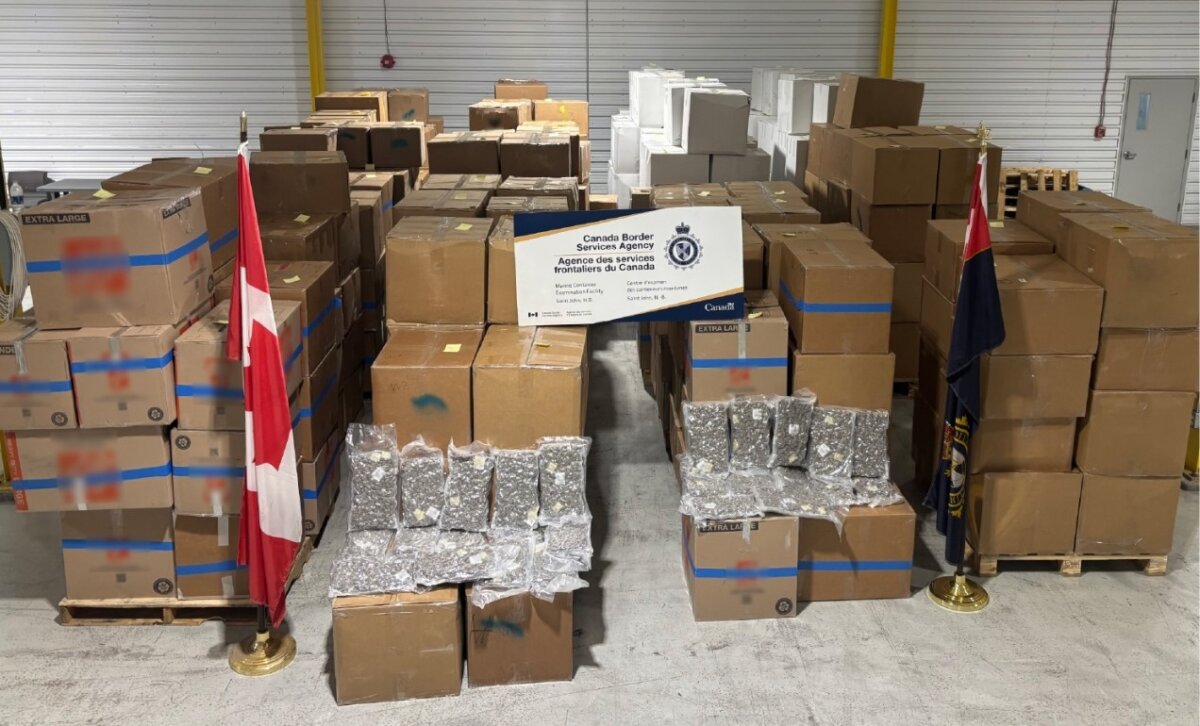
Canada Border Services Agency (CBSA) officers at the Port of Saint John in New Brunswick intercepted a shipment of more than 6,700 kilograms of cannabis linked to organized crime operating across national boundaries, the agency said in a July 14 press release. Officers at the Saint John container examination facility are responsible for examining all “high-risk” containers and cargo arriving and leaving Canada via the port.
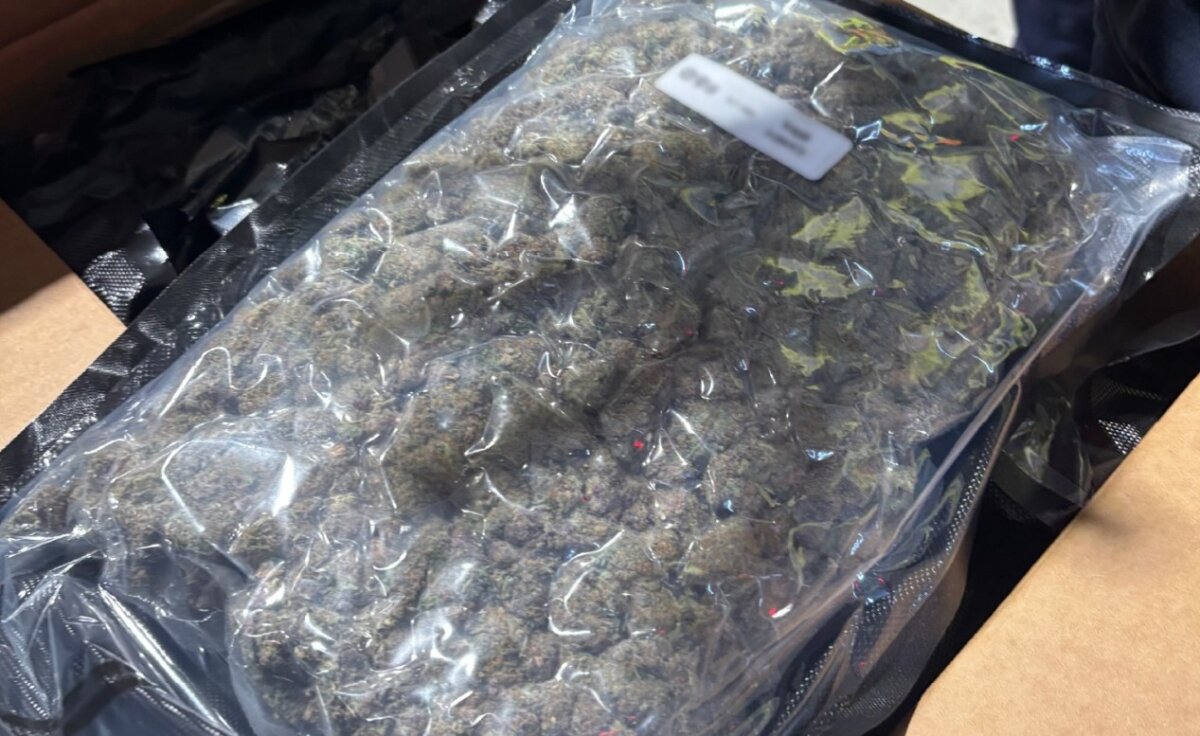
The drugs, worth an estimated $49.6 million, were found concealed in nearly 400 cardboard boxes inside a marine container, the border agency said. The drugs were falsely declared on the documentation provided to the CBSA and were destined for export to Scotland at the end of May.
“Illegal cannabis helps fuel transnational organized crime,” Public Safety Minister Gary Anandasangaree said in the press release. “This seizure demonstrates our continued commitment to fight it and keep our borders strong and secure.”
The amount of drugs seized in this shipment is three times greater than the total amount of cannabis confiscated by the CBSA across Canada in the previous year, the agency said.
It noted that while marijuana is legal in Canada, smuggling it is not.
“Cannabis smuggling supports organized crime and helps fund other illegal activities, such as narcotics and weapons smuggling,” the agency said. “It is often used as an exchange for other illegal drugs being imported into Canada such as cocaine.”
The trade of contraband cannabis is punishable with imprisonment of up to five years under the Customs Act and up to 14 years under the Cannabis Act.
The late May discovery was made with assistance from CBSA intelligence officers in the Greater Toronto Area and Atlantic Regions, the agency said.
The cannabis and all associated evidence were transferred to RCMP Eastern Region Federal Policing in New Brunswick for further investigation.
RCMP Superintendent Germain Leger said the federal police force is continuing to work closely with border authorities and other law enforcement partners both at home and abroad to foil international drug trafficking and “reduce the flow of illicit drugs within and outside of Canada.”
“Intelligence sharing and operational engagement with our partners contributes to successful action against the illegal drug trade,” he said.
Drug Emphasis at Border
The CBSA and the RCMP are also working together to secure Canada’s borders against illegal drug smuggling and organized crime operations, the agencies said.
It is part of Canada’s $1.3 billion plan to bolster security at the border and tighten the immigration system after U.S. President Donald Trump’s levied 25 percent tariffs on Canadian goods not covered by the countries’ free trade agreement earlier this year in response to cross-border fentanyl trafficking.
The president has argued that lax security at the northern border has played a large role in the amount of fentanyl entering his country while Canadian officials say the amount coming from Canada is miniscule.
Data released by Canada’s Fentanyl Czar showed that fentanyl seizures by the United States Customs and Border Patrol at the Canada-U.S. border represented less than 0.1 percent of U.S. fentanyl seizures between 2022 and 2024.
While 59 pounds of fentanyl were seized at the northern border of the United States during that timeframe, 61,900 pounds were confiscated at the U.S.-Mexico border.
Part of Canada’s $1.3 billion investment includes funding for the CBSA and RCMP, which were allocated $355.4 million and $667.5 million respectively to heighten security at borders and ports and combat the trafficking of illegal drugs.
CBSA’s portion of the funding is being used in part to deploy new chemical detection tools at high-risk ports of entry as well as putting new canine teams in place to intercept illegal drugs. Funding is also being used to provide crewed and non-crewed drones to the agencies to “support live operational response” and monitor the border.
 Friends Read Free
Copy
Facebook
Tweet
Friends Read Free
Copy
Facebook
Tweet