
JAMMU, India—Shyam Lal Sharma and his family had returned from his nephew’s wedding reception close to midnight on May 6. A few hours later, at around 2 a.m., they heard a loud blast.
An Indian fighter jet had crashed into a neighboring village.
“It erupted like a massive ball of fire,” Sharma told The Epoch Times. “It turned everything even brighter than the sun would do.”
Two pilots ejected from the jet; one pilot sustained a fracture, villagers said.
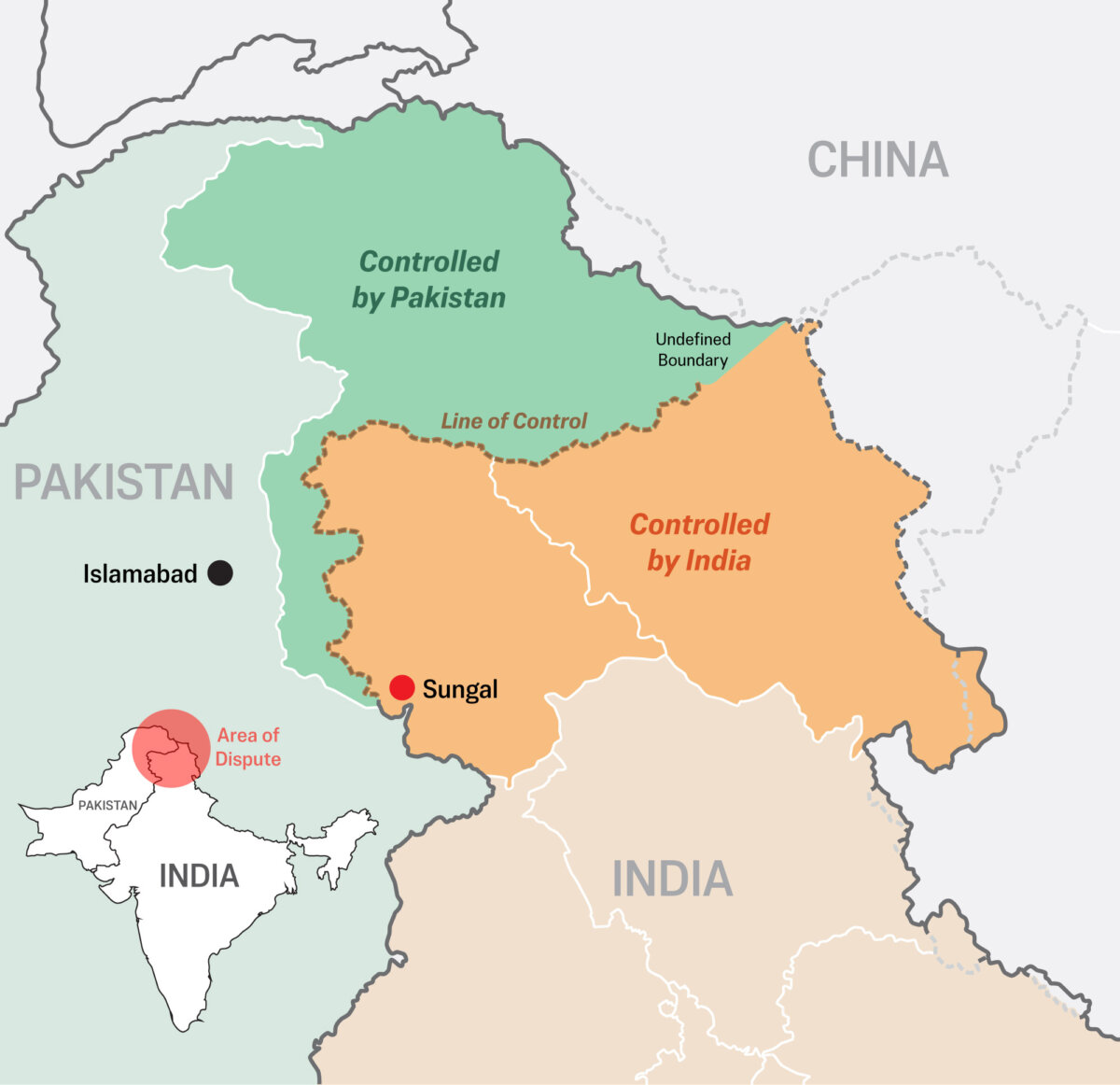
Sharma is from a village called Sungal in India-controlled Jammu and Kashmir, a border region where the India-Pakistan conflict played out in May.
In interviews with The Epoch Times in August, locals recounted the four-day conflict that marked the worst standoff between Indian and Pakistan in decades, and its aftermath.
The conflict, which largely involved missile and drone strikes, killed dozens before a ceasefire agreement was reached on May 10.
The fighting came after terrorists massacred 26 people at a resort in India-controlled Kashmir in April. India accused Pakistan of supporting the terrorist group behind the attack. Islamabad has denied this.
Pakistan has claimed it shot down six Indian jets during the conflict, which has been denied by India. However, an Indian defense official has acknowledged that an unspecified number of its jets were downed.
The Epoch Times was unable to independently confirm the crash reported by villagers. The Indian Defense Ministry didn’t return a request for comment from the publication.
Changing Nature of Warfare
Sharma, 71, the chair of a regional farming cooperative, has witnessed every conflict between India and Pakistan except the first in 1947.
“Earlier wars used to be such that Pakistan would cross over to our side or we would march over to their side,” he said.
While there were some border skirmishes in May, the border didn’t experience as much tension as in earlier wars, Sharma added. “This was a fight using missiles and drones,” he said.
The four-day conflict saw India for the first time using two types of cruise missiles against Pakistan, one developed jointly with Russia and another European missile, according to the Washington, D.C.-based Stimson Center think tank. Pakistan, likewise, deployed several short-range ballistic missiles for the first time against India.
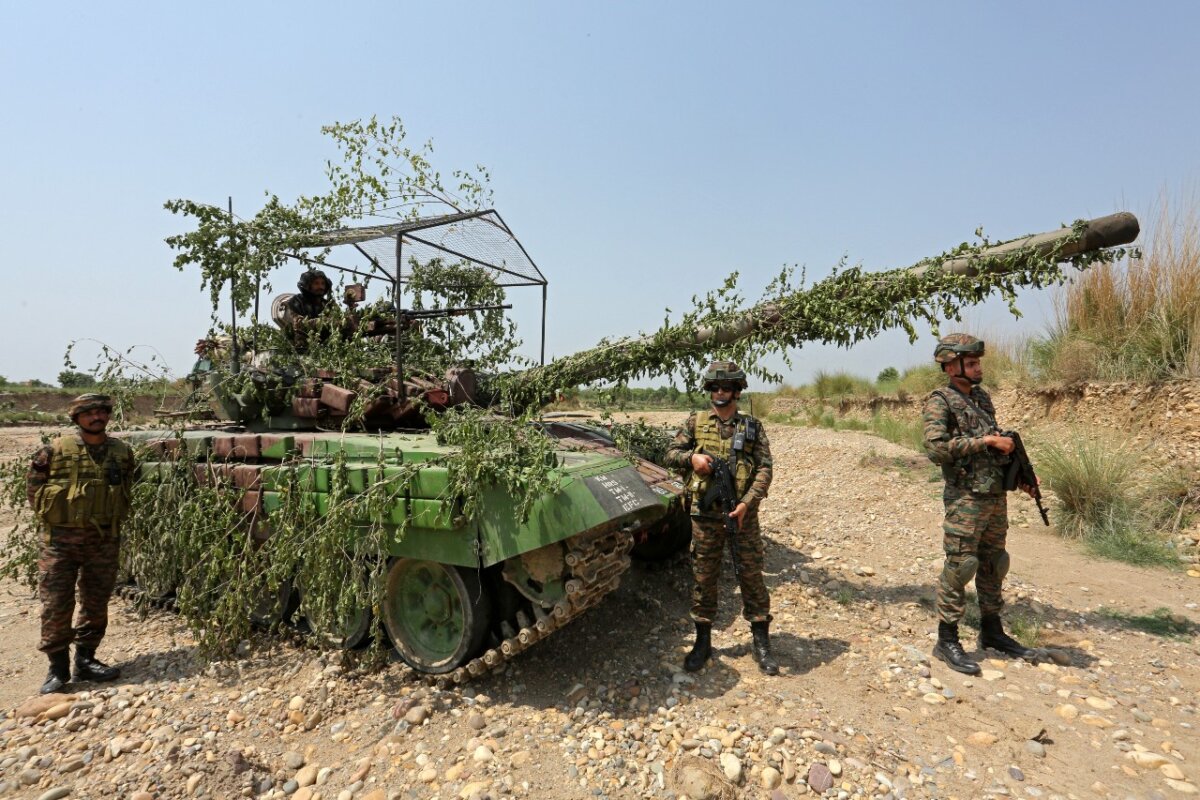
“Immediately after [the terrorist attack], our region was put on high alert. From the next day, we started seeing lots of movement of the army. Army tanks moved through our village,” recalled Anil Kumar, a teacher at a public school in Sungal.
Sungal lies just four miles from the India-Pakistan border and 15 miles from the disputed border known as the Line of Control, meaning the area is particularly vulnerable in times of conflict.
Both sides also used drones on a large scale for the first time against each other.
When the drone strikes started, they were visibly directed towards an Indian defense system in a nearby village, four miles away, Kumar said. The drones flew over Sungal on their way to the target.
Ahead of the strikes, Kumar said, residents of the hilly villages around the defense system were relocated to safer places.
Vikrant Dogra, chair of the cooperative federation in India-controlled Jammu and Kashmir, lives in the large city of Jammu, in Indian-administered Kashmir.
Typically, during cross-border fights or shelling, the fighting doesn’t reach the densely populated city, about nine miles from the border, Dogra said.
“But this time it was like an open video game where the sky was the screen,” he said.
Jammu was one of several areas hit by Pakistani drone strikes during the conflict, which led to Indian counterattacks in Pakistan.
Dogra sent his two children to live with their grandmother in a neighboring state to protect them from the conflict.
Relocation
More than 70,000 people from the greater region of Akhnoor, an area that includes Sungal, voluntarily relocated to safer places during the border tensions, according to Ram Paul Sharma, a village head in Sungal.
Even though the conflict played out differently from previous confrontations that involved more ground battles, the perception among residents hadn’t changed, resulting in widespread confusion.
As community leaders, Ram Paul Sharma and Shyam Lal Sharma said they tried to help residents understand that there wouldn’t be heavy border clashes this time, and so they didn’t need to leave their homes.
The focus on air warfare is the new reality facing border regions, said Shyam Lal Sharma.
He believes that if India weren’t prepared to attack and defend against drones and missiles, the border residents would have been under greater threat.
Had the ceasefire not happened, Shyam Lal Sharma said, “the army would have rescued and relocated us as well.”
The government has given some border residents in Akhnoor plots of land to use as shelters in times of conflict, Dogra said. There are also bunkers along other parts of the disputed border. However, according to locals, the Akhnoor region lacks sufficient bunkers for its residents.
Many Akhnoor residents migrated to the hills, either to their relatives or local pilgrimage sites, said Jagdish Raj, a village council member in Sungal.
“They migrated to safer areas where these drones didn’t reach,” he said.
Impact on Children
The conflict, in particular, left scars on children.
“Even a cracker at night makes them think that it’s firing,” said Kumar, the teacher. “Children have become clingy. They don’t leave their parents’ side because of fear that drones will come anytime.”
In the wake of the conflict, Sungal villagers appealed to the Indian government for more welfare programs. They demanded special provisions for the education, employment, and medical care of children in border regions.
They said children in border regions suffer particularly because any tension on the border closes their schools. The May conflict disrupted the normal curriculum of border schools for more than a month.
Water Treaty Suspended
After the April terrorist attack, New Delhi suspended its participation in the Indus Waters Treaty, a 65-year-old pact that splits control of rivers that flow downstream from India into Pakistan and regulates water sharing.
The treaty allocated three rivers each to the two countries. India was granted use of the eastern rivers Sutlej, Beas, and Ravi; Pakistan was allocated three western rivers, Indus, Jhelum, and Chenab.
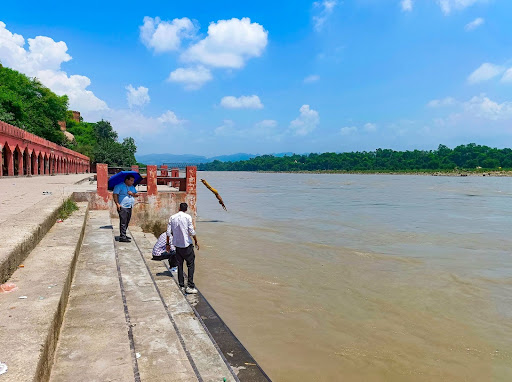
Villagers from Sundal, located on the Chenab River, told The Epoch Times they observed that water flow stopped on the waterway for about six hours on April 23. They also observed significant variation in river flow between April 23 and May 7.
In announcing its withdrawal from the treaty, India said it would continue to do so “until Pakistan credibly and irrevocably abjures its support for cross-border terrorism.”
India stopped river data sharing under the agreement with Pakistan as a result, said Sant Kumar Sharma, a veteran journalist and co-author of two books on the Indus Waters Treaty.
Citing the long-running mistrust between the rival nations, Sant Kumar Sharma suggested the suspension of the pact won’t be lifted anytime soon.
“The Indus Water Treaty doesn’t exist anymore,” he told The Epoch Times.
 Friends Read Free
Copy
Facebook
Tweet
Friends Read Free
Copy
Facebook
Tweet