
UK inflation held at 2.8 percent for May, unchanged from the 13-month low in April, official figures showed on June 17.
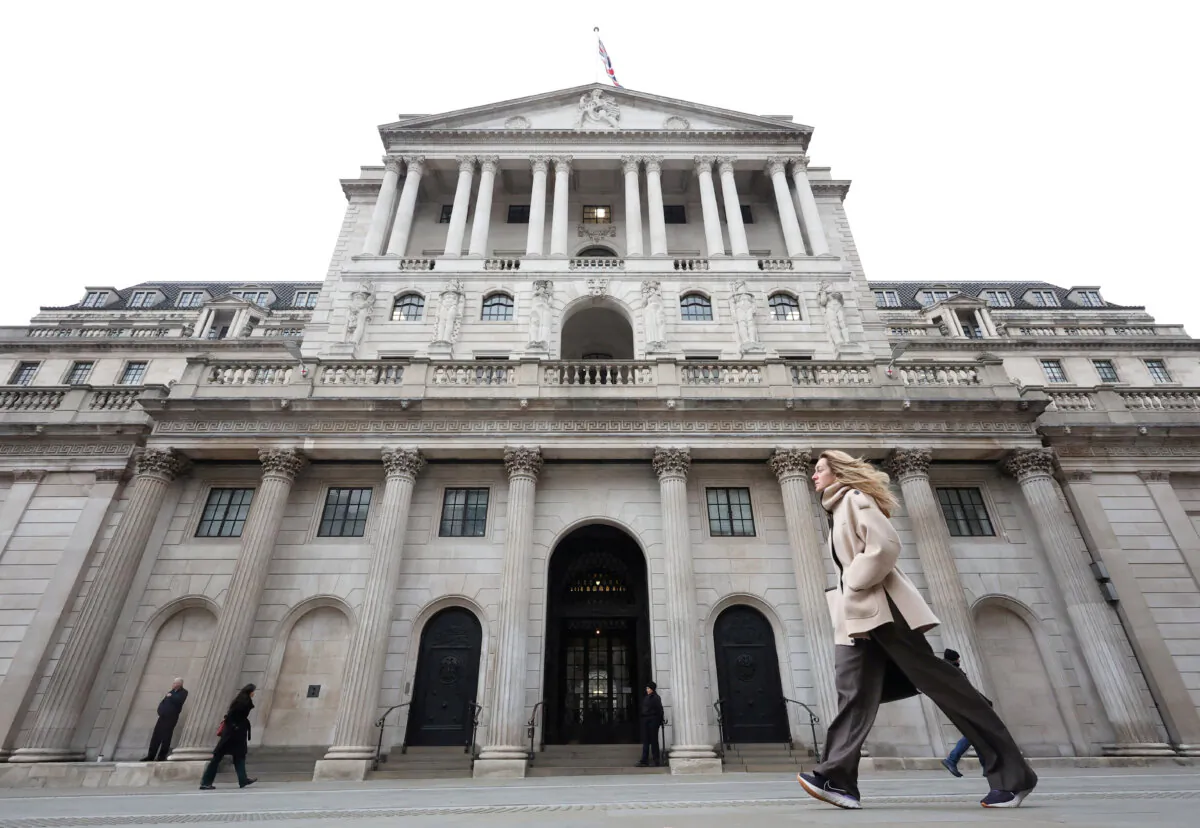
The unexpected hold comes a day before the Bank of England (BoE) is set to announce its next interest rate decision, having earlier kept interest rates on hold on April 30, waiting to see the economic impact of the war in Iran.
The British pound weakened a little against the U.S. dollar following the release of the data, and investors slightly lowered their expectations for a rate rise later in 2026.
Economists had forecast a rise to 3 percent for May, according to a poll by Reuters, as the U.S.–Iran war kept UK inflation almost 1 percentage point higher than the BoE had forecast in February.
Lower prices for meat, vegetables, and dairy products, as well as domestic heating oil, helped offset a jump in airfares and gasoline, the UK Office for National Statistics (ONS) said.
Transportation costs spiked by 6.8 percent in the 12 months to May 2026, up from 4.5 percent in the 12 months to April, marking the steepest rise since December 2022.
“The main effects behind the increase in the transport annual rate came from air fares, motor fuels, and sea fares, together with the correction of an error in the Vehicle Excise Duty … series in 2025,” the ONS said.
Inflation in the UK has been above the BoE’s 2 percent target for most of the past five years, and in April, the BoE said it was likely to rise above 3.5 percent by the end of the year and potentially exceed 6 percent early next year under the worst of three scenarios it set out.
The UK has been affected more than most countries in the West by the conflict in the Middle East because of its heavy reliance on imported natural gas.
UK manufacturers reported an 8.7 percent annual rise in their raw material costs for May, the biggest since February 2023.
Bank of England Governor Andrew Bailey said last month that allowing inflation to rise above the bank’s 2 percent target is justified, given the economic impact of the conflict in the Middle East.
“The conflict in the Middle East has led to sharp increases in global oil and gas prices as transit through the Strait of Hormuz has been curtailed and critical infrastructure in the region has been damaged or destroyed,” Bailey told the Reykjavik Economic Conference. “This is a big negative supply shock to the world economy.
“There is nothing monetary policy can do to prevent higher energy prices from affecting businesses and households. For net importers of energy like the UK, the terms of trade have worsened and real incomes will fall. The shock will push up inflation, and weigh on activity.”
Although Bailey acknowledged that the bank’s remit was clear that the 2 percent target applied “at all times,” it also recognized that “attempting to bring inflation back to the target too quickly may cause undesirable volatility in output.”
Yael Selfin, chief economist at KPMG, said that data released by the ONS on June 17 strengthens the case for a continued cautious approach from the BoE.
“Underlying inflationary pressures have yet to show clear signs of strengthening, which is likely to underpin a majority decision within the Monetary Policy Committee to hold interest rates at Thursday’s meeting,” she said.
Financial markets this week have received a boost because of a deal between the United States and Iran, set to be signed in Switzerland on June 19, which promises to reopen the Strait of Hormuz.
Reuters contributed to this report.
 Friends Read Free
Copy
Facebook
Tweet
Friends Read Free
Copy
Facebook
Tweet