British Prime Minister Andy Burnham has said in an interview released on Wednesday that Britain should consider options for its future relationship with the European Union, including “going all the way” and applying to rejoin the bloc.
“Brexit has done more harm than good,” Burnham told the Labour Party’s annual conference in Liverpool on Tuesday.
And in an interview with the BBC’s “Today” program on Wednesday, he said: “I think around 60 percent of the British public agree with that statement.”
Britain voted to leave the European Union in 2016, and finally departed in January 2020, after a landslide general election victory for the Conservative Party, which promised to “Get Brexit Done.”
The opposition Labour Party proposed renegotiating a Brexit deal, and then putting that to the electorate.
When Labour, under Burnham’s predecessor Keir Starmer, won a general election in July 2024, their manifesto pledged to reset the UK’s relationship with the EU and reduce trade barriers, but Starmer ruled out rejoining the entity.
Reform UK Calls It ‘Betrayal’
Reform UK’s deputy leader Richard Tice told the BBC that Burnham was “trying to sneak us back into Brussels via the back door” and said his party would “never let this betrayal go unchallenged.”
“He says Brexit has done more harm than good but what’s done real harm is a Labour government that can’t deliver growth, can’t control migration and now wants to outsource the job to Brussels,” Tice said.
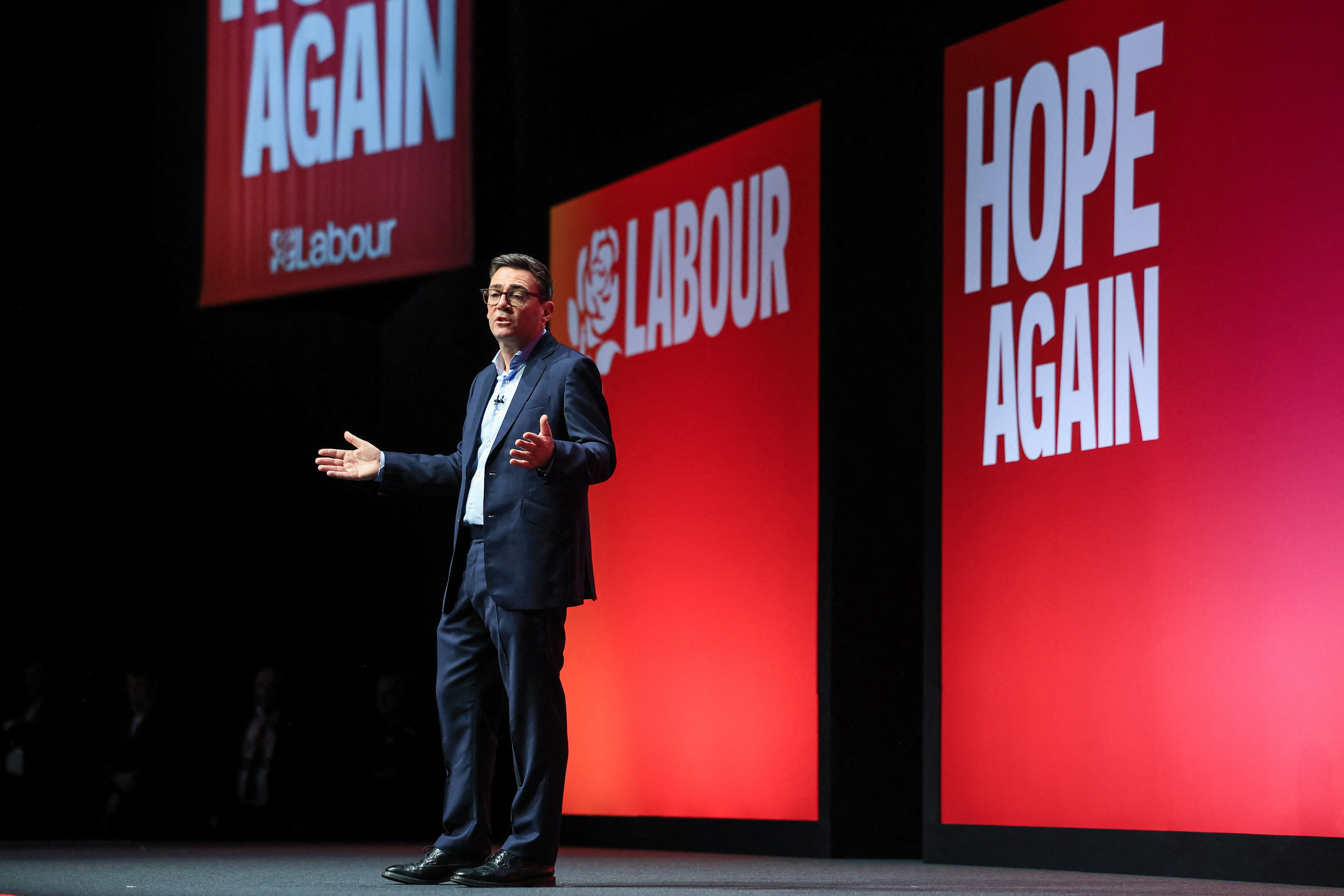 British Prime Minister Andy Burnham speaks on stage at the Labour Party’s annual conference in Liverpool, England, on Sept. 29, 2026. (Temilade Adelaja/Reuters)
Customs Union as an Option
In his interview with the BBC, Burnham laid out several options.
“We could stay as we are. That’s definitely an option, if people think this is the right place to stay,” Burnham said. “We could look at … a customs union. We could look at what the Liberal Democrats said at their conference about a single market, or we could go all the way.”
Former Conservative Chancellor of the Exchequer George Osborne, who backed the unsuccessful “Remain” campaign, told The Independent newspaper this month that Britain should pursue a customs union with the EU.
Burnham said the options should be assessed based on “what is doable,” and he conceded there would be advantages and disadvantages with each option.
“Let’s be clear about where we want Britain to go in the next decade,” he told the BBC.
In Burnham’s conference speech, he also said he planned to end Britain’s historic “first past the post” voting system for lawmakers.
The system meant that in July 2024, despite only winning a national vote share of 33.7 percent, Labour won almost two-thirds of the seats in Parliament.
Reform won 14.3 percent of the vote, but got less than 1 percent of seats, and the Greens also got far fewer seats than their 6.7 percent vote share deserved.
“We will contest the next election with a manifesto commitment to change the electoral system so that everyone’s vote counts and everyone’s voice is heard,” Burnham said in his conference speech, announcing an electoral reform commission.
The next election is due in 2029.
‘Era of Five-Party Politics’
“In an era of five-party politics, can we really watch a party with less than 30 percent just walking to Downing Street? Is that something we should feel comfortable about?” Burnham told the BBC, referring to recent polls which have suggested Labour, the Conservatives and Reform UK are all below 30 percent.
In a post on X on Tuesday, the leader of the Conservative Party, Kemi Badenoch, said in a post on X: “Nothing Burnham announced today will do anything to fix Britain’s long-term problems.”
“He had no plan to fix our stagnant economy. No plan to fund defence,” she said. “No plan to sort out the spiralling welfare bill, beyond more government schemes.”
Reuters contributed to this report.
 Friends Read Free
Copy
Facebook
Tweet
Friends Read Free
Copy
Facebook
Tweet