The federal government has added the Bishnoi Gang to its list of terrorist entities, citing its involvement in criminal and violent acts such as murder and extortion.
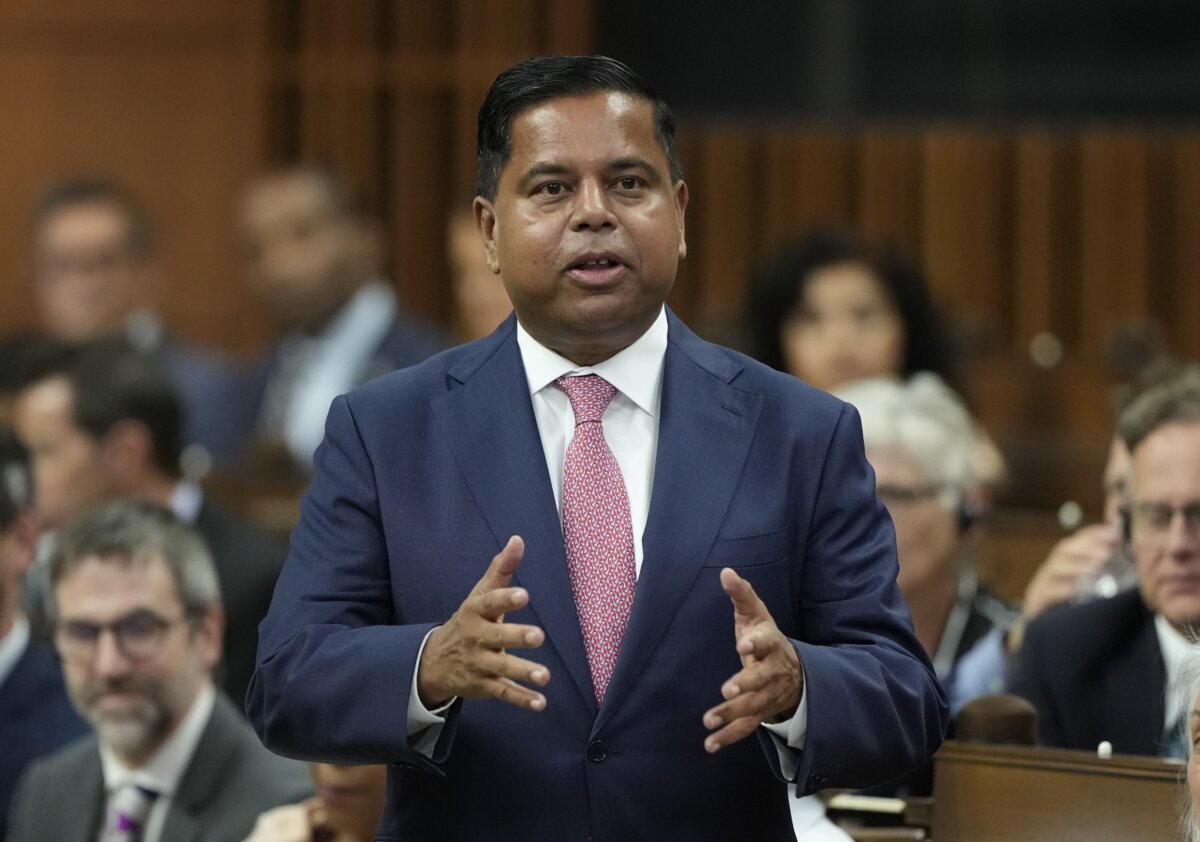
“Specific communities have been targeted for terror, violence and intimidation by the Bishnoi Gang,” Public Safety Minister Gary Anandasangaree said in a Sept. 29 statement.
His department said the group has been involved in shootings and arsons and has been most active in areas of Canada that have significant South Asian communities.
“The Bishnoi Gang creates a climate of insecurity for South Asian Canadians as it targets them, their prominent community members, their businesses, as well as cultural figures within the community,” Public Safety Canada says in its official terrorist listing.
The group is named after its leader and founder Lawrence Bishnoi, who is said to run the sprawling criminal network while being behind bars since 2015. The gang has been linked to high-profile shootings and assassinations in India, including that of local politician Baba Siddique and movie and music stars.
Federal Conservatives, along with political leaders at the provincial and municipal level, had been calling for the Bishnoi Gang to be listed as a terrorist entity.
Conservative Leader Pierre Poilievre commented during an unrelated press conference that the decision was “long overdue.” He said on Sept. 29 the Bishnoi Gang has been responsible for “much of the extortion that has terrorized Surrey, Brampton, Northeast Calgary.”
Earlier this month, the B.C. government launched a task force to respond to the rising number of extortion threats and shootings targeting the South Asian community. Meanwhile, the city of Surrey, B.C., announced a fund of $250,000 to offer rewards for tips to counter extortion against South Asian businesses.
Listing
Tory MP Frank Caputo, who serves as his party’s public safety critic, had called on Ottawa to list the Bishnoi Gang on Aug. 11, saying it conducts violence for “political, religious and ideological reasons.”
Having such a motive is integral for an offence to be considered terrorist activity, according to the Criminal Code.
With the Bishnoi Gang now being listed, Anandasangaree said authorities will be able to pursue additional investigative avenues to go after the group.
Any assets owned by the group in Canada can be frozen or seized, while law enforcement will be able to pursue charges related to financing and recruitment. It is also now illegal for anyone in Canada or for Canadians abroad to deal with property owned or controlled by the group.
Canada also listed other international criminal organizations as terrorist groups this year. In February, Canada followed the U.S. lead by listing several Mexican drug cartels and two transnational criminal organizations primarily based in Venezuela and El Salvador.
There are also geopolitical ramifications for Canada’s listing of the Bishnoi Group, as the country is currently trying to rebuild relations with India. The national security advisers of the prime ministers of Canada and India met in New Delhi on Sept. 18.
National Security and Intelligence Advisor Nathalie Drouin said she and her counterpart Ajit Doval agreed committed to “non-interference” and “refraining from transnational repression.” Meanwhile New Delhi said the two advisers agreed to work on countering terrorism and transnational organized crime.
Canadian Footprint
The Bishnoi group garnered national attention in Canada when the RCMP said last year it was being used by the Indian government to conduct criminal activities and target certain communities.
“An extraordinary situation is compelling us to speak about what we have discovered in our multiple ongoing investigations into the involvement of agents of the government of India in serious criminal activity in Canada,” RCMP Commissioner Michael Duheme said at a press conference on Oct. 14, 2024.
RCMP Assistant Commissioner Brigitte Gauvin said that one particular organized crime group being used by India is the Bishnoi Gang. “That’s what we’re seeing here in Canada, and we believe that that group is connected to agents of the government of India,” she said while speaking alongside Duheme.
The RCMP accused Indian government agents of being involved in homicides, extortion, intimidation, and coercion, with pro-Khalistan elements being particularly targeted. Khalistanis are followers of the Sikh faith who seek to carve out an independent country of India’s Punjab. Canada is home to the largest population of Sikhs outside Punjab.
The RCMP had not made a direct link to the June 2023 assassination of pro-Khalistan activist Hardeep Singh Nijjar in B.C. in its press conference. Prime Minister Justin Trudeau had accused Indian agents of being involved in the murder of Nijjar in September 2023, leading to a breakdown of bilateral relations with India.
India has long accused Canada of being a safe haven for Khalistani separatists, but it has denied being involved in criminal acts, saying accusations of involvement in the Nijjar murder are “absurd and motivated.”
The Canadian Security Intelligence Service (CSIS) said in its 2024 annual report that some Canadians are involved in “legitimate and peaceful” advocacy in the Khalistan movement, with only a “small group” being considered extremists as they “continue to use Canada as a base for the promotion, fundraising or planning of violence primarily in India.”
CSIS said India’s foreign interference in Canada is driven by “real and perceived Khalistani extremism.”
On the same day the RCMP had warned of Indian agents’ involvement in criminal acts in Canada, then-Foreign Affairs Minister Mélanie Joly announced Canada was expelling six Indian diplomats, said to be “persons of interest” in the Nijjar case. India had responded with tit-for-tat expulsions.
Relations between Ottawa and New Delhi have been rebuilding since Indian Prime Minister Narendra Modi visited Canada for the G7 Leaders’ Summit in June, which was followed by the two countries appointing new high commissioners.
 Friends Read Free
Copy
Facebook
Tweet
Friends Read Free
Copy
Facebook
Tweet