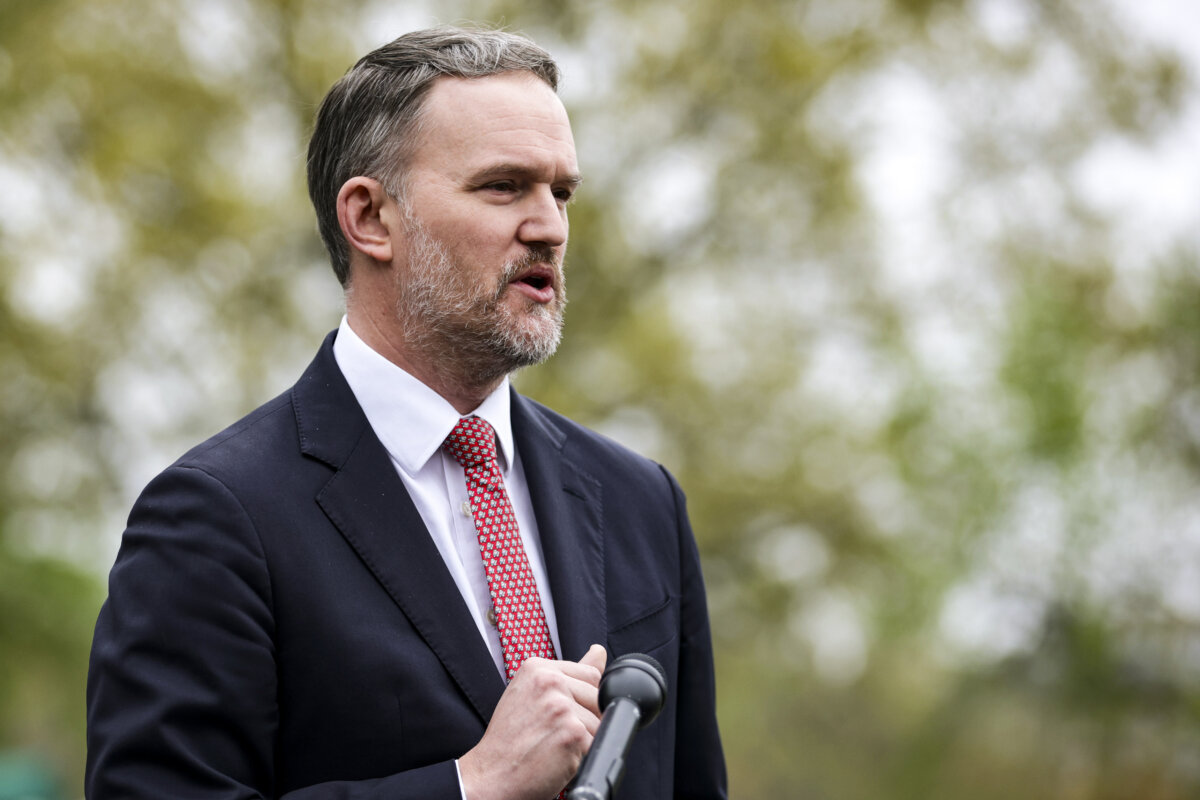

Canada-U.S. Trade Minister Dominic LeBlanc says Ottawa welcomes Washington “withdrawing its positions” on Canada’s discoverability requirements for streamers after U.S. Trade Representative Jamieson Greer said the United States has “flexibility” on the issue.
Greer disputes Ottawa’s characterization of the issue, saying it was never a red-line for the United States, contradicting Prime Minister Mark Carney’s statement that Washington opposed Canada’s French-language protection requirements.
“Canada welcomes that the U.S. is now withdrawing its positions on discoverability and labelling and is confirming that measures to promote French language and Canadian culture will not be subject to future U.S. trade actions,” LeBlanc said in a statement on Aug. 27.
LeBlanc also suggested that Washington’s updated position meant there was more of an opening for a “mutually beneficial trade agreement that respects Canadian sovereignty,” and that Ottawa looked forward to seeing “further constructive U.S. clarifications on their other positions.”
Carney told reporters a day after the negotiations broke down that it was in part due to American “efforts to restrict our protections of our language, our culture, and in effect, our sovereignty.”
Carney also told reporters on Aug. 22 that Washington’s insistence on Canada restricting trade agreements with other nations and omitting medium- and heavy-duty truck from tariff exemptions contributed to the collapse of negotiations.
“Ultimately, it’s simple. That was never on the table for Canada and it would not have been acceptable to Canadians,” Carney said of the U.S. French language and culture demands.
The United States imposed new 50 percent tariffs on US$20 billion of Canadian exports on Aug. 22, while Ottawa intends to put tariffs on CA$27.6 billion of U.S. exports beginning Sept. 8.
CBC News asked Greer in an Aug. 26 interview about the discoverability of French content on streaming services. He replied that U.S. President Donald Trump recognizes “the importance and sensitivity of the French language in Canada, in Quebec, in areas in the Maritimes.”
Greer said Canada had previously implemented “discriminatory laws” targeting U.S. streaming companies, in reference to the Online Streaming Act that required large streamers to contribute 5 percent of Canadian revenues to funds supporting Canadian and indigenous content.
Greer said the United States’ latest concern was with Canadian regulations requiring streamers such as Netflix to actively make French-language and Canadian content findable on their platforms, but he said Washington was flexible on this.
“We always have questions about this. This is something we talked about, but we showed a lot of flexibility. And our view is, there is no way we would let a good deal go by for something like this,” he said.
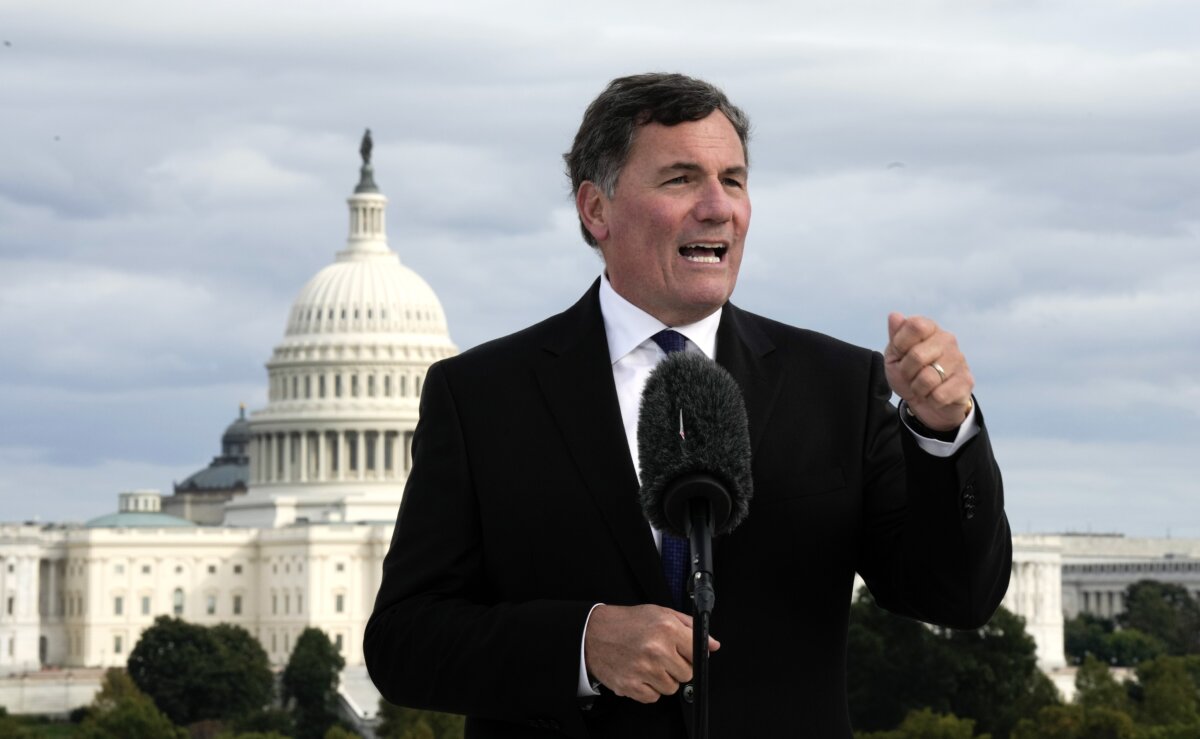
Bloc Québécois Yves-François Blanchet said in a statement on Aug. 27 that the matter of discoverability was not “as important as the Liberals” claimed, and it is now necessary “to address the other crucial issue for Quebec: the funding of Quebec and Canadian music production and the discoverability of French-language music on online platforms.”
Conservative MP and Quebec Lieutenant Pierre Paul-Hus said on X on Aug. 24 that it’s unclear who is “telling the truth” about the “attack on French,” reiterating his party’s demand that Ottawa release the details of the proposed deal for transparency.
Paul-Hus suggested the Liberals could be using the story as a political tactic to garner French support ahead of the byelection in Chicoutimi—Le Fjord, and said Quebecers have a “right to know what really happened at the negotiating table and to learn the true details of the deal that fell through.”
Greer Denies US Had Last-Minute Demands
Trump had warned of implementing the 50 percent tariffs on Canada on Aug. 19, but announced hours before that deadline that both parties were nearing an agreement and postponed the tariffs for three days.
Greer said the U.S. side had felt “very, very confident in the deal we had struck late Tuesday night, shortly before a deadline,” and extended the deadline to “get everything down on paper.”
“Then Minister LeBlanc went back to Ottawa, and they spoke with premiers, spoke with the prime minister, and when they came back, they had some additional views, they had some additional requests, they had some additional things that were too much for the United States,” Greer said.
Ottawa has also accused the United States of imposing additional demands before the Aug. 22 deadline. Carney said Washington “proposed new terms that were uneconomic, unfair, and undermined the net benefits for Canada, and called into question the reliability of any deal.” He said that’s why he told his team to walk away from the negotiation table on Aug. 21.
Greer was asked about comments Trump made in a recent interview with CNN. The president was asked if the United States imposed additional, last-minute demands on Canada, and he responded, “that sounds like me.” Trump was asked if he was not denying he made the demands, and said “No, no, I don’t deny anything. So no, they have to pay a fair amount. And if they don’t pay a fair amount, we won’t make a deal.”
Greer said that Trump had made “off the cuff” comments, and that no additional demands had been made.
“The president, we all felt so comfortable that there was a meeting, there were agreements on specific rates, specific percentages, etc.,” he said. “Hard to change those things after a given time.”
International Trade Deals
In the CBC interview, Greer was also asked about Carney’s remarks that the United States wanted to restrict Canada’s ability to engage in trade deals.
“We’re the partner of choice in many respects for countries around the world, and the Americans wanted to restrict that. They had language that what they wanted was to restrict that. Unacceptable,” Carney said on Aug. 22.
Greer disputed Carney’s characterization, saying Washington’s request was about preventing issues such as a third country dumping steel in Canada and those products making their way into the United States, if Canada has a preferential tariff rate under a new agreement.
“In USMCA [United States-Mexico-Canada Agreement] originally there was actually a provision in there where Canada, Mexico, and America all agreed that if anyone ever joined a free trade agreement with a non-market economy country like China, that that country could be kicked out of the deal. So there’s kind of a long history of trying to defend North American market,” he said.
In reference to proposals made by Ontario Premier Doug Ford, Greer said Canadian officials have been proposing the idea of “Fortress North America,” adding that it’s “bizarre” to him that as they work together toward that idea, the Canadian side would object to the protections such an arrangement would require.
Trucks
Greer was also asked about the issue of Washington wanting to keep medium- and heavy-duty trucks out of the tariff-relief deal.
“With respect to Ford’s new plant, for example, in Oakville, which is F-350s, 450s, 550s, they would have been excluded. GM, Silverado, same thing, would have been excluded from that,” Carney said on Aug. 22.
Greer said Washington’s goal with its tariff policy is to bring back factories to the United States.
“I understand why the Canadians, you know, want to have as much as they can get and try to expand concessions from the U.S. But we are focused on doing what’s good for America and accommodating Canada to the extent we can,” he said.
 Friends Read Free
Copy
Facebook
Tweet
Friends Read Free
Copy
Facebook
Tweet