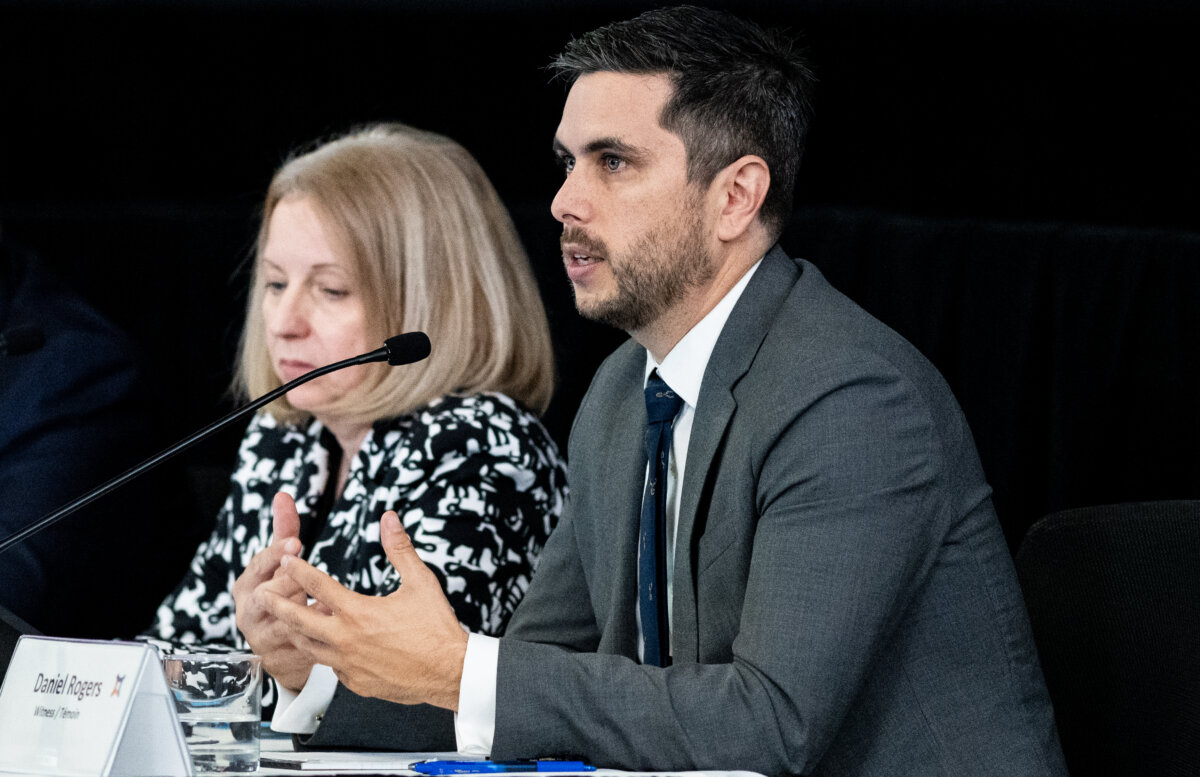
The director of Canada’s spy agency is warning about the state of social cohesion in the country.
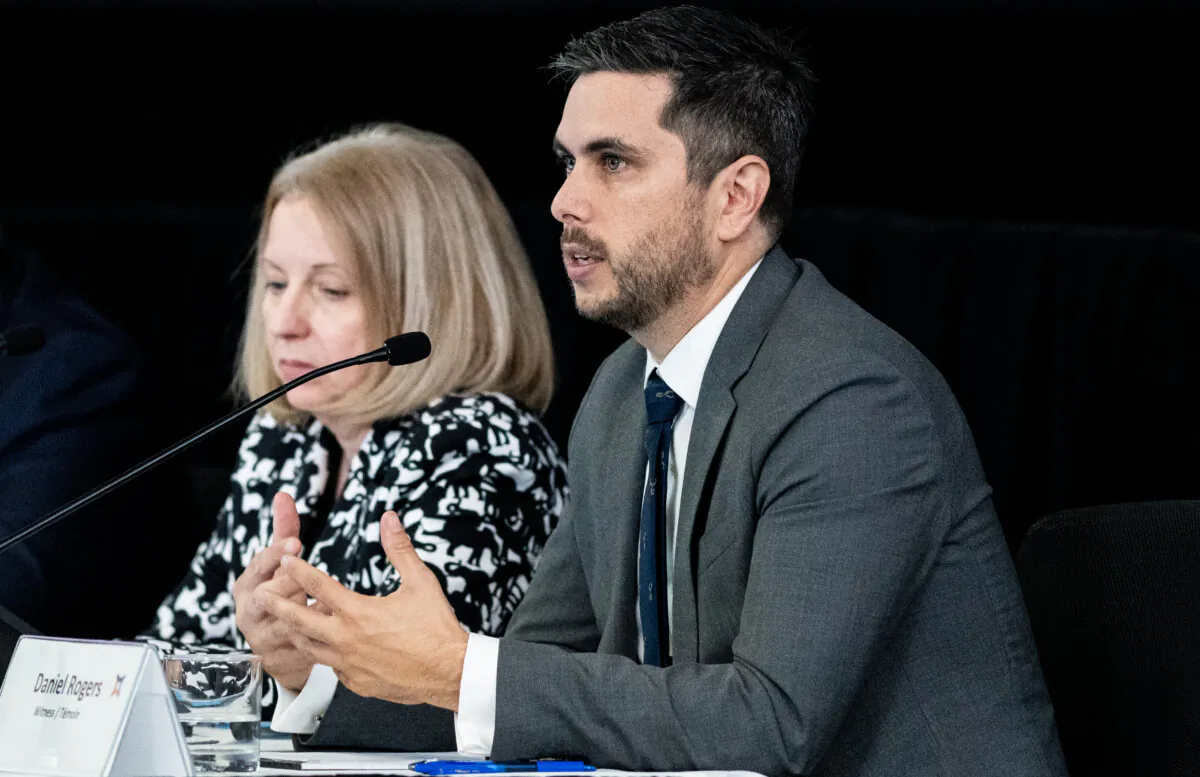
Daniel Rogers, director of the Canadian Security Intelligence Agency (CSIS), made the observation in the agency’s annual report for 2024, which was publicly released on June 18 this year.
“Our social cohesion has been weakening in recent years, creating cleavages in our social fabric that threat actors seek to exploit,” wrote Rogers, who took the helm of the agency in October 2024, replacing David Vigneault.
Rogers said the trends around terrorism are concerning, and that the national threat level has remained at “medium” mostly because of efforts from security agencies. The RCMP said in December it had foiled six terrorist plots in the last 12 months.
Rogers said what is “most concerning” is how threat actors are seeking to radicalize youth online to incite violent acts.
CSIS and the RCMP collaborated with other Five Eyes partners to produce a report on youth radicalization that was released late last year. It followed the arrest of a number of youths for terrorism offences in recent months.
China
Threats to social cohesion are also mentioned in the CSIS report in the context of foreign interference and espionage. The report says there has been increased awareness from the Canadian public about these threats, but nonetheless “foreign interference poses a significant threat to Canada’s social cohesion, sovereignty, and national security.”
This issue has come to the forefront in recent years. Multiple intelligence leaks in the media began in 2022 depicting widespread interference by Beijing, which eventually led to a public inquiry.
The Foreign Interference Commission, led by Justice Marie-Josée Hogue, reviewed the federal elections of 2019 and 2021, as well as specific incidents related to foreign meddling. Hogue’s final report was released in January and it identified the People’s Republic of China (PRC) as the “most active perpetrator of foreign interference” targeting Canada.
The CSIS annual report draws a similar conclusion, identifying the PRC as posing the “greatest counter-intelligence threat to Canada.” It says China has one of the “world’s largest and most active security intelligence systems” which is “intently focused on ensuring the survival of the Chinese Communist Party (CCP).”
The report delves into some of the methods used by Chinese spy services to conduct operations in Canada, such as using social media and jobs advertising platforms to recruit individuals to collect privileged or classified government information on behalf of the PRC.
The CCP also uses its United Front Work Department, identified as the “primary foreign interference administrative arm,” to conduct spying operations on Canadians who are critical of Beijing, the report says. The main targets of these activities are political dissidents, human rights activists, religious and ethnic minority groups, and journalists.
Security agencies warned during the federal election campaign they had detected a Chinese transnational repression operation directed at Conservative candidate Joe Tay, who is an advocate for democracy in Hong Kong. Content posted on Chinese language online platforms, some linking back to Beijing, amplified information about a bounty placed on Tay by Hong Kong authorities, and suppressed other information about him.
The PRC is not only influencing online content but media outlets as well, with CSIS noting that “CCP-friendly narratives inundate Chinese-language media in Canada.” CSIS said this is achieved by providing economic incentives to media outlets and journalists to run content approved by the CCP, while also “fostering self-censorship through threats and punishments.”
CSIS also noted it had taken measures to mitigate the threat posed by the PRC on another issue, by warning former Canadian Armed Forces pilots who had worked in China teaching the Chinese military advanced fighter pilot tactics from Canada and NATO.
“In response, CSIS warned the pilots by letter that such an activity is detrimental to Canada’s security interests,” the report says. The RCMP said it had launched an investigation into the matter in 2023, which also involved pilots from other countries such as the UK.
CSIS also said it collaborated with law enforcement last year to warn private investigator (PI) associations of hostile state actors hiring their services to aid in their operations.
“Such activities include the facilitation of repression and harassment directed by authoritarian governments,” the report says, adding that PIs were being hired under deceptive pretences of alleged financial fraud or marital infidelity. The spy agency did not say which countries were involved in such activities.
India
Aside from China, CSIS identified the other main perpetrators of foreign interference as India, Russia, Iran, and Pakistan.
Relations with India collapsed after Ottawa accused the Indian government of having a hand in the killing of pro-Khalistan activist Hardeep Singh Nijjar on Canadian soil in 2023. New Delhi has denied involvement and rejected the accusations as “politically motivated.” Canada expelled India’s high commissioner and five other diplomats in 2024, saying they were persons of interest in the Nijjar case. India retaliated in kind.
The CSIS report notes that the investigation on Nijjar continued in 2024, and that criminal proceedings are ongoing, with four individuals having been charged.
“Links between the Government of India and the Nijjar murder signals a significant escalation in India’s repression efforts against the Khalistan movement and a clear intent to target individuals in North America,” said CSIS.
India has long accused Canada of being a safe haven for the Khalistan movement, which seeks to carve an independant state out of India’s Punjab. CSIS says some Canadians participate in “legitimate and peaceful” advocacy for the cause, while “only a small group of individuals are considered Khalistani extremists because they continue to use Canada as a base for the promotion, fundraising or planning of violence primarily in India.”
This threat of extremism is a driver of Indian foreign interference activities in Canada, CSIS says.
The CSIS annual report was published on June 18, a day after the conclusion of the G7 summit in Canada. Indian Prime Minister Narendra Modi attended the summit, where he met with Prime Minister Mark Carney. The two leaders agreed to appoint new high commissioners and return respective consular services back to normal operations.
“Prime Minister Carney and Prime Minister Modi reaffirmed the importance of Canada-India ties, based upon mutual respect, the rule of law, and a commitment to the principle of sovereignty and territorial integrity,” said a readout of the meeting from Carney’s office.
 Friends Read Free
Copy
Facebook
Tweet
Friends Read Free
Copy
Facebook
Tweet