
Prime Minister Mark Carney laid out the conditions for building an oil pipeline to the West Coast ahead of his meeting with British Columbia Premier David Eby, who has repeatedly cited opposition to the project.
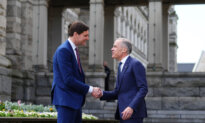
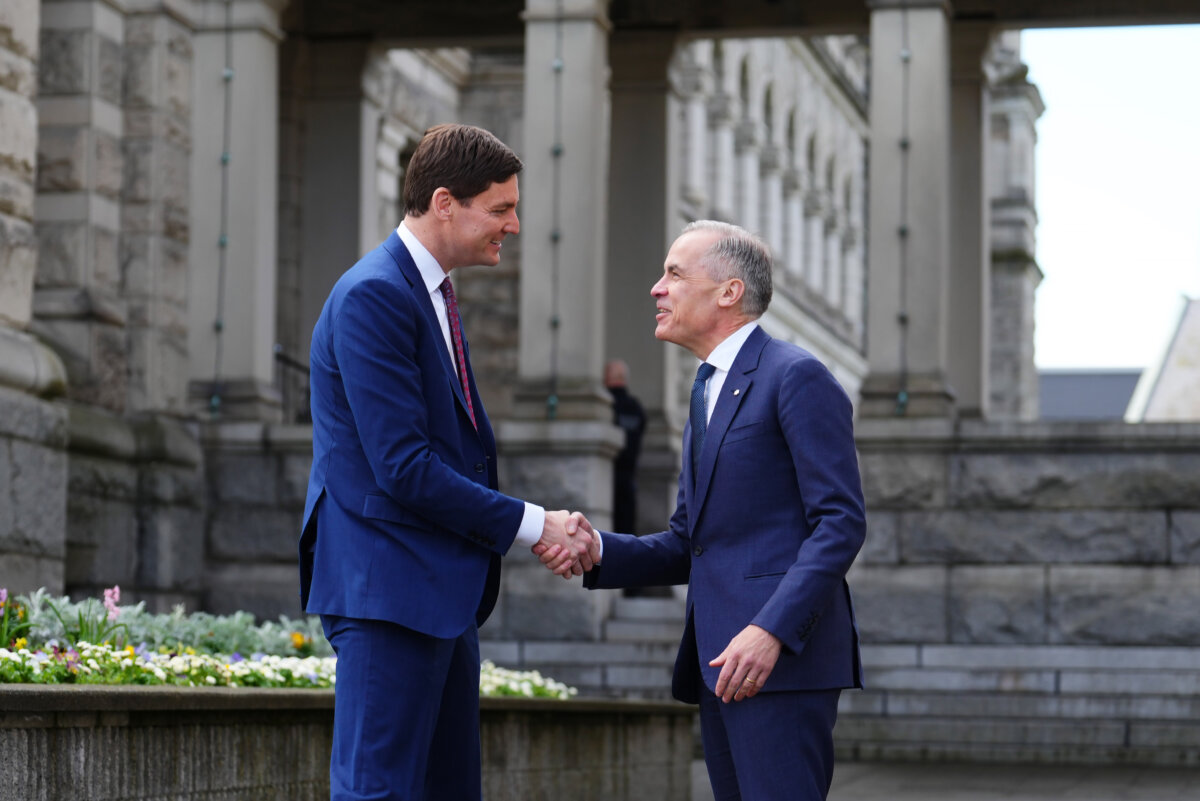
The two leaders met on May 20 in Victoria, where they also discussed a number of projects that Eby would like to see the federal government approve.
Hours before that meeting, Carney told the Greater Vancouver Board of Trade that a pipeline would only be built if the Pathways carbon capture project is built alongside it. He also said a pipeline must include consultation with First Nations, as well as provide “substantial economic and financial benefits” to B.C.
Carney added that “if things get stalled” in B.C., then the federal government would be “spending more time elsewhere in the country, because we need to move forward, we need to invest at scale in the country.”
Carney and Alberta Premier Danielle Smith signed an energy agreement on May 15 that would potentially pave the way for construction of a new pipeline to the West Coast by 2027. As part of the agreement, Alberta’s effective industrial carbon price will increase to $130 a tonne by 2040.
Smith said her province plans to submit the pipeline proposal to the Major Projects Office by July 1, which would designate it as a project of national interest and accelerate its approval. Construction on the pipeline could begin as early as Sept. 1, 2027, and Alberta officials say it could begin shipping oil by 2034. The project needs to have a private proponent before it can proceed.
Eby said the same day the agreement was signed that, with the other provinces having a national standard of $170 a tonne for carbon pricing, he was concerned his province would “not be in a competitive position if Alberta has a special federal carbon price that the rest of us don’t have access to.”
Eby called for Ottawa to give projects in B.C. the “same amount of attention” as the proposed pipeline, which he added does not yet have a private proponent. Smith has said a private-sector proponent for the pipeline would likely come when there is “some certainty” that it will get built.
On May 19, Eby also said that Carney was rewarding a “separatist premier” and her “bad behaviour,” in reference to Smith, saying she is open to a referendum on Alberta independence from Canada. A judge recently ruled against Elections Alberta’s approval of a citizen-led petition to hold a referendum. Smith has said she doesn’t want Alberta to separate, and her working toward achieving a pipeline agreement would curb separatist sentiments in the province. She has also said the judge erred in law by quashing the petition, and that citizen-led petitions shouldn’t be shut down by courts if they meet legal requirements.
Standing alongside the prime minister on May 20, Eby told reporters that he was glad the two would be discussing “B.C’s priorities going forward,” which include clean energy, critical minerals, and infrastructure.
However, Eby said the two leaders needed to be “telling each other the truth,” and that included the need for resource development to accompany environmental protection, “including the North Coast tanker ban that is crucially important for British Columbians.”
The Oil Tanker Moratorium Act bans tankers carrying more than 12,500 metric tons of oil off the North Coast of B.C. in order to prevent oil spills. Carney has suggested that legislation could be overturned as part of building the pipeline, allowing oil to be shipped to Asian markets.
Carney told reporters that building major projects meant partnerships with First Nations, emphasizing both environmental sustainability and prosperity, and building on the priorities of British Columbians.
“There are a series of other issues that we will work on this part of broader Canadian federalism and cooperation. That is critical,” Carney said.
 Friends Read Free
Copy
Facebook
Tweet
Friends Read Free
Copy
Facebook
Tweet