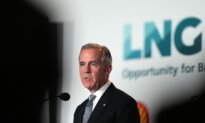

Prime Minister Mark Carney announced $1.2 billion in federal funding for marine protection on Sept. 29, as Ottawa prepares to make decisions on a proposed Alberta-to-B.C. pipeline and the expansion of a major port in Metro Vancouver.
Carney said the projects would bring increased marine traffic and put additional pressure on ocean habitats.
“More ships on the water and more pressure on the habitats that we are all working to protect,” he said. “So we must scale up our systems to protect marine life in the event that something goes wrong.”
The funding will support a range of measures, including increased Canadian Coast Guard capacity to monitor marine traffic, the creation of a national near-shore weather forecasting system and a marine mammal oil spill response plan.
The government also plans to upgrade search and rescue stations, improve seabed mapping and strengthen fisheries conservation efforts, Carney said.
While in New York for the U.N. General Assembly last week, Carney also announced $82 million over five years for a global initiative to expand ocean observation and data collection efforts.
Canada is hosting the Our Ocean Conference in Halifax next year. Carney’s wife, Diana Fox Carney, who has been appointed as Canada’s first Ocean Envoy, will chair the conference.
LNG Expansion
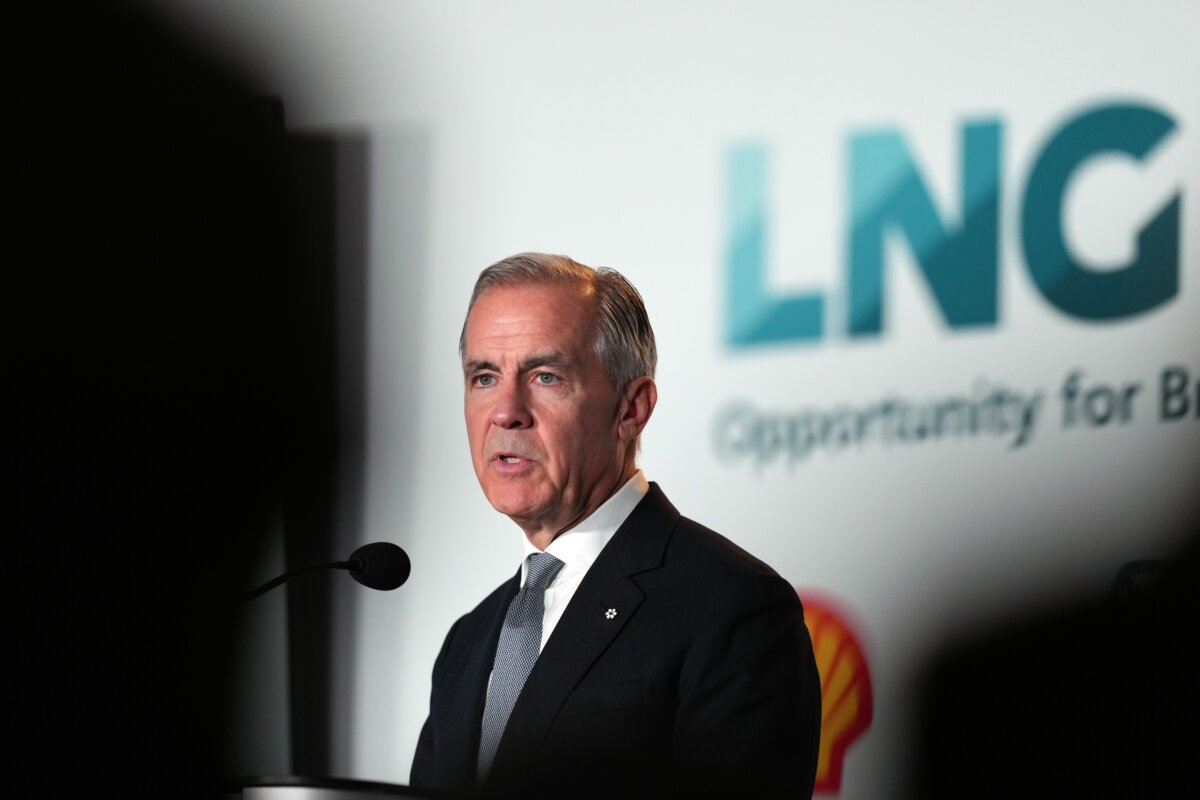
Carney also praised LNG Canada’s announcement of a final investment decision for its Phase Two expansion in northern B.C., saying Canada is “just getting started” and is “building big again.”
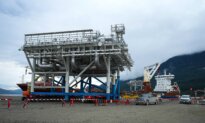
The Phase Two expansion of the facility at Kitimat, B.C., will double its capacity from 14 million tonnes of liquefied natural gas per year to 28 million tonnes, with commercial operations expected to begin in the early 2030s, according to LNG Canada.
“We’re building big, building fast, and crucially, as everyone has emphasized, building in the right way, working together, working for all Canadians, and we are just getting started,” Carney said at the announcement in Vancouver on Sept. 29. “Canada is working. Canada is building big again,” he added.
Those in attendance at the event included B.C. NDP Leader David Eby, LNG Canada CEO Chris Cooper, Haisla Nation elected Chief Councillor Maureen Nyce, and representatives of the five partners in the project: Shell, Petronas, PetroChina, Mitsubishi Corporation, and Korea Gas Corporation.
Ottawa says the expansion is expected to attract roughly $33 billion in private-sector capital and will be the second-largest LNG facility in the world.
During his remarks, Carney touted the role of the Major Projects Office (MPO), which was launched in August 2025. The project was referred to the MPO on Sept. 11, 2025, and was one of the first major projects referred to the newly created office.
“The speed of this project shows that now, when Canadians want something built, we get it built,” he said, adding “Twelve months from referral to final investment decision is the pace that this pivotal moment in Canada’s history demands.”
Conservative Leader Pierre Poilievre welcomed the expansion announcement, saying on Sept. 29 that it was “long-delayed good news,” but argued that the project received its permit a decade ago under former prime minister Stephen Harper and was delayed by what he called “bad Liberal policies.”
“Over the same period, the U.S. built, not announced but built, 9 LNG terminals. Germany built an LNG import terminal in 194 days,” Poilievre said on social media, adding that Prime Minister Mark Carney should “explain why it took him so long to do so little.”
The Canadian Press contributed to this report.
 Friends Read Free
Copy
Facebook
Tweet
Friends Read Free
Copy
Facebook
Tweet