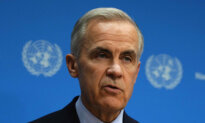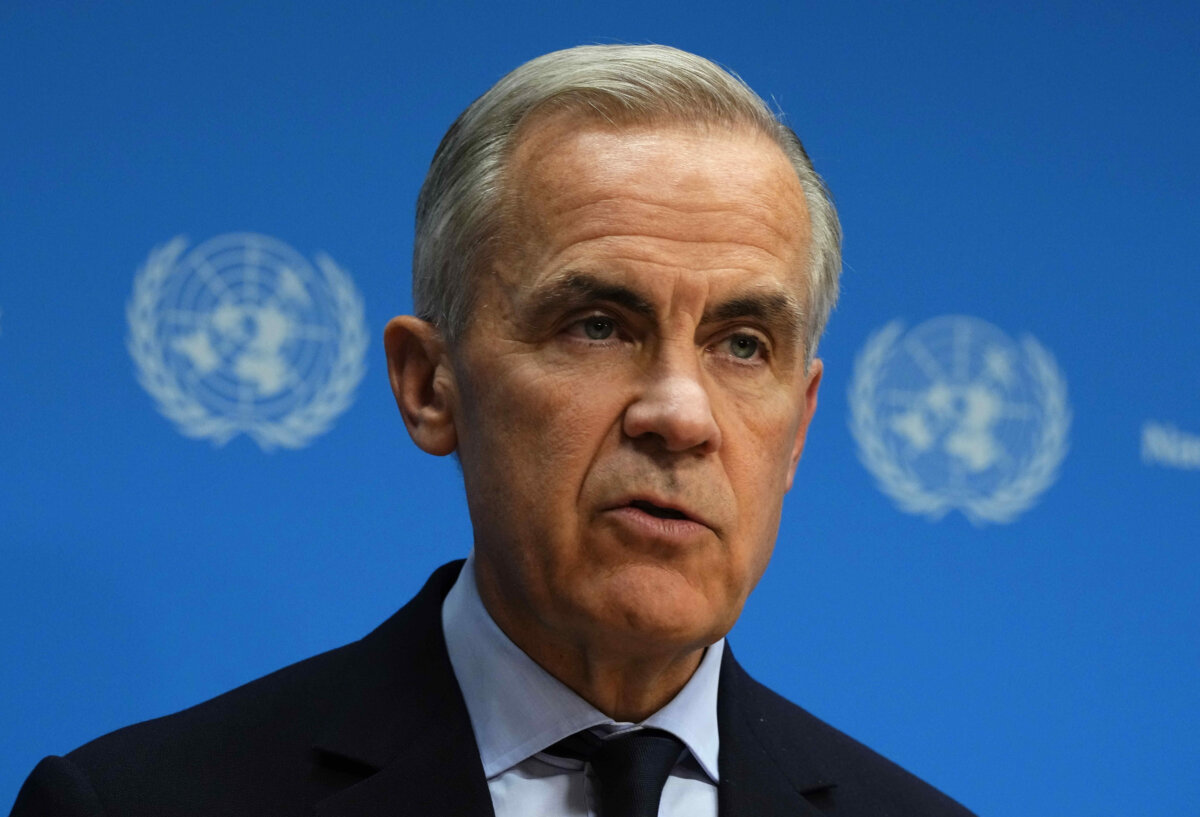

Prime Minister Mark Carney says he has reviewed scenarios involving possible U.S.-led military action on Canadian soil.
He made the comments in an extensive interview with the New York Times while he was in New York this week. Carney declined to elaborate on the specifics of the review, but implied it would be reckless to remain unprepared for what he described as “extreme tail risk.”
“I think you have a responsibility in these roles to look at extreme tail risk,” Carney said. “That’s just risk management. That’s not a base case, but it would be irresponsible not to.”
U.S. President Donald Trump has frequently made posts on social media about Canada merging with the United States as its “51st state.” When asked by reporters if he would use military force, Trump said he wouldn’t, saying in January 2025 that he would employ “economic force” as a tool to encourage Canadian integration into the United States.
Canada and the United States are partners in NORAD, a binational military organization responsible for the defence of North America. They are also both members of NATO and the Five Eyes intelligence alliance.
Despite trade talks collapsing at the end of August, Carney told the Times that he and Trump continue to speak “frequently.” He told reporters last month that he speaks to Trump on a regular basis and the two leaders “compartmentalize” and work together to deal with global issues like the war in Ukraine.
Carney also discussed Canada’s strategy during the Times interview to decrease its dependence on Elon Musk’s Starlink satellite internet service.
Starlink is the sixth-largest internet service provider in Canada with roughly 400,000 subscribers. Its satellite service is widely used in rural and remote areas where terrestrial broadband options are limited.
Ontario cancelled its $100 million Starlink contract in July 2025 as part of a series of retaliatory measures over U.S. tariffs. All other provinces and territories continue to use Starlink for rural and remote connectivity.
Carney also told the Times that Canada is considering alternatives to purchasing American F-35 fighter jets.
The Liberal government announced in 2023 its decision to procure 88 F-35 jets from Lockheed Martin at a cost of about US$85 million each to replace Canada’s aging CF-18 Hornet fleet. Canada is legally committed under the contract to purchasing the first 16 aircraft, while Carney ordered a review of the broader procurement in March 2025 as trade tensions with the United States were escalating. The review remains ongoing.
U.S. Ambassador Pete Hoekstra has warned that changing or abandoning Canada’s planned purchase of 88 F-35s could alter the NORAD partnership, saying the United States would likely need to deploy more of its own fighter jets into Canadian airspace to fill the resulting capability gap.
Carney and Trump did not meet while attending the 81st session of the United Nations General Assembly in New York City this week. The trip marked Carney’s first visit to the United States since the collapse of trade negotiations last month.
The Canadian Press contributed to this report.
 Friends Read Free
Copy
Facebook
Tweet
Friends Read Free
Copy
Facebook
Tweet