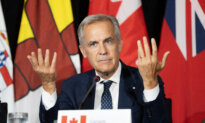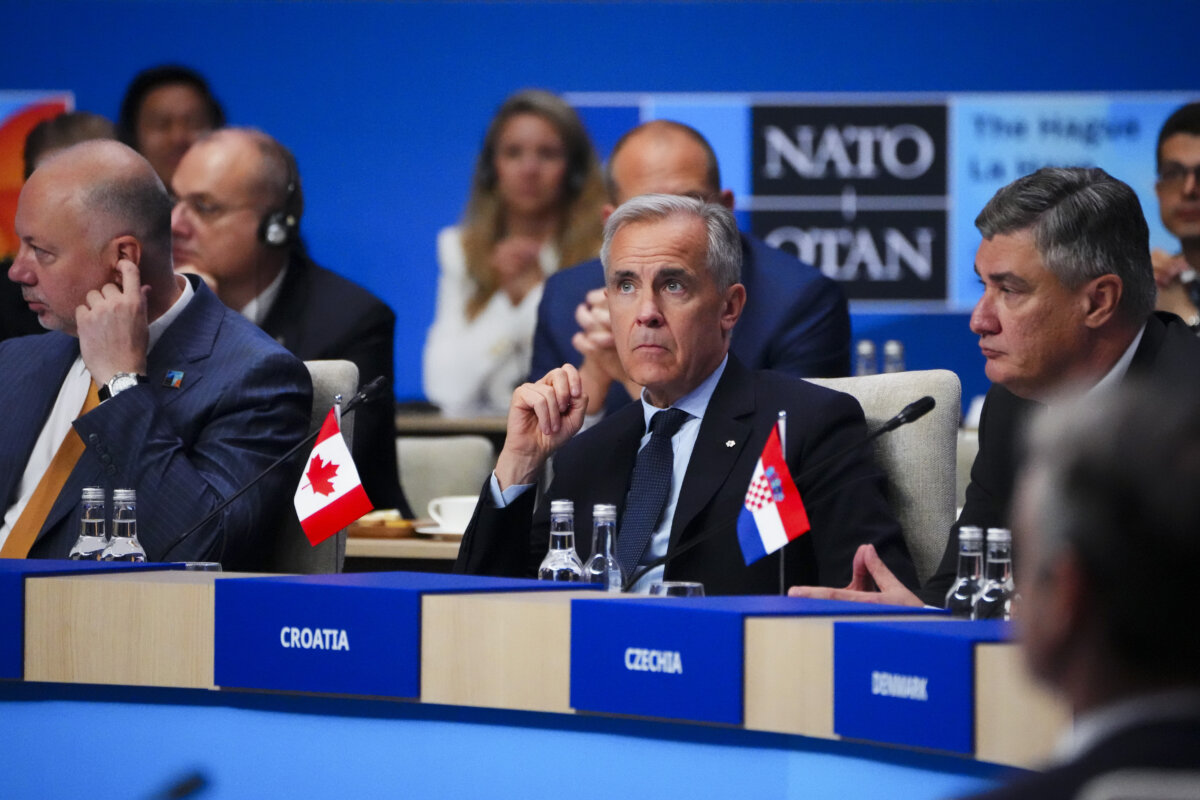

Prime Minister Mark Carney says Ottawa’s plans to massively increase defence spending is not to please “NATO accountants” but to protect Canadians against new threats.
“With advanced missile capacities, we can no longer rely on our geography to protect us as the global landscape shifts,” Carney said during a press conference after the conclusion of the NATO summit in The Hague on June 25.
The prime minister cited the need for Canada to assert its sovereignty in a changing Arctic, and to meet the challenge of rapid advances in cyber capabilities, artificial intelligence, and quantum computing.
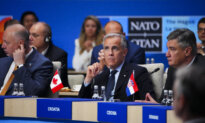
Carney spoke to reporters after meeting with other leaders of NATO countries, who agreed at the summit to raise the military alliance’s defence spending target from 2 percent to 5 percent of GDP. The alliance has set the requirement to reach the target by 2035.
The leaders cited the need to increase defence spending in a joint declaration, saying the alliance faces “profound security threats and challenges,” including from Russia and terrorism.
The increase could be a challenge for Canada, which had never met the previous target of 2 percent. According to the latest NATO estimates, Canada spent 1.45 percent of its GDP on defence in 2024.
Carney had announced earlier this month that an increase of $9 billion in defence spending in this fiscal year would bring Canada to the 2 percent target.
The new 5 percent NATO guideline is split into two, with 3.5 percent reserved for core defence spending and 1.5 percent of spending for items related to defence such as critical infrastructure, civil preparedness, cyber defence, and bolstering the industrial base.
Carney told CNN before the summit that meeting the new NATO guideline would represent a yearly defence budget of $150 billion.
The prime minister said at the press conference that reaching the new target will be achievable given Canada is already investing in areas which fall under the 1.5 percent spending category related to infrastructure and domestic industrial advances.
Carney said spending on ports, transportation infrastructure, the development of critical minerals, and telecommunications is contributing to building the country’s resilience.
“We’re going to do a more proper accounting of that and a more strategic set of investments in that,” Carney said. “So the overall context of the net increase in defence spending is much less than the headline, from 2 to 5 [percent].”
With the sizeable increase in defence spending coming at a time when Ottawa is running significant deficits and increasing national debt, the prime minister said political support and social licence must “absolutely” be established to proceed.
“We’re focused on the outcome, the result, protecting Canadians. We’re driven by that, not by—with all due respect sitting in the NATO building—by NATO accountants,” Carney said, noting that a review would be conducted in 2029 to assess the progress on the new defence pledge.
The increase in spending will be slow at first, said the prime minister, citing the need to increase Canada’s industrial base to help meet the objectives. He also said that defence investments will go further than what is contained in the Liberal Party’s election platform, which he noted related to spending in the “low twos,” in percent of GDP. “So there’s additional capacities that would need to be developed,” he said.
Carney announced on June 9 that Canada would reach NATO’s 2 percent target this year, with new spending including measures to increase recruitment and retention, such as increasing troops’ salaries and bolstering the civilian defence workforce to untie soldiers for more operational tasks. Other major spending is being put towards repair and maintainence of military equipment and infrastructure.
NATO countries agreed to increase defence spending amid a prolonged war in Ukraine and pressure from the current and previous Trump administrations.
NATO Secretary-General Mark Rutte credited U.S. President Donald Trump for having alliance members on track to reach the 2 percent target this year and agreeing to raise the bar to 5 percent.
“Would you ever think that this would be the result of this summit if he would not have been re-elected president?” Rutte said, also questioning whether the remaining countries not meeting the NATO target would have pledged to reach it this year if it weren’t for Trump.
 Friends Read Free
Copy
Facebook
Tweet
Friends Read Free
Copy
Facebook
Tweet