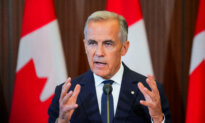

Prime Minister Mark Carney’s office says public servants have corrected information tabled in the House of Commons that indicated the prime minister did not “proactively” raise the issue of human rights during discussions with Chinese officials in January.
“The parliamentary return in question was submitted in error,” said a spokesperson for Carney’s office.
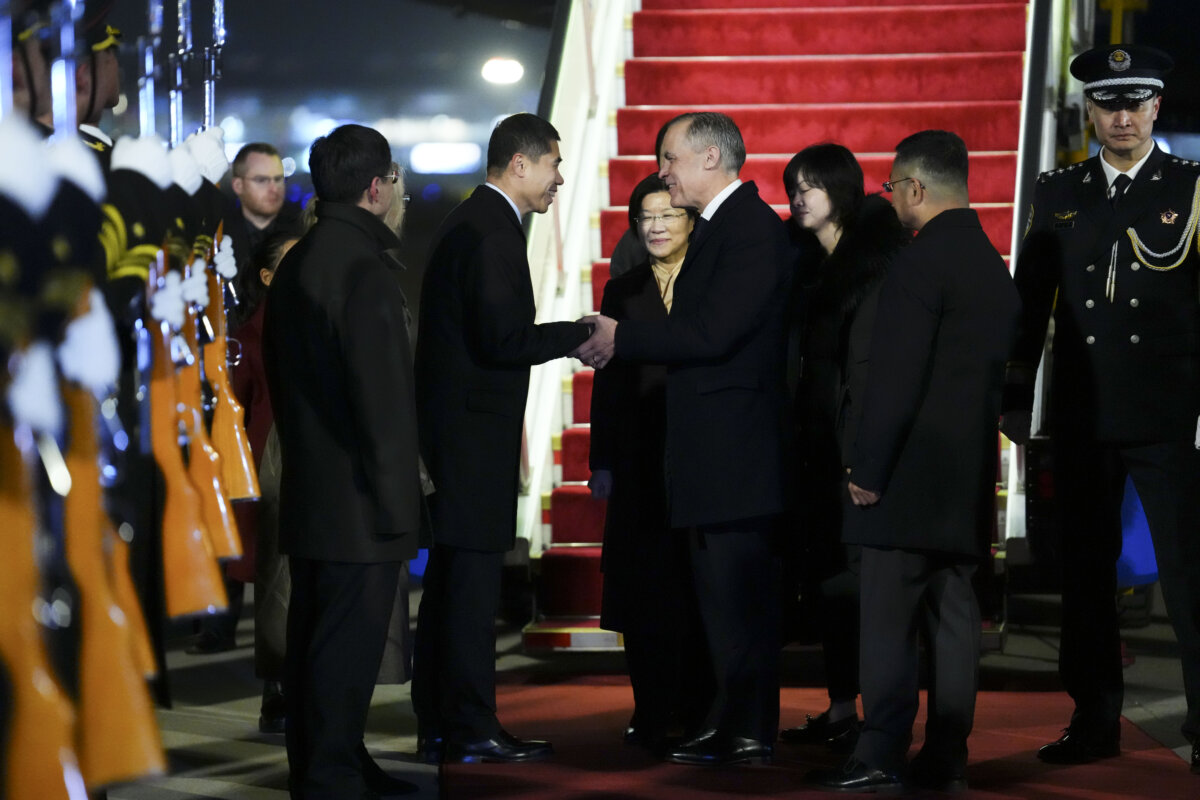
Carney told reporters in Beijing on Jan. 16 that he raised the issue of human rights in his discussions with Chinese officials during his trip to China. However, the Privy Council Office, which provides public service support to the prime minister, tabled a document in the House of Commons on March 13 that said the topics of human rights and foreign interference “were not brought up proactively by the Canadian Prime Minister.”
The document was tabled in response to a Jan. 26 request from Conservative MP Ned Kuruc, who was seeking details on which meetings during Carney’s trip included discussions of human rights or foreign interference.
Carney’s office said on March 23 that the information was “retabled” in the House of Commons that afternoon.
“While in Beijing, Canada’s position on areas of concern, including human rights, were raised proactively at multiple levels, including by the prime minister with his counterparts,” the spokesperson said. “Canada and China are building a bilateral framework to standardize engagements and address areas of concern pragmatically.”
The original document tabled by the Privy Council Office indicated Foreign Affairs Minister Anita Anand had discussed “sensitive issues such as human rights and foreign interference” with her Chinese counterpart during the trip.
The issue of human rights discussions in China was brought up during question period in the House of Commons on March 23, with Kuruc saying the prime minister “has been caught misleading Canadians.”
“After his trip to Beijing, he claimed human rights violations and foreign interference were discussed in meetings with CCP [Chinese Communist Party] leaders,” Kuruc said. “However, the government documents I requested revealed that neither of these topics were discussed in any of the bilateral meetings.”
He added, “Today, the Prime Minister is trying to change his story yet again. Canadians want to know: Why can the Prime Minister not stick to his story?”
Anand responded that the parliamentary return was “submitted in error and will be corrected at the earliest opportunity.” She said the prime minister “has been clear” that the issue of human rights was “raised proactively at multiple levels” during the trip by both Carney and his counterparts, but did not specify when or with which Chinese officials Carney raised the issue.
“I want to emphasize that Canada is a world leader in advancing human rights and the rules-based international order,” Anand added.
The Privy Council document indicated Carney met with Chinese leader Xi Jinping on Jan. 16 for approximately two hours, and had a luncheon. It also listed a private meeting with Chinese Premier Li Qiang and several meetings with executives from Chinese businesses.
Ottawa–Beijing Relations
When a reporter asked Carney on Jan. 16 if concerns about human rights and freedom of expression are things Canada “just can’t afford to think about because we’ve got to diversify our markets,” Carney responded, “no.”
“Look, we fundamentally stand up for human rights. We stand up for democracy, territorial integrity, rights to self-determination,” Carney said. “We take the world as it is, not as we wish it to be,” he added, noting that this means Canada calibrates its engagement with countries “depending on our values and interests.”
Carney had also said he discussed foreign interference when he met with Xi during their first formal meeting at the Asia-Pacific Economic Cooperation forum in South Korea last October.
“I don’t think they recognize the level of concerns we have about these issues,” Carney told reporters the day after the meeting. “But we manage these issues in Canada; we have a structure to manage them.”
Carney had said during the 2025 election campaign last April that China was the “biggest security threat” to Canada and “one of the largest threats with respect to foreign interference.” His remarks followed heightened concerns about foreign interference and transnational repression by China in recent years, with a public inquiry looking into the topic extensively.
Meanwhile, during his trip to China in January, he said Ottawa and Beijing were in a “strategic partnership” and relations between the two countries had entered a “new era.”
When asked by reporters on Jan. 16 whether he still believes China poses the biggest security threat to Canada, Carney said the “security landscape continues to change” and the government is managing threats by building resilience and security, and through alliances and engagement.
The Canadian Press contributed to this report.
 Friends Read Free
Copy
Facebook
Tweet
Friends Read Free
Copy
Facebook
Tweet