

Nationals Senator Bridget McKenzie has voiced her strong support for cash amid the dramatic decline of the once-mainstream payment method.
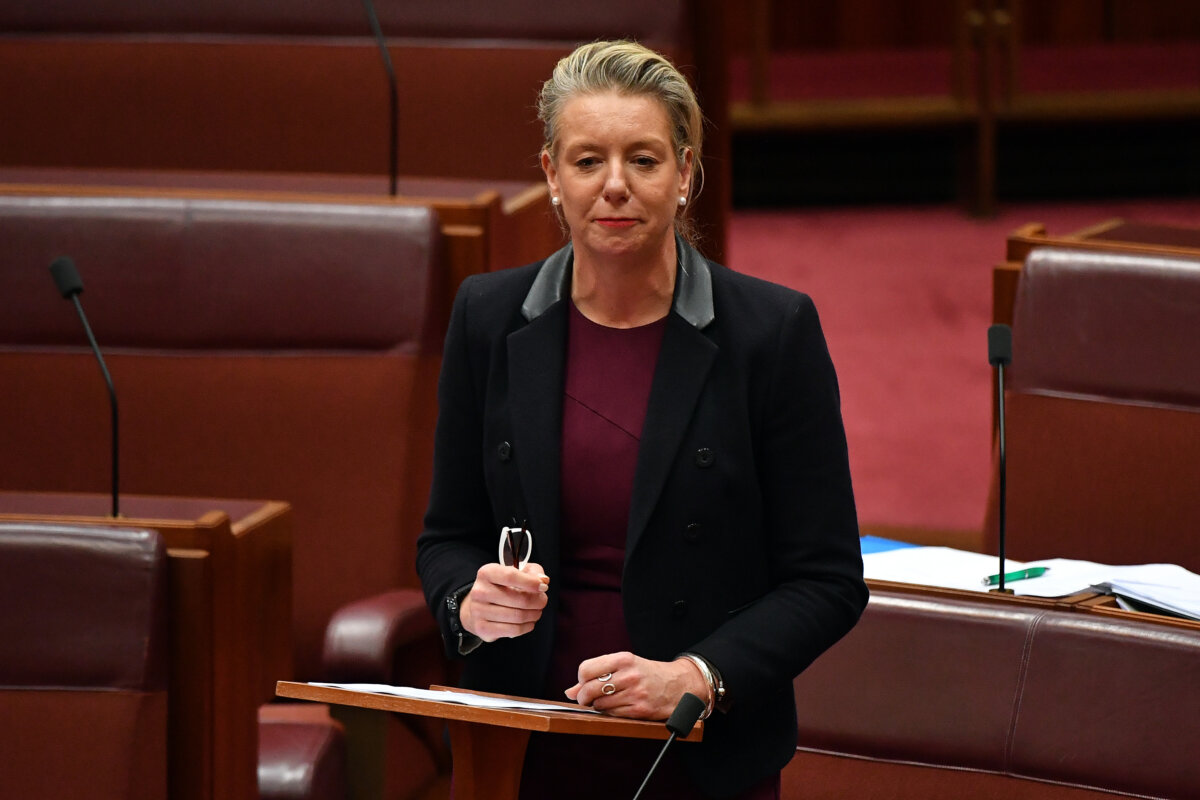
At a recent Senate sitting, McKenzie highlighted the popularity of cashless payments in the Australian economy, saying it has shifted from mere convenience to something more far-reaching.
“We all know the feeling of tapping a card or waving your phone at the checkout. It’s fast, it’s convenient, and it’s become the norm,” she said.
“Somewhere along the line, convenience has become compulsion.”
However, the senator noted that cashless payments are not foolproof and subject to a wide range of risks.
“In a cashless world, risk shifts silently. Once, banks bore responsibility for safeguarding our deposits and ensuring access. Now the risk sits with the user: the consumer [has to] navigate outages, identity theft, data breaches, algorithmic errors, and service fees,” she said.
“When your bank card is frozen and your e-wallet malfunctions or your app is hacked, you’re the one that’s left stranded.”
Cash Is Still King: Senator
McKenzie then pointed out that cash does not have many of the vulnerabilities of cashless payment systems.
“When you hold cash in your hand, you’ve got a failsafe,” she said.
“Cash doesn’t crash. Cash is absolutely King. Cash doesn’t need an update. Cash works when the system doesn’t.”
Apart from being a reliable payment method, McKenzie said cash played the role of “a great equaliser.”
“[It] doesn’t ask any questions about who you are, where you live, how good your credit rating is, what gender you are,” she said.
“For elderly Australians and those in remote communities and those who simply prefer privacy, cash remains a lifeline.
“Without it, millions are left being excluded from everyday life, not through choice, but through quiet coercion of no cash acceptance.”
At the same time, the senator noted that cash is not merely a means of payment but is also tied to Australia’s sovereign values.
“Our Australian notes and coins are more than a payment method. It is legal tender in this country, backed by the Commonwealth, issued by the Reserve Bank, and guaranteed by the Crown,” she said.
“It carries not only monetary values, but sovereign values. It remains a symbol of trust between citizens and the state.
“When that physical connection is lost, we surrender more than convenience. We surrender control.”
McKenzie then called on the Labor federal government to protect cash transactions.
The Decline of Cash Transactions
McKenzie’s remarks came as Australia continues to see a drop in cash use among the population.
According to a report released by the Reserve Bank of Australia (RBA) early this year, cash transactions plunged from 70 percent in 2007 to just 13 percent in 2022.
In addition, only 7 percent of Australians are now classified as “high cash users,” people who rely on cash for at least 80 percent of their in-person transactions.
During an inquiry hearing, RBA Governor Michele Bullock forecast that cash would only last for another 10 years amid the rise of other digital payment methods.
While the governor emphasised that the RBA was committed to supporting cash as “a viable means of payment for as long as Australians want or need to use cash,” she said doing so imposed significant costs on the system.
“It’s becoming more expensive to store, process, and distribute cash around the country,” she said.
Bullock also admitted that the RBA had no solution to ensure long-term cash distribution in the economy.
“The bottom line [with] cash distribution is someone is going to [pay],” she said.
“If you don’t want the consumers to pay, then someone has to pay, and it’s going to be difficult to figure out how it is subsidised.”
 Friends Read Free
Copy
Facebook
Tweet
Friends Read Free
Copy
Facebook
Tweet