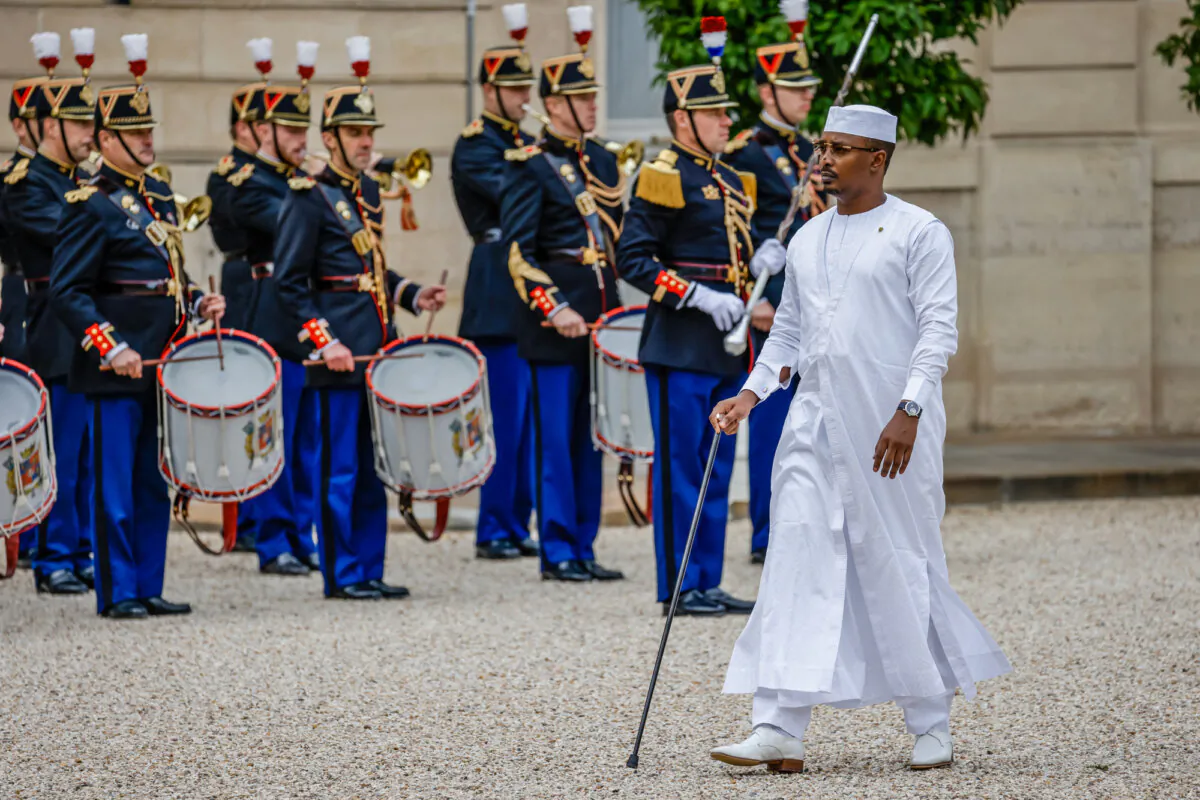

Chadian President Mahamat Idriss Deby said on June 5 that he had ordered his government to stop issuing visas to U.S. citizens after the Trump administration imposed a travel ban on Chadian nationals.
Chad was among the 12 nations named in President Donald Trump’s June 4 proclamation, which barred their citizens from entering the United States over national security concerns. The proclamation, which took effect on June 9, cited these nations as being “deficient with regards to screening and vetting.”
The proclamation cites Chad’s high visa overstay rates in 2022 and 2023 as “unacceptable,” saying that they showed “a blatant disregard” for United States immigration laws.
In response to the travel ban, Deby announced that his nation would suspend the issuance of visas to U.S. nationals “in accordance with the principles of reciprocity.”
“Chad has neither planes to offer, nor billions of dollars to give but Chad has its dignity and pride,” the Chadian president stated in a Facebook post.
It remains unclear if the directive will impact visas already issued to U.S. nationals. Other nations included in Trump’s travel ban are Afghanistan, Equatorial Guinea, Eritrea, Haiti, Iran, Libya, Burma (also known as Myanmar), the Republic of the Congo, Somalia, Sudan, and Yemen.
Trump also imposed a partial travel ban on nationals from seven countries—Burundi, Cuba, Laos, Sierra Leone, Togo, Turkmenistan, and Venezuela—allowing entry of lawful permanent residents of the United States, existing visa holders, individuals in certain visa categories, and those whose entry would “serve U.S. national interests.”
“It is the policy of the United States to protect its citizens from terrorist attacks and other national security or public-safety threats,” the proclamation reads. “Screening and vetting protocols and procedures associated with visa adjudications and other immigration processes play a critical role in implementing that policy.”
Sierra Leone’s information minister, Chernor Bah, said that his nation is committed to addressing the issues that led to the ban, stating that his government will work with U.S. authorities “to ensure progress.”
Thierry Moungalla, spokesperson for the government of the Republic of the Congo, said he believes that his country was included in the travel ban because of a “misunderstanding” related to an armed attack in the United States, in which the perpetrators were “mistaken” as being from the Republic of the Congo.
“So we think that this is a misunderstanding and I believe that in the coming hours, the competent diplomatic services of the government will contact the American authorities here,” he said.
The African Union Commission issued a statement on June 5, calling on the Trump administration to engage in “constructive dialogue” with the affected countries.
It warned that the travel ban could negatively impact people-to-people ties, educational exchange, commercial engagement, and diplomatic relations between the United States and the African continent.
“While recognising the sovereign right of all nations to protect their borders and ensure the security of their citizens, the African Union Commission respectfully appeals to the United States to exercise this right in a manner that is balanced, evidence-based, and reflective of the long-standing partnership between the United States and Africa,” it stated.
The Associated Press contributed to this report.
 Friends Read Free
Copy
Facebook
Tweet
Friends Read Free
Copy
Facebook
Tweet