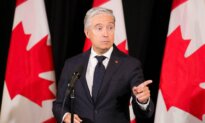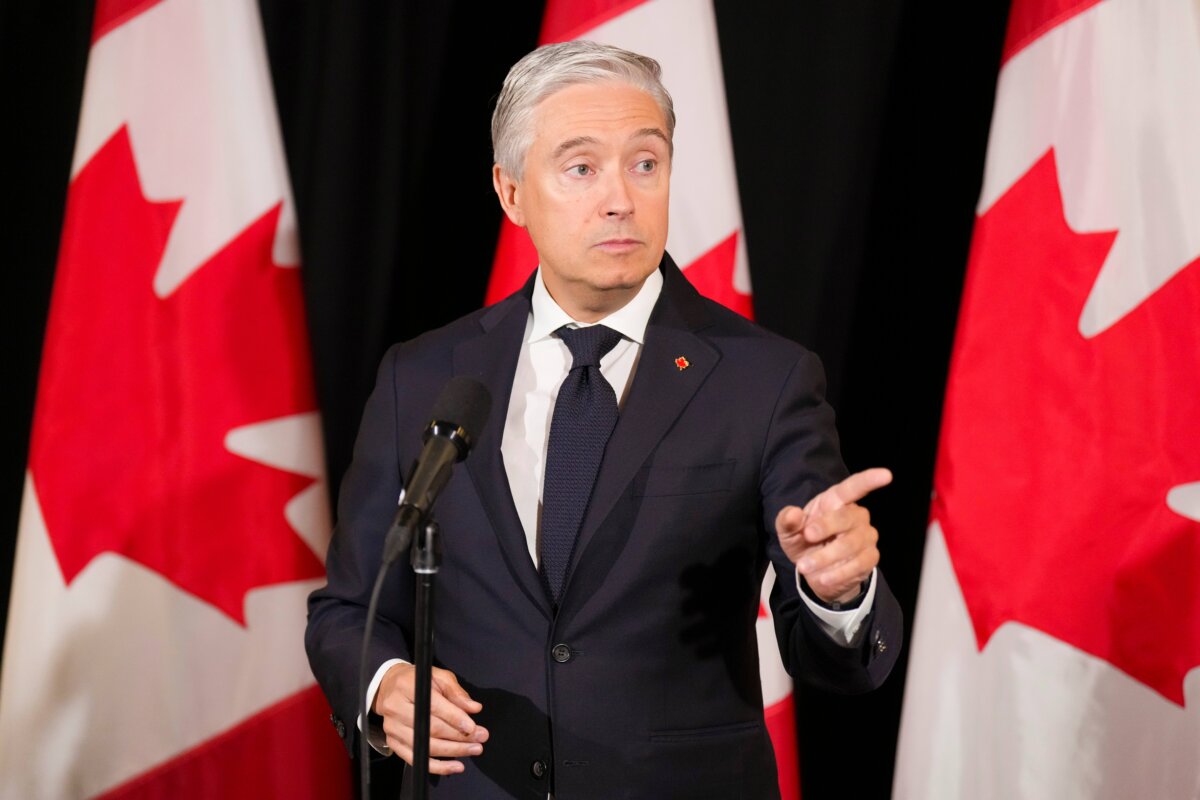

Finance Minister François-Philippe Champagne said G7 countries need a common approach to facing some of China’s trade practices as Ottawa increases interactions with Beijing.
Champagne made the comment during a call with reporters from Berlin on Dec. 17, at the end of a European trip with stops in Paris and London to meet with officials and business leaders.
This came as Canadian officials are doing groundwork for Prime Minister Mark Carney’s upcoming visit to China, with his parliamentary secretary Liberal MP Kody Blois currently in Beijing.
“We have started to engage with China with eyes wide open,” Champagne said when asked about what discussions he had with his counterparts about China’s foreign and trade policies.
“We’re looking at ways where we can work together, and I think it’s a good thing,” he added. “At the same time, within the framework of the G7, we need to make sure that we have a common approach when it comes to non-market practices, over-capacity, which are affecting the G7 economies.”
Canada–China relations were frozen in late 2018 when Canada executed a U.S. extradition warrant for Huawei executive Meng Wanzhou, accused of fraud. In apparent response, Beijing arbitrarily detained Canadians Michael Kovrig and Michael Spavor for more than 1,000 days.
These events led to Ottawa hardening its stance toward Beijing, including by putting roadblocks to Chinese investments in Canada.
As minister of industry at the time, Champagne oversaw policy and legislative changes to make it harder for state-owned enterprises to acquire stakes in Canadian companies.
A policy change to protect critical minerals was implemented in October 2022 under the Investment Canada Act, with Champagne’s department noting that state-owned enterprises “can be motivated by non-commercial imperatives that are contrary to Canada’s interests.”
This change was followed by amendments to the Investment Canada Act by way of Bill C-34, adopted by Parliament in March 2024. The bill tightened rules around foreign investments by, in part, providing expanded powers to cabinet to review commercial deals on national security grounds.
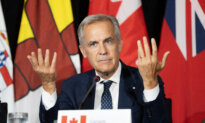
Prime Minister Mark Carney has overseen the rapprochement with China since taking office, which culminated in a meeting with Chinese leader Xi Jinping in South Korea in late October.
A few days before the meeting, he was asked by reporters whether he’s considering loosening some of the restrictions on Chinese investment put in place by the Trudeau government.
“There were greater restrictions that were in place given other issues in the relationship,” Carney said without elaborating.
“We’re starting from a very low base, and we can move quite substantially before we start to get to sensitive areas,” he added, alluding to the previously frozen relations and potential cooperation in sectors not impacting national security.
Carney noted that progress could be made on the issue of travel, given Beijing had blocked organized tour groups from visiting Canada. This restriction was lifted after the Carney-Xi meeting.
The countries remain engaged in a trade conflict, with Beijing targeting Canadian agricultural and seafood products in March, after Ottawa placed tariffs on Chinese electric vehicles, steel, and aluminum in October 2024.
China watchers have warned against Canada getting closer to Beijing.
“The PRC government, Chinese Communist Party, is the biggest transnational organized crime group ever seen in the world today, bar none,” former RCMP investigator and chief anti-money laundering officer Garry Clement said during a Dec. 6 forum event at Toronto City Hall.
Critical Minerals
As Ottawa seeks closer ties with Beijing amid a push to diversify trade, the plan of the previous government to focus on the development of the critical minerals sector has remained in place.
Ottawa says the move is necessary to develop alternative supply chains given China controls much of the market for the raw materials crucial to make anything from communications devices to military hardware.
The current Liberal government’s interest on the matter has taken shape through the recent referral of several mining projects to the Major Projects Office for steering.
Champagne said discussions about critical minerals took place with German partners but no new agreements were announced. The minister has been touting Canada’s potential with many allies and said he believes the country has enough deposits to go around.
He said the Major Projects Office has been “matching demand and offer” and that Canada needs to “move from exploration to extraction and refining, so that we do more in the value chain.”
A concern with the development of new mines has been commodity prices, given China could decide to lower prices to hurt competitors.
This issue was raised this week by Canada-U.S. Trade Minister Dominic LeBlanc when addressing why the Sisson Mine project for tungsten has not gone forward for 10 years despite getting cleared by governments.
“China has a dominant position in the global marketplace for this critical mineral,” LeBlanc said. “That’s not in Canada’s national security interest to be dependent on other countries in a disproportionate way, and you can imagine that’s also true for allies in Europe, in the United States, [and] other allies of Canada.”
The Sisson Mine project in New Brunswick was referred earlier this year to the Major Projects Office, which LeBlanc oversees. He said the Office is working with the mine’s proponents to “figure out the right series of financial instruments necessary to allow an investment decision of hundreds of millions of dollars of private capital to begin.”
“Understandably, the shareholders of these companies want the right series of assurances, reliable assurances, that China is not simply going to cut the price once the mine goes into production, to make sure that it then is no longer viable,” LeBlanc said.
 Friends Read Free
Copy
Facebook
Tweet
Friends Read Free
Copy
Facebook
Tweet