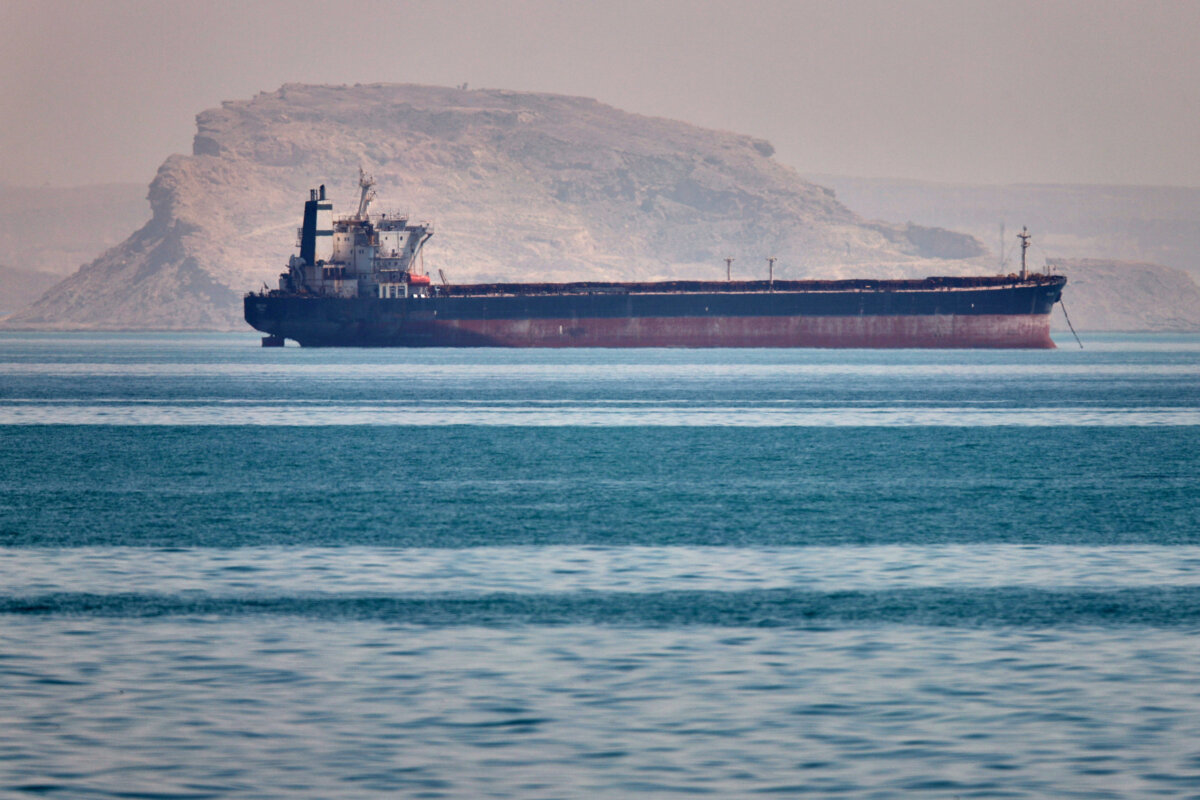

A Chinese-owned oil tanker was attacked by Iran near the Strait of Hormuz on May 4, as the United States paused its mission to protect commercial ships in the strait.
Analysts told The Epoch Times the strike shows that the Iranian military’s command system is fragmented, and that they don’t really trust the Chinese communist regime as an ally, while the United States is preserving its military power to face China in the Asia-Pacific.
Major Chinese financial media outlet Caixin reported on May 7 that a Chinese-owned large oil tanker was attacked on May 4 off the coast of the United Arab Emirates’ Port of Fujairah, located on the Gulf of Oman, just outside the Strait of Hormuz, causing a fire on the deck of the vessel. The ship was marked “CHINA OWNER & CREW.” This is the first instance of a Chinese-owned oil tanker being attacked, according to Caixin.
Later on May 7, U.S. Ambassador to the United Nations Mike Waltz posted on X, “Confirmed. Chinese owned ship struck by Iran in the Strait of Hormuz.”
Chinese Foreign Ministry spokesperson Lin Jian responded to the incident at a regular press conference on May 8, saying that the vessel involved in the attack is flagged in the Marshall Islands and carries Chinese crew members. The vessel has not reported any crew casualties.
The ship is the Marshall Islands-flagged oil products and chemical tanker JV Innovation, which reported a fire on deck to nearby ships on Monday, according to Reuters.
Meanwhile, U.S. President Donald Trump said on May 5 that he would briefly pause “Project Freedom,” a U.S. military operation intended to guide commercial ships through the Strait of Hormuz, just two days after its launch.
The strike came just a day before the Iranian regime’s foreign minister Abbas Araghchi’s visit to Beijing to seek help, which took place May 5–6. Araghchi had a meeting with Chinese Foreign Minister Wang Yi on May 6.
The Chinese regime is the main supporter of the Iranian regime, as it’s at the core of the “axis of evil” of China, Iran, Russia, and North Korea. China buys more than 80 percent of Iran’s shipped oil, which is a major source of revenue for the Iranian regime.
Why Attack a Chinese Oil Tanker?
The Iranian regime’s attack on a Chinese oil tanker shows that currently, Iran is essentially in a state where various factions are acting independently, Mark Cao, a U.S.-based military analyst and host of Chinese-language military news YouTube channel Mark Space, told The Epoch Times.
“There are already numerous conflicts between the Islamic Revolutionary Guard Corps (IRGC) and the civilian government. Furthermore, compounded by the Mosaic Warfare adopted by the Iranian regime at the time, lower-level commanders within the IRGC were granted the authority to launch attacks on their own initiative. Actually, they were operating without central control,” he said.
To prepare for U.S. strikes, Iran has implemented a “Mosaic Warfare” strategy, which has decentralized decision-making authority down to lower-echelon military units, rather than having orders issued directly by the supreme leader or the highest leadership of the IRGC, Cao explained.
“The regime divided Iran into 31 smaller operational zones. If the upper echelon were to be decapitated or eliminated, the lower-tier units can independently decide to launch attacks,” he said. “Currently, IRGC is in a relatively dispersed state.”
The theocratic Iranian regime fundamentally distrusts the CCP, a Marxist-Leninist atheist organization, according to Cao. “Some of the low-level IRGC military commanders do not view the CCP as a genuine ally.”
“In fact, they feel that it’s a betrayal of Iran that the CCP hasn’t stepped forward to support Iran militarily to this day,” he said.
They harbor deep animosity toward the CCP specifically because it exploited the opportunity of Iran being sanctioned by the West to purchase vast quantities of Iranian oil at extremely low prices, Cao said.
“In other words, the CCP capitalized on Iran’s plight to make a massive fortune. That is why they targeted Chinese oil tankers,” he said.
Many “teapot,” smaller and independent, refineries in China have been buying sanctioned Iranian oil at a significantly lower price than the standard market price.
Because of the sanctions, Iran has almost no other buyers other than China, so it is at a disadvantage on pricing. In 2024, a senior official from the Iran Chamber of Commerce called the China–Iran trade relationship a “19th-century colonial trap,” saying that China also “dictates how payments are made.”
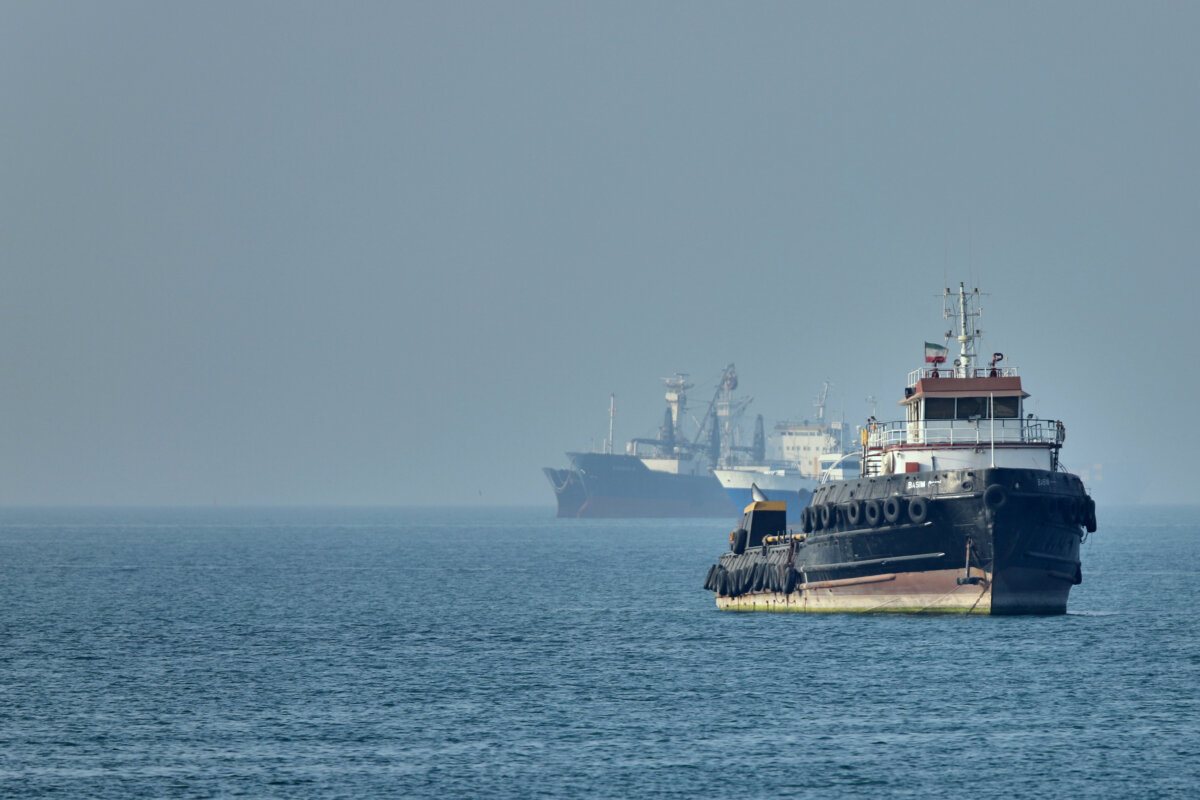
Previously, the Iranian regime blocked two Chinese container ships from leaving the Gulf through the Strait of Hormuz in late March.
Araghchi’s recent visit to Beijing did not achieve what he wanted in his talks with Wang Yi, said Su Tzu-yun, researcher and director of the Division of Defense Strategy and Resources at Taiwan’s Institute for National Defense and Security Research.
“This is because Wang Yi’s stance was that the war must end soon, implicitly suggesting that Iran accept the U.S. terms. Nor did Araghchi receive any assistance during his previous visit to Moscow,” he told The Epoch Times.
What’s Next
Although the Chinese tanker being attacked by Iran is somewhat embarrassing for Beijing, “the most critical priority right now for the Chinese regime is ensuring the continued survival of the Iranian regime; for the CCP, this constitutes its paramount interest,” Cao said.
So, the CCP will continue to provide diplomatic and economic support to Iran, he said.
Soon after Trump paused ship-protection provided by the U.S. military at the Strait of Hormuz, Iran attacked three U.S. naval ships. U.S. military launched retaliatory strikes on Iranian military facilities on May 7, and, as of May 8 the two sides have continued to exchange fire at the strait.
Trump said that despite the exchange of fire, the ceasefire still holds.
Iran has certainly conveyed a very strong message to Trump through its attacks, Cao said. “When the United States launched a naval escort operation, it effectively stripped Iran of its leverage, which is holding the Strait of Hormuz hostage. That’s why Iran reacted to it with violence, then negotiations won’t be able to continue.”
“As for Trump, he does not wish to resolve this situation solely through military action; rather, he prefers to seek a resolution through diplomatic means,” he said of Trump’s pause of Project Freedom.
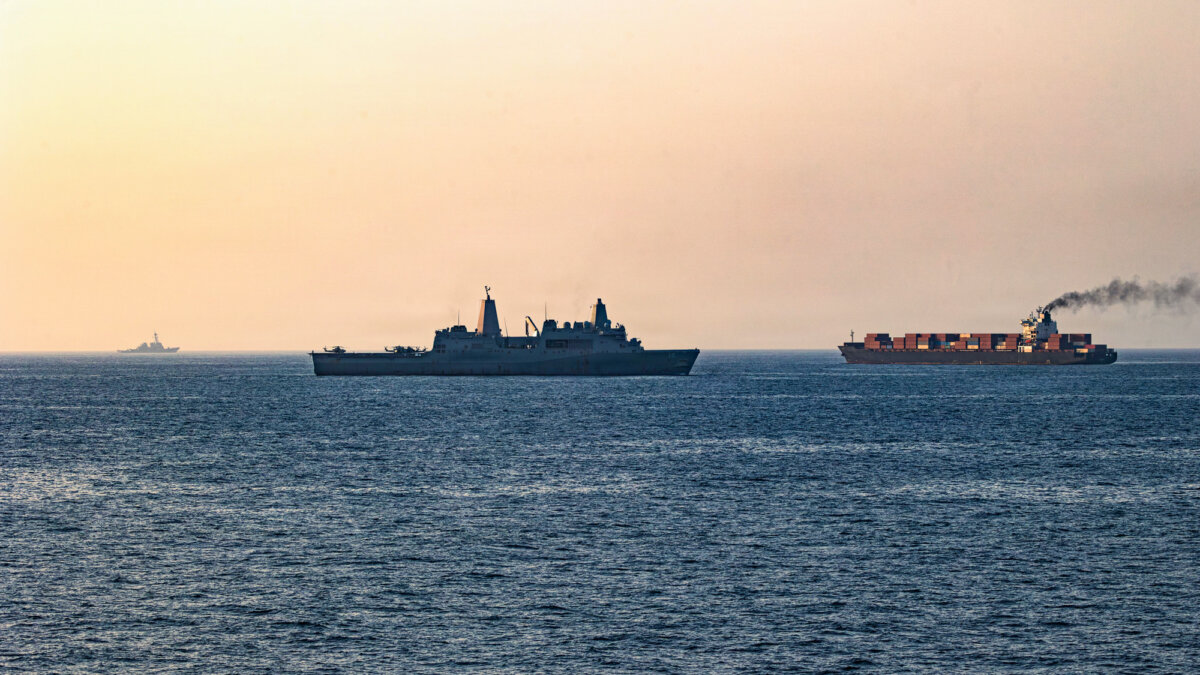
This is quite a masterstroke of diplomacy by Trump, Su said.
“When Araghchi went to Beijing for help, Trump suspended the escort mission in the strait, leaving it up to other nations—particularly China—to decide for themselves whether or not they will cooperate with the United States,” he said. “After all, beyond the cutoff of Iranian oil, oil supplies from other sources—ranging from Saudi Arabia to Qatar—would also be unable to get out, consequently, the Chinese communist regime’s domestic demand would go unmet, whereas the United States possesses ample oil reserves of its own.”
“Trump may hold more bargaining chips when he meets with Xi Jinping in Beijing in mid-May,” Su said.
The U.S. retaliatory strike on Iran for its attack on U.S. Navy ships is a single, tactical strike, which doesn’t mean that the war will continue, Su said.
Keeping U.S. military pressure on Iran is to force it to come back to the negotiating table, Cao said.
The United States wouldn’t go “all in” to remove the Iranian regime, as the CCP is the bigger threat to deal with, according to Cao.
“The United States cannot afford to expend all of its military equipment, weaponry, and ammunition on the battlefields of the Middle East, as they must retain a portion for the Indo-Pacific region to counter the threat posed by the CCP, because the CCP represents the far greater threat,” he said.
Through the strikes to achieve the core objectives regarding Iran—preventing Iran from having nuclear weapons and dismantling its military capabilities—the United States hopes to have a period of peace in the Middle East, thereby freeing up resources to focus primarily on countering the CCP, Cao said.
“For the United States, it’s the priority in managing the broader global strategic landscape.”
Su shares a similar assessment. After achieving the objectives in Iran, “the United States can then focus its efforts on Beijing,” he said.
Luo Ya and Reuters contributed to this report.
 Friends Read Free
Copy
Facebook
Tweet
Friends Read Free
Copy
Facebook
Tweet