
Iran has rejected Beijing’s attempt to play the mediator role in the war and its request for safe passage of Chinese cargo ships through the Strait of Hormuz, according to insiders in China’s diplomatic circles who spoke to The Epoch Times.
Sun Min, an insider in diplomatic circles who used a pseudonym out of fear of reprisal, told The Epoch Times that Beijing originally planned to leverage its special relationship with the Iranian regime to act as a key mediator in the conflict between the United States and Iran, thereby seeking to secure leadership over the “global south”—developing countries in Africa, Latin America, and Asia. However, Iran rejected the idea, according to Sun.
Contrary to external perceptions of close cooperation between the Iranian, Chinese, and Russian regimes, China and Russia actually have conflicting motives regarding Iran, Sun said. Both Beijing and Moscow are attempting to use Iran as a “bargaining chip” to trade for concessions with the United States and alleviate their own diplomatic pressures, according to Sun.
Both the Chinese Communist Party (CCP) and Russian leaders have been offering advice to Iran, yet Tehran refuses to accept any diplomatic arrangements, Sun said.
“Iran’s core demand is now unequivocally clear, which is to seek substantive military assistance, not diplomatic rhetoric,” Sun said.
This places Beijing in a dilemma, according to Sun.
“Providing military aid to Iran would trigger a full-blown confrontation with the United States and its allies; conversely, refusing to do so would mean completely forfeiting its influence over the Iranian regime,” Sun said.
Qin, an independent scholar in China who gave only his surname out of fear of reprisal, told The Epoch Times that this is the inevitable blowback from the CCP’s “Wolf Warrior diplomacy” and its mindset of “bloc confrontation” against the West.
“Beijing has long covertly propped up regional disruptors—such as Iran—to counterbalance the United States, attempting to employ the strategic maneuver of distraction; yet, it failed to anticipate that the situation would spiral out of its control,” Qin said.
Supply Chain Breaking Down
Soon after the Iran war broke out on Feb. 28, the Iranian regime blocked the Strait of Hormuz, firing at commercial cargo ships and oil tankers. The blockade has driven up international oil prices and the cost of logistics, triggering a devastating rupture in China’s export supply chains.
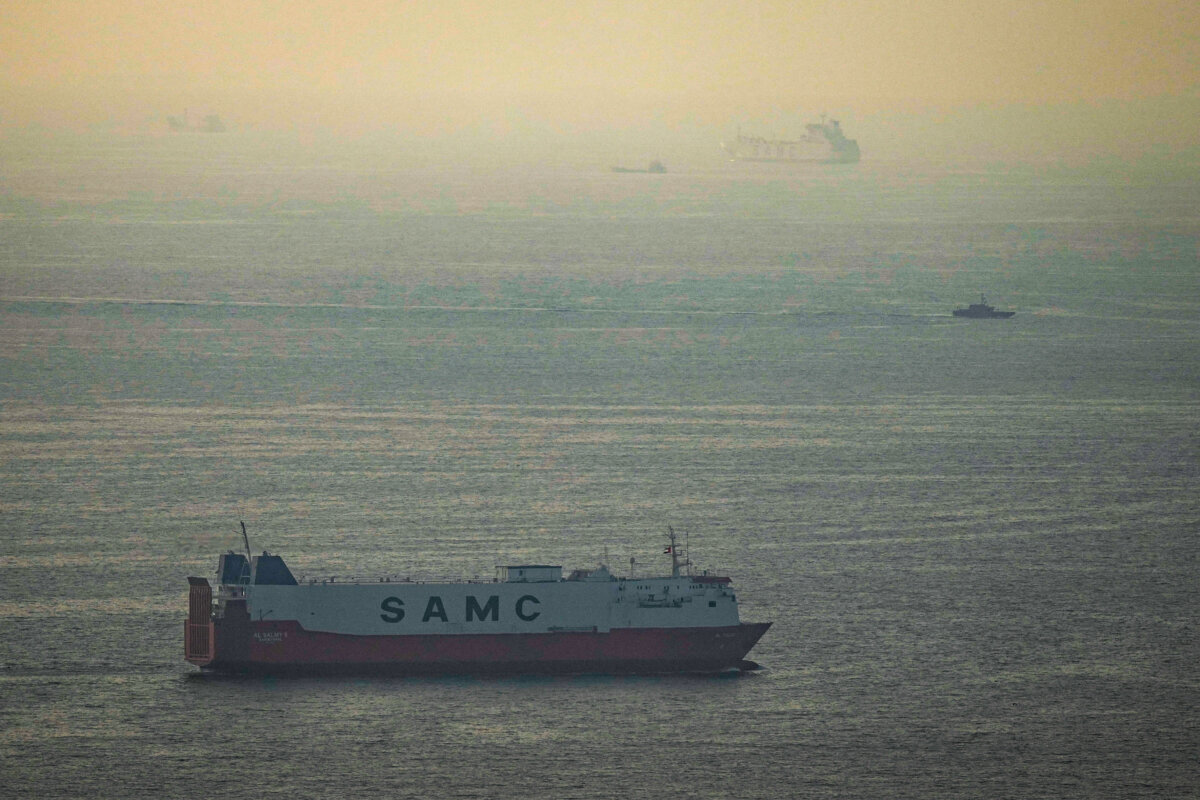
Although the Iranian regime said it would allow Chinese ships to pass through, two Chinese container ships had to turn back after trying to exit the Gulf via the strait on March 27.
Wang Ruolin, an insider close to the Chinese Ministry of Foreign Affairs, also used a pseudonym out of fear of reprisal. Wang told The Epoch Times that China’s foreign minister has repeatedly been instructed by CCP leader Xi Jinping to communicate with the Iranian foreign ministry “with the core objective of ensuring the maritime safety of Chinese commercial vessels.”
“However, Iran’s response was disheartening, as Tehran stated that they could only guarantee the safety of ‘some’ of the cargo bound for Iran,” Wang said.
Wang said this “selected safety” guarantee is Iran’s “soft blackmail” in response to Beijing’s refusal to provide military aid.
“Iran is leveraging this as a threat to coerce Beijing into making a fateful choice between providing substantive military support and ensuring safety of its trade interests,” he said. “Consequently … repeated attempts at secret mediation have proven entirely futile.”
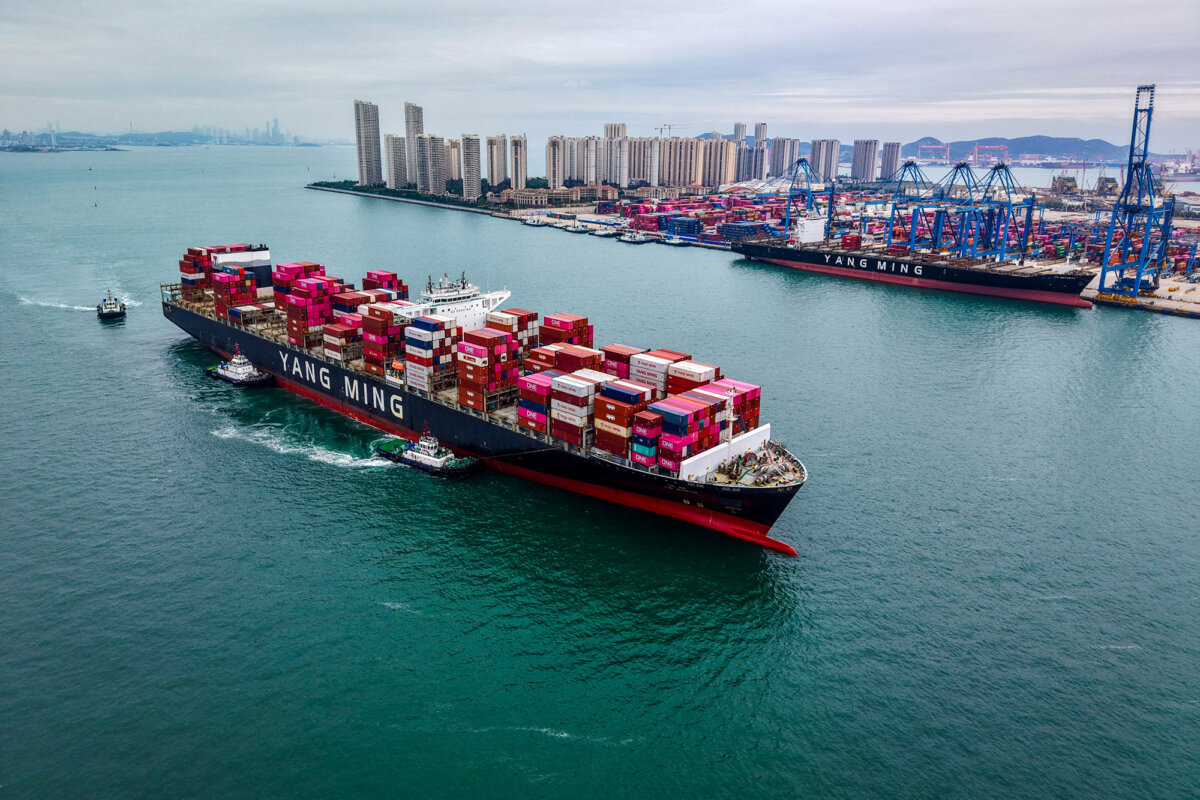
The blocking of the strait has already hurt the Chinese economy, driving up prices for chemicals, pig feed, and grains, while the Chinese regime’s state-owned oil enterprises use the conflict as a pretext for raising prices. China’s export sectors have been hit especially hard.
Zeng, the head of a private, Shenzhen-based appliance manufacturer exporting to the Middle East who gave only her last name out of fear of reprisal, told The Epoch Times: “We currently have five containers sitting stalled at the port, completely unable to be shipped out.
“This batch of goods was custom-made to Middle Eastern specifications, making it difficult to reroute the orders; our cash flow has already completely broken down.”
To her knowledge, in Guangdong Province alone, thousands of containers remain stranded because of the blockade. Consequently, numerous factories are facing disrupted order deliveries and hindered cash flow and have been forced to halt production.
Guan, a coordinator within China’s foreign trade sector who gave only her last name out of fear of reprisal, told The Epoch Times that the Iran war has exacted the heaviest toll on China’s manufacturing industry.
“Artillery shells have no eyes; shipping and insurance costs are skyrocketing,” she said. “The only wish enterprises have right now is for a cease-fire; otherwise, China’s export system faces structural collapse.”
Qin said this situation shows that “the CCP leadership has fallen into a predicament of its own making within the arena of international geopolitics; the very forces it has propped up are now severing its own economic lifelines.”
The shutdown of the strait represents “not only a disruption of global logistics, but the epitome of the total collapse of the CCP’s geopolitical strategic framework,” he said.
Wu Fei and Reuters contributed to this report.
 Friends Read Free
Copy
Facebook
Tweet
Friends Read Free
Copy
Facebook
Tweet