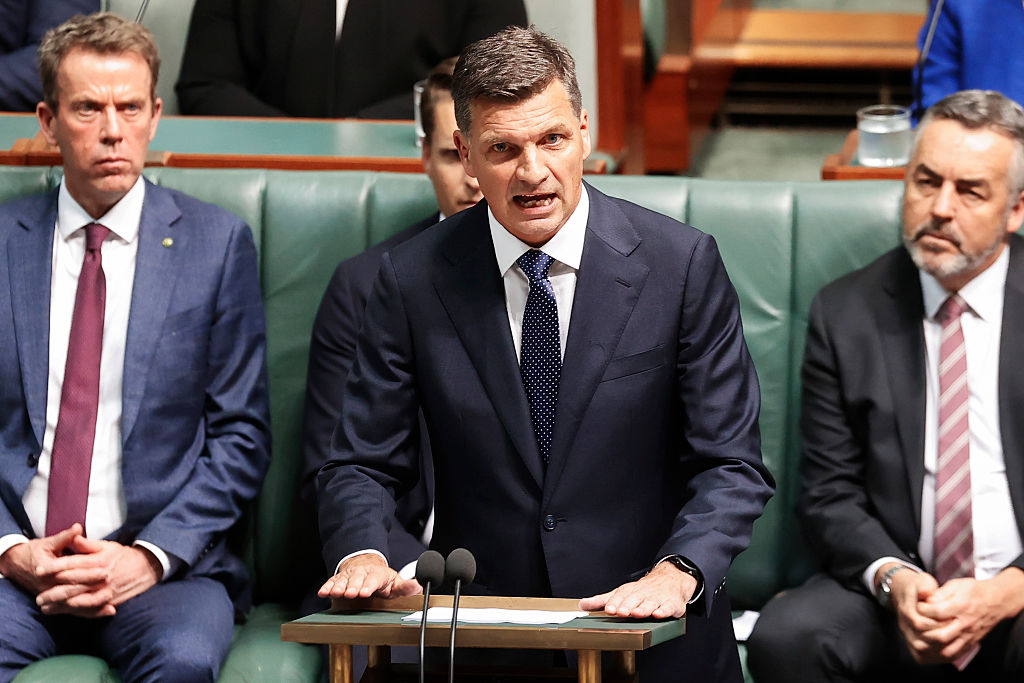

The Coalition has formally declared it will vote against Labor’s proposed changes to capital gains tax (CGT) and negative gearing, while backing the government’s income tax cuts and workplace deduction measures.
During a debate on the Treasury Laws Amendment (Tax Reform No. 1) Bill 2026, introduced to Parliament on May 28, Opposition Leader Angus Taylor outlined amendments to remove Labor’s property tax measures while retaining the rest of the legislation.
“Labor’s $250 (US$179) annual income tax cut stays in the bill, we support it. We seek to retain Schedule Three, Labor’s $1,000 deduction for work-related expenses also stays in the bill. We support that as well, but we oppose Labor’s toxic taxes on Australians,” he told Parliament.
Taylor said the Coalition would vote against Labor’s proposed changes to capital gains tax (CGT).
“These changes punish aspiration and the Coalition, therefore, seeks the removal of schedule one from the bill,” he said.
Under the current system, investors who hold an asset for more than 12 months generally receive a 50 percent discount on capital gains tax when they sell it. Labor’s proposal would replace that discount with a new inflation-linked model for future gains.
The legislation would also limit negative gearing to newly built homes, allowing investors to claim tax deductions on losses only for investments that add to housing supply.
In addition, discretionary and family trusts would face a minimum 30 percent tax rate on retained income under the government’s proposed reforms.
Taylor argued the changes would discourage investment and reduce housing supply.
“We also don’t support Labor’s changes to negative gearing. Their own budget papers explicitly admit that the combined impact on these taxes will reduce housing supply,” he said.
The legislation is expected to pass the House of Representatives, where Labor holds a majority. However, its fate in the Senate remains uncertain, with the government needing support from the Greens and crossbench senators to secure passage.
Treasurer Rejects Claims of Excessive Powers
Taylor also accused the government of handing too much power to Treasurer Jim Chalmers through the legislation.
He argued that key details, including which properties qualify as new homes for negative gearing purposes and how some tax provisions would operate, could be determined by ministerial decisions rather than Parliament.
“In effect, the treasurer can decide what’s going to be affected and who is going to be affected, and more importantly, who will not be. This is absolutely outrageous,” Taylor said.
Chalmers rejected the criticism, saying it is “not unusual for tax laws to work this way, or for definitions to be finalised in legislative instruments.”
“Those legislative instruments often can be disallowed by the parliament,” he told reporters during a press conference on June 2.
The treasurer also clarified how the proposed negative gearing rules would operate, saying investors who fund genuinely new housing projects would be able to choose between the existing 50 percent CGT discount and the new inflation-linked approach.
“So the examples that we have used are: investors in new apartment developments and subdivisions will get the choice of discount, but not if it’s a simple knockdown-rebuild or a renovation,” he said.
Moreover, Chalmers said the government’s tax package had been designed as a single reform package because savings from the property tax changes would help fund the income tax measures.
“The reason that they are in the same bill is because two of those measures pay for the other two in a package which is broadly neutral over the forward estimates, that’s why they are together,” he said.
 Friends Read Free
Copy
Facebook
Tweet
Friends Read Free
Copy
Facebook
Tweet