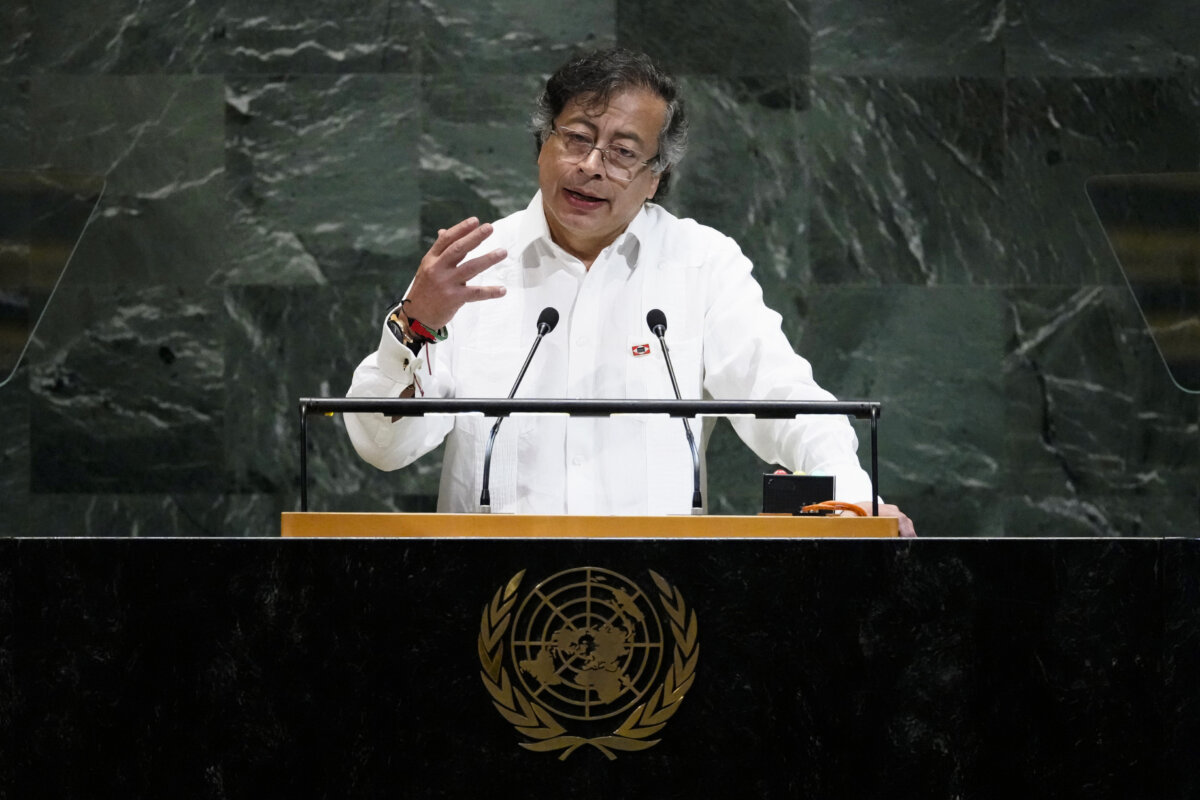
The Republic of Colombia on Oct. 20 recalled its U.S. ambassador amid an ongoing dispute between its president, Gustavo Petro, and U.S. President Donald Trump.
The recall occurred after Trump announced he was imposing new tariffs and cutting subsidies to Colombia in response to the country’s alleged acquiescence in illegal drug manufacturing within its borders and the transport of drugs to the United States.
“[Petro] is an illegal drug leader strongly encouraging the massive production of drugs, in big and small fields, all over Colombia,” Trump wrote on social media on Oct. 19.
The Colombian Embassy in the United States announced on social media: “The Ambassador of Colombia to the United States, Daniel García-Peña, has been recalled to Bogotá for consultations by President Gustavo Petro Urrego.
“The Government of Colombia will announce the corresponding decisions in due course.”
Countries traditionally recall ambassadors “for consultations” in order to signify their displeasure with the receiving country while maintaining diplomatic relations. The United States does not presently have a permanent ambassador in Colombia.
The U.S. chargé d’affaires—the senior official performing the duties of ambassador—in Colombia, Minister-Counselor John McNamara, had previously been recalled to Washington for consultations and returned to the country on July 9.
“[There are] concerns from my government [about] rhetoric and actions by the highest levels of the Colombian government that put at risk the historically close, mutually beneficial partnership between our two countries,” McNamara wrote in a statement on that date.
The United States and Colombia have had diplomatic relations since 1821, and the two countries worked together closely during the Cold War regarding military matters. The U.S. military trained the Military Forces of Colombia during their decades-long counterinsurgency against communist rebels. The Biden administration in 2022 designated Colombia as a “major non-NATO ally” of the United States.
Petro, who heads a left-wing political coalition, has criticized several actions of the Trump administration, including by suggesting it was “complicit in genocide” for supporting Israel during its war against the Hamas terrorist group in the Gaza Strip. The United States revoked Petro’s head-of-state A-1 visa for allegedly suggesting, during his visit to New York City in September, that U.S. military forces disobey orders from Trump.
In January, after Petro initially declined to accept Columbian citizen deportees, Trump threatened to impose steep tariffs on Colombian goods, ban travel by Columbian officials to the United States, and impose banking and financial sanctions on the country. Colombia later accepted Trump’s demands to accept the deportees.
 Friends Read Free
Copy
Facebook
Tweet
Friends Read Free
Copy
Facebook
Tweet