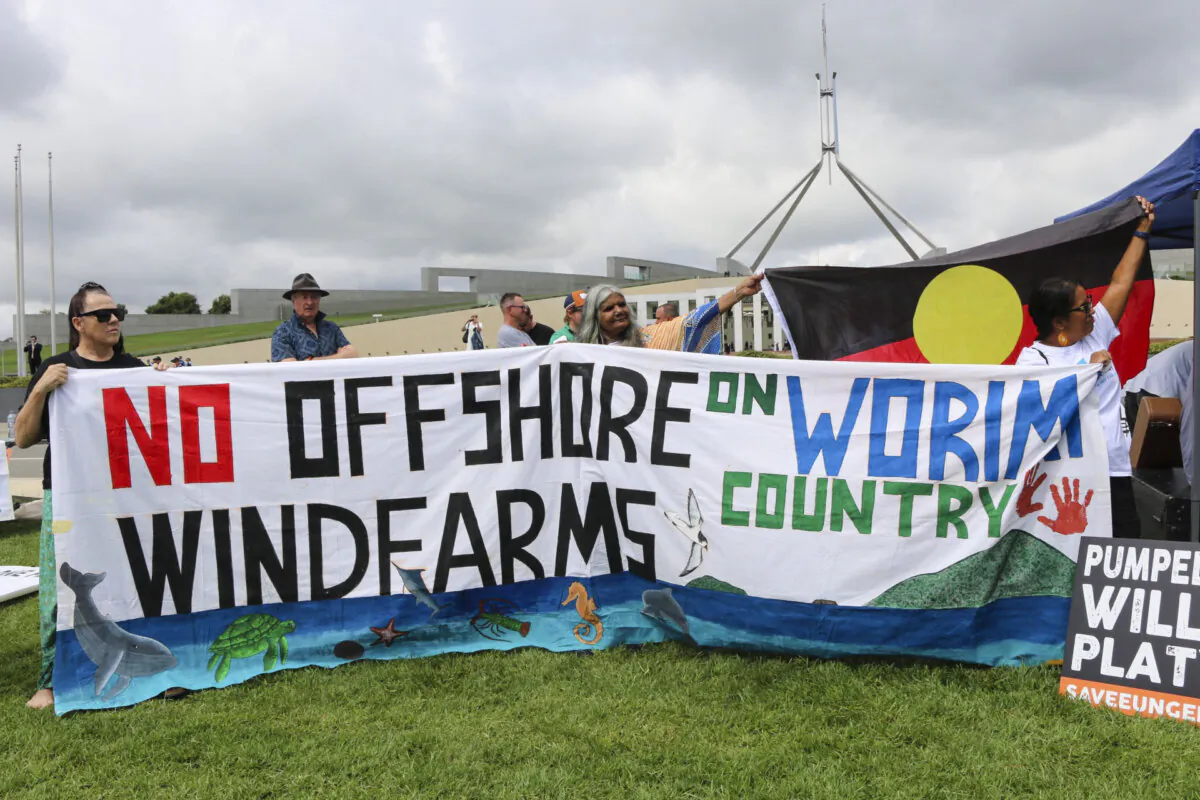

The push towards net zero has created widespread distrust among Australian communities toward renewable energy projects, developers, and the government.
This was the comment made by Australian Energy Infrastructure Commissioner Tony Mahar at a recent parliamentary inquiry into misinformation on climate change and energy.
Since its inception in 2015, the Australian Energy Infrastructure Commission (AEIC) has received over 1,000 complaints over large energy infrastructure projects.
The AEIC has also engaged extensively with communities affected by energy projects, holding around 330 meetings with relevant stakeholders, including landowners, community members, local industries, and Indigenous representatives, to understand and address their concerns.
However, Mahar noted that there was a common theme in the meetings he had attended.
“I think the trust issue is common across all of the complaints, and that relates to wind to solar, to batteries, to companies, to government,” he told the Select Committee on Information Integrity on Climate Change and Energy.
“The lack of trust is something that is common that I see across all of my interactions.”
Why the Lack of Trust Exists
The commissioner pointed out that the lack of trust stemmed from community members having access to numerous information sources with different views about the energy transition.
“What I’ve seen in my travels and my interactions with the community is that there’s a lot of noise, and people are unsure as to what to believe,” he said.
“[The information people receive comes from] the internet, through various social media platforms.
“They [people] are getting it from some of the [energy] companies. And some of the information is coming from governments—the commonwealth or state governments.”
Amid the influx of information about the renewable energy transition, Mahar said there was a risk of communities getting overloaded, resulting in lacklustre responses, which could affect the development of energy projects.
The commissioner then highlighted the need to provide people with “specific, targeted, absorbable, and consumable” information to help them deal with the “disruption” in their community.
While Mahar noted that the AEIC could serve as an independent and trusted source of information on issues such as decommissioning, fire risk, taxation, and insurance, he acknowledged the difficulty of this role given that people place their trust in different sources.
“Science and research and opinions change based on changes in technology and changes in information,” he said.
“So, from my office’s point of view, I would rely on trusted sources of information, [such as] science institutions, government institutions that are doing credible contemporary research and providing that information in a way that’s absorbable and consumable.”
Rating Scheme for Energy Companies
At the same time, Mahar informed the committee about the progress of the rating scheme for energy companies, which is under development by the federal government.
Its purpose is to improve the practice behaviour of energy developers, who often receive complaints from communities.
Mahar believes the rating scheme will take into account a company’s social licence, community engagement, transparency, and governance “so that the community can have a greater level of confidence that they [the companies] are an upstanding fine citizen in terms of the energy supply chain,” he said.
It will be built on the existing code of conduct and guidelines in the energy sector, but will provide a greater level of accountability and transparency.
“The developer rating scheme, in its best form, will bridge the gap between what the expectations are in the community and the behaviour of the energy companies,” he said.
Mahar noted that a pilot of the scheme has begun, with the program expected to be available next year.
 Friends Read Free
Copy
Facebook
Tweet
Friends Read Free
Copy
Facebook
Tweet