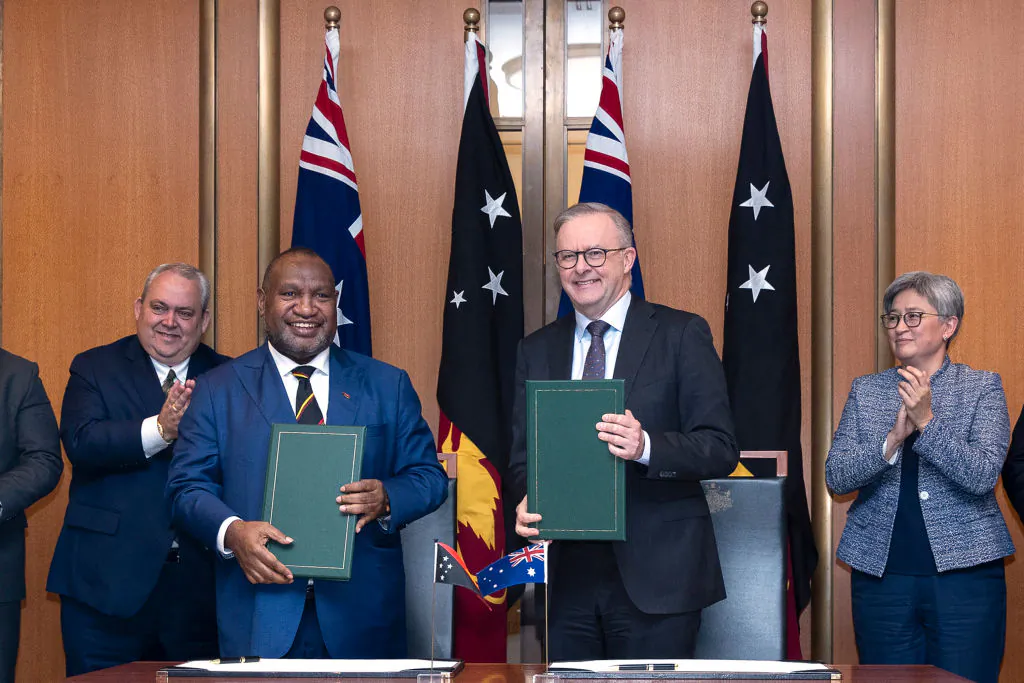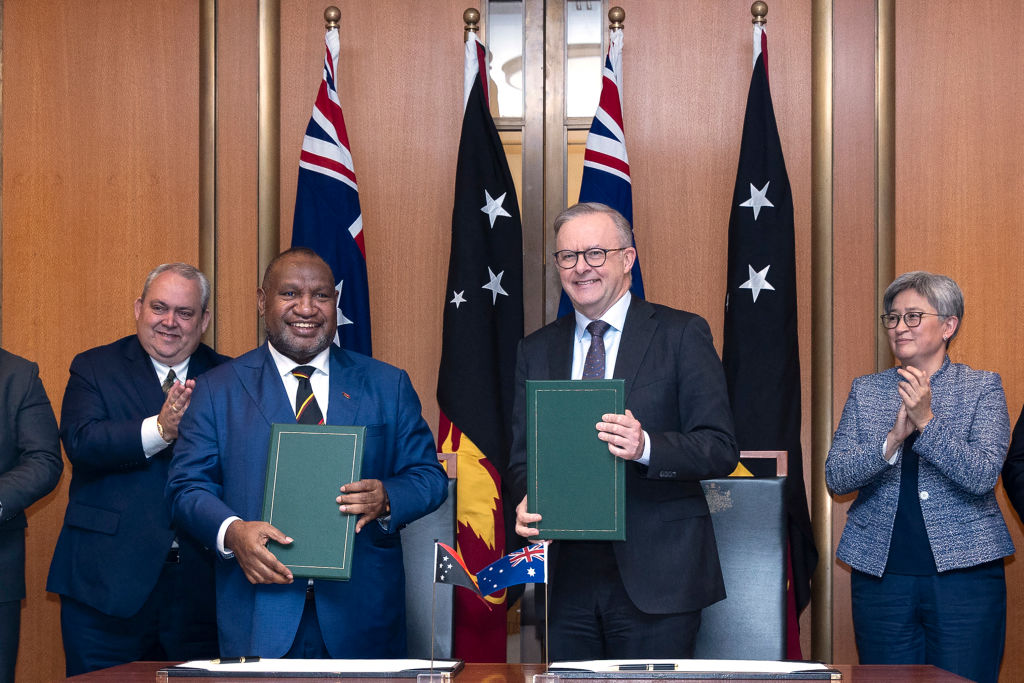

Australian Prime Minister Anthony Albanese is leaving Papua New Guinea (PNG) without the defence treaty he had hoped for after a confused and somewhat shambolic response derailed plans to have it signed while he was in the country to celebrate the 50th anniversary of its independence.
Instead, he and PNG Prime Minister James Marape have agreed to sign a communiqué agreeing to continue the negotiating process.
PNG’s cabinet will meet next week to consider the terms. It had planned to do so on Sept. 15, but lacked a quorum after ministers returned to their homes to take part in local celebrations.
That uncertainty continued through to Sept. 17, with gold pens being placed on the table at the press conference venue where the two prime ministers were scheduled to address the media, leading to speculation that it was to be a signing ceremony.
‘Which Treaty?’: PNG Foreign Minister
While a government source told reporters there is no major opposition to the treaty among senior ministers and should be ratified next week, PNG Foreign Minister Justin Tkatchenko, speaking to the ABC, expressed confusion about the treaty’s status.
“Well, you know, things take time,” he said. “We make sure things are done properly, to everybody’s benefit, long-term benefit, it’s all good.”
When asked if the cabinet had approved the treaty, he replied, “Which treaty?”
He described it as a “work in progress” and avoided answering questions about a timeline for its signing.
At a press conference on Sept. 17, Albanese played down the significance of the delay, describing the signing of the communique as a “historic step” forward.
“Australia and PNG are the closest of the neighbours,” he said.
“[From] Saibai Island, you can look across and see PNG literally,” he said. “We’re the truest of friends. We’re there for each other when times are tough, but we take pleasure and joy in each other’s achievements.”
Known as the Pukpuk Treaty—the Papua New Guinean pidgin word for crocodile—it would commit both countries to defend each other from a military attack on either territory and provide the Australian Defence Force (ADF) with free access to designated facilities and areas within Papua New Guinea.
It says both countries recognise an attack on either would be “dangerous to the other’s peace and security” and commits them to “act to meet the common danger.”
It would also implement the plan, announced earlier, for Australia and PNG to recruit citizens from each other’s countries into their defence forces, and would establish joint military exercises each year.
Before heading to PNG, Albanese described the treaty as a “very significant upgrade” in the defence relationship.
“It provides for mutual defence, which means that we will provide support for each other,” he said. “It provides for an integration of our interoperability of our assets and our respective defence forces.”
 Friends Read Free
Copy
Facebook
Tweet
Friends Read Free
Copy
Facebook
Tweet