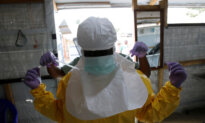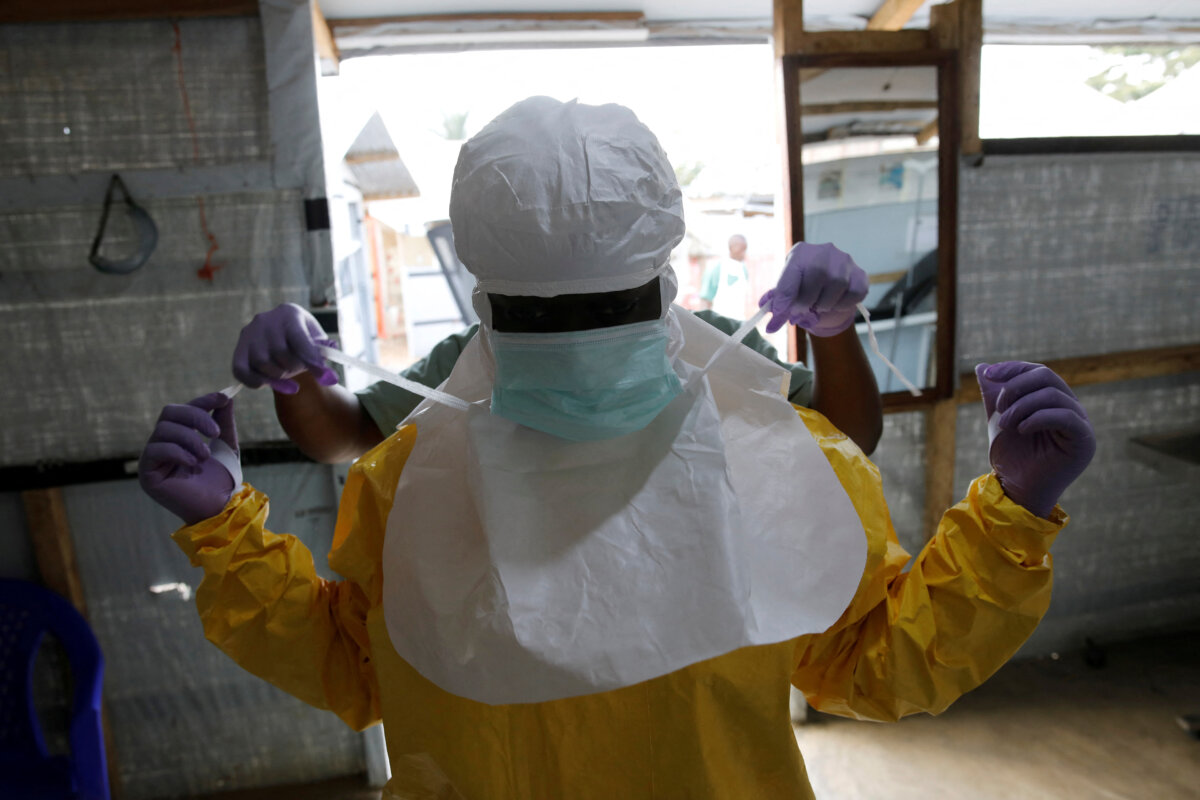

Health authorities in Congo have declared a new Ebola virus outbreak, reporting 15 deaths and 28 suspected cases since late August.
The epicenter of the outbreak is in Kasai Province, in the southwest of the equatorial African country, health officials said on Sept. 4. The first case was identified on Aug. 20 in a 34-year-old pregnant woman admitted to hospital with symptoms including high fever and vomiting.
The World Health Organization (WHO) has sent experts to support a Congolese rapid response team already on the ground.
“We’re acting with determination to rapidly halt the spread of the virus and protect communities,” WHO Regional Director for Africa Mohamed Janabi said.
Four health workers were among the 15 people who died, according to the WHO.
“Case numbers are likely to increase as the transmission is ongoing. Response teams and local teams will work to find the people who may be infected and need to receive care, to ensure everyone is protected as quickly as possible,” the WHO added in its statement.
Congo has a stockpile of Ebola treatments, including 2,000 doses of the Ervebo vaccine, which the WHO said “is effective to protect against this type of Ebola.”
The disease is one of the deadliest in the world, with a fatality rate as high as 90 percent.
Symptoms usually begin with fever, fatigue, sore throat, muscle pain, and headache, followed by vomiting, diarrhea, and internal and external bleeding. Ebola attacks the immune system and organs and can cause death through multi-organ failure and shock.
Scientists believe the virus originates in wild animals such as chimpanzees, gorillas, and bats, before spilling over into humans. The virus spreads through direct contact with the bodily fluids of people who are infected with the disease, or have died from it, putting health workers and family caregivers at greatest risk.
Ebola doesn’t travel through the air, which limits its transmission when proper health precautions are followed. Its rapid and deadly impact on the human body can also shorten the window of transmission, making it harder for the virus to spread following an outbreak.
There are two antibody treatments for Ebola virus disease that prevent the virus’s entry into cells.
According to the Centers for Disease Control and Prevention, patients have a much better chance of surviving with early treatment, such as administering fluids and body salts to prevent dehydration and using medications to support blood pressure and control vomiting and diarrhea.
The first known Ebola cases were reported in 1976 in Zaire—what is now Congo—near the Ebola River. Since then, the country has experienced 15 outbreaks. The most recent, in 2022, caused five deaths and was brought under control in three months.
Ebola drew worldwide attention during the 2014–2016 West Africa epidemic, which killed more than 11,000 people. Eleven patients were treated for Ebola in the United States during that crisis; two of those patients died, including a doctor who had contracted Ebola while treating patients in Sierra Leone.
Two U.S. nurses contracted the disease while caring for a patient in Dallas, but both recovered.
No new cases have been diagnosed in the United States since 2014.
 Friends Read Free
Copy
Facebook
Tweet
Friends Read Free
Copy
Facebook
Tweet