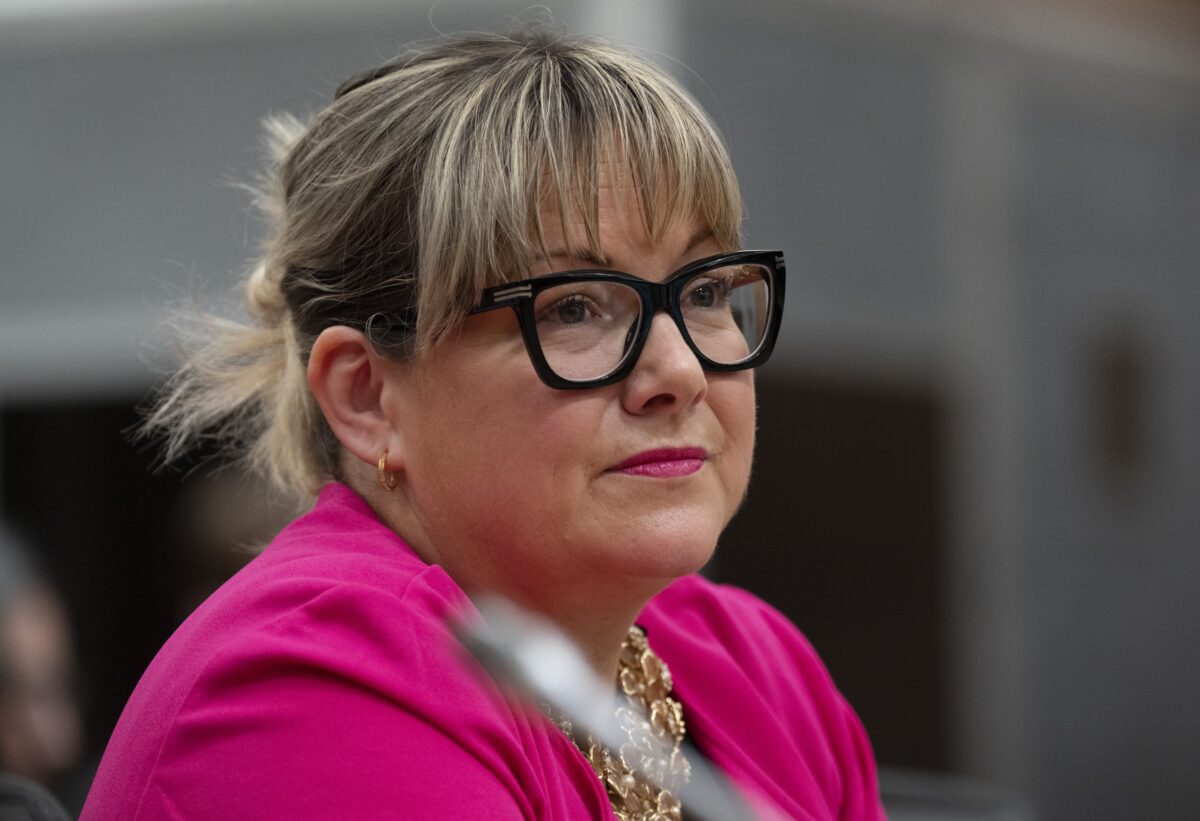

Conservative campaign manager Jenni Byrne says she won’t return to the role in the next federal election, while maintaining it was right not to pivot the party’s messaging toward the U.S. president in the last election campaign.
Byrne said on a podcast called “Beyond a Ballot” released on Aug. 8 that while she is still advising Conservative Leader Pierre Poilievre and the party on some policies, “I’ve stepped back from the day-to-day and I’m not going to run the next campaign.”
Byrne said the reason for her decision is that she wanted to return to a business she started in 2020, and she no longer wanted to commute from Toronto to Ottawa.
Following the April 28 election, which saw the Liberals once again win a minority government and Poilievre lose his seat in Carleton that he had held for 20 years, there had been voices within the party for Byrne to be let go from her role.
Byrne, who had served as Poilievre’s adviser since he won the leadership race in 2022, said she could “understand why people feel let down” by the election results. “Victory was close. People could taste it, and people are desperate for change,” she said.
While Poilievre had been leading in the polls and approaching majority government territory in 2024, the resignation of Prime Minister Justin Trudeau, his replacement with Mark Carney, and U.S. President Donald Trump’s tariff threats and “51st state” comments led to the Liberals’ fortunes being restored.
The Conservatives had been criticized by some, including Ontario Progressive Conservative campaign manager Kory Teneycke, for not pivoting away from their message around the economy and toward the Trump presidency. Byrne said the party’s message around affordability resonated with younger voters, and these Canadians “didn’t have the luxury to vote on Donald Trump, because … they were sick of living in their parents’ basement.”
Byrne said while Poilievre talked about Trump “every single day” during the election campaign, the party continued on message about affordability and did not get “distracted” by the U.S. president.
“The Liberals wanted to talk about Trump, I think they were trying to bait us into talking about Trump,” Byrne said, adding that she was not sure what the party would “say every day” about the president without turning off voters concerned with affordability.
Poilievre’s Seat Loss
Byrne also addressed Poilievre’s loss of the seat of Carleton to Liberal candidate Bruce Fanjoy. She said Poilievre lost the riding by 4,500 votes because the demographics of the riding had “changed a lot in the last 20 years,” and now had more public service workers.
“Being honest in terms of that there were going to have to be cuts made to the Public Service upset certain voters,” Byrne said. “But I think that it was the right thing to do, because Pierre is an honest guy, and there’s no sense going in and pretending that that’s not going to be the case.”
Byrne said she wished that the party would have “seen what was happening” in Poilievre’s riding sooner and put more resources towards securing his seat, but added, “I’m not sure what we could have done about it at the time.” She said Poilievre continues to be “the right leader for the party.”
Poilievre is currently running to gain a seat in the Alberta riding of Battle River—Crowfoot, which was vacated after Conservative MP Damien Kurek stepped down to allow Poilievre a chance to return to Parliament. Advance voting has begun in the riding, and the byelection will be held on Aug. 18.
When asked about the backlash she received after the election loss, Byrne said she had “never seen post-campaign analysis focused on a campaign manager as much as what it has on me.” Byrne also rejected the accusation that she was a “one-person machine” making all the political decisions.
Byrne said for whoever comes in to run the next Conservative campaign, “I will do whatever I can in terms of helping get ready for the campaign. But as I said, I don’t need to be part of the day-to-day.”
 Friends Read Free
Copy
Facebook
Tweet
Friends Read Free
Copy
Facebook
Tweet