
The Conservatives are calling for an emergency debate in Parliament over Canada’s economic outlook after the country entered a technical recession in the first quarter of 2026.
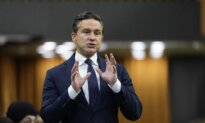
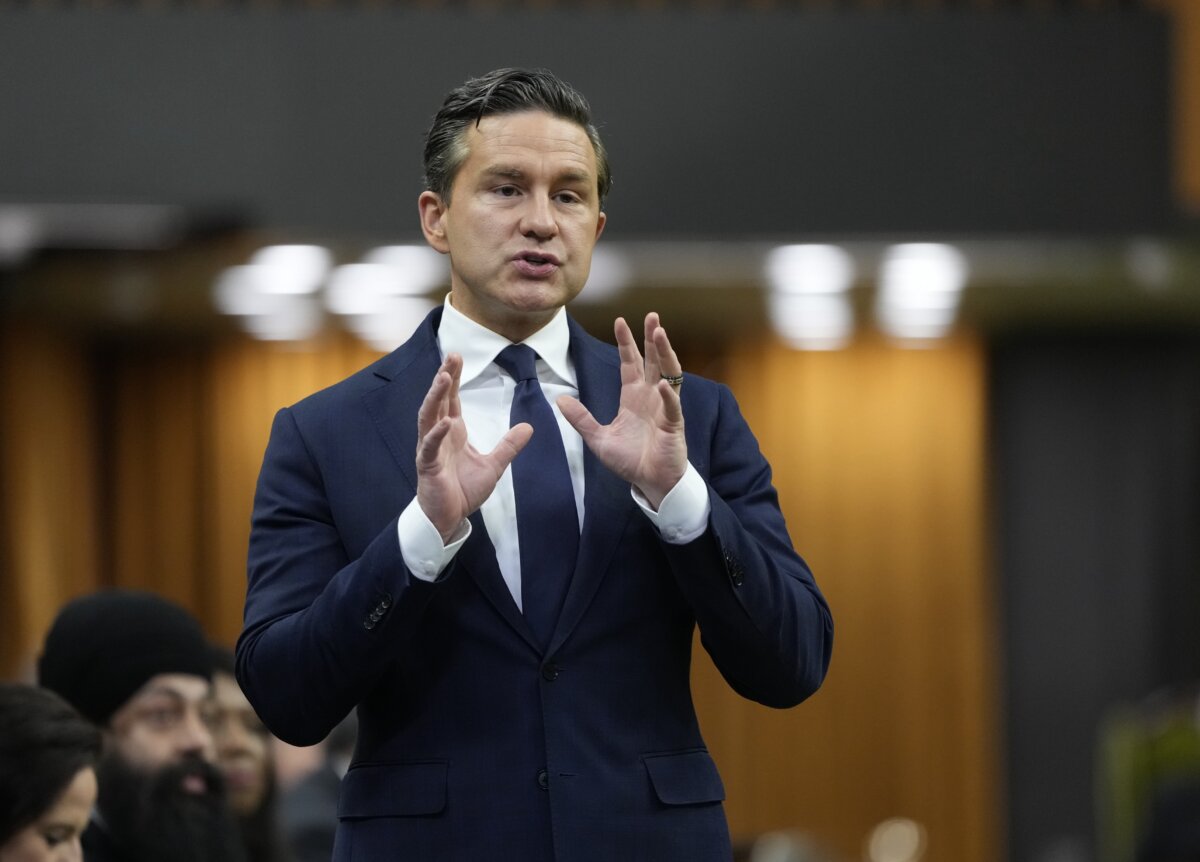
Conservative Leader Pierre Poilievre sent a letter to Prime Minister Mark Carney on May 31, urging the prime minister to appear before Parliament and outline his government’s plan to address the economy’s decline.
“I am calling for an emergency Parliamentary debate, so that you – and the Liberal government you lead – can tell Canadians your plan is to reverse this recession and inflation you have caused,” Poilievre said in the letter.
The Tory leader’s comments come after Statistics Canada data released on May 29 revealed that Canada made a slight foray into a technical recession in the first quarter of 2026 following a decline in the economy in two consecutive quarters.
Poilievre accused Carney of being “the only leader in the G7 to have taken your country into a recession,” adding that Carney’s reasons for the technical recession, such as tariffs and the war in Iran, “do not workm” as all other G7 countries faced the same pressures.
He said Canada’s economic downturn is seen in job losses, a high unemployment rate, declining business investment, growing debt among Canadians, and increased food bank use.
He noted that Canada saw 112,300 job losses in the first quarter of this year, and that the country has the second-highest unemployment rate in the G7. He also pointed to business investment falling another 0.7 percent, marking the fifth-consecutive quarterly decline, as well as more than $20 billion of net investment having fled Canada’s economy.
Approximately 1.5 million Canadians missed a debt payment in the first three months of this year, he said, adding that Canada has the highest household debt in the G7 “by far.” He also pointed to the CEO of Daily Bread Food Bank in Toronto telling MPs in committee this week that one-10th of Greater Toronto Area residents are now using a food bank.
Speaking at a press conference on May 29, Poilievre said the federal government needs a “real plan” to incentivize the United States to sign a tariff-free trade agreement with Canada, to eliminate capital gains tax on reinvestments in Canada, to end the industrial carbon tax, and to cut taxes on work, energy, home building and investment.
“The only way out of this Liberal recession is to reverse the policies that caused it in the first place,” Poilievre said, adding that his party is calling on the prime minister to table a bill in the House of Commons to reverse all economic policies Liberals have introduced over the last decade.
The Conservatives followed up Poilievre’s remarks with a statement on May 31 saying the party is calling for an “emergency recession debate” in the House of Commons.
Technical Recession
StatCan data on May 29 showed that Canada’s economy fell by 1 percent in the fourth quarter of 2025 and by 0.1 percent in the first quarter of 2026 on an annualized basis. The technical definition of a recession is two consecutive quarters of negative GDP growth.
Before the data was released, economists had largely expected growth of 1.5 percent of GDP on an annualized basis in the first quarter of this year.
On a quarterly basis, Canada narrowly escaped the technical definition of a recession since GDP fell 0.2 percent in the last quarter of 2025 and was unchanged in the first quarter of 2026.
StatCan said imports rose by 2.9 percent in the first quarter, with metal products and scrap metal accounting for roughly half of the increase. Meanwhile, exports declined by 0.1 percent and was led by fewer exports of passenger cars and light trucks, which have been impacted by U.S. tariffs.
The federal agency also pointed to a decline in business investment and household savings.
Some economists told The Epoch Times that while the recession is relatively minor and GDP growth could be revised upward, the overall outlook for the Canadian economy could still be cause for concern.
Livio Di Matteo, a professor of economics at Lakehead University, said that the first quarter drop of 0.1 percent in 2026 was “so small that it could easily be substantially revised next quarter.”
BMO chief economist Doug Porter said U.S. tariffs lowering exports and business investment has “undercut Canada’s overall economic performance.”
Jack Mintz, president’s fellow at the University of Calgary School of Public Policy, said that regardless of whether Canada is in a recession or just facing continued low growth, a lack of investment is harming Canada’s productivity.
Sylvain Charlebois, a professor at Dalhousie University’s Faculty of Management, said in a May 29 post on X: “Canada is in a recession—the only G7 country currently in one. Unemployment is up. Inflation is rising. Food insecurity is at a record high.”
Matthew Horwood contributed to this report.
 Friends Read Free
Copy
Facebook
Tweet
Friends Read Free
Copy
Facebook
Tweet