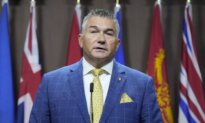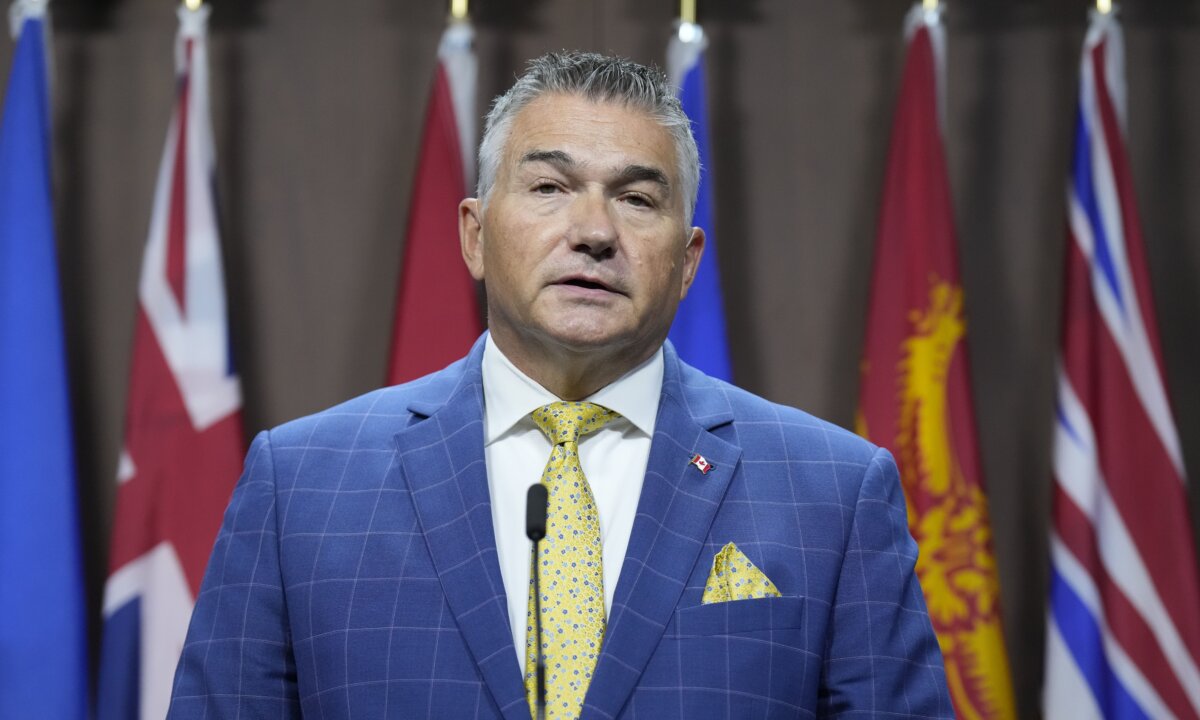

Conservative MP James Bezan has introduced a private member’s bill to extend Canada’s sanctions regime to cover the immediate family members of international human rights violators and to address transnational repression.
Bezan said the changes are needed so that “Canada is never a safe haven for those that are trying to hide their illicit wealth and their families while they’re committing … human rights violations against their own citizens, as well as creating destabilizing impacts in regions like the war in Ukraine, the ongoing aggression against Taiwan.”
“We want to make sure that Canada is not being used as a safe haven for corrupt foreign officials that are hiding their families here,” he said at a Sept. 16 press conference after tabling the bill in the House of Commons.
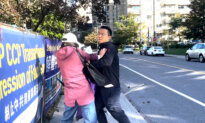
The proposed changes to the Special Economic Measures Act would also bolster Canada’s response to transnational repression of suppressive regimes such as China’s reaching into Canada, Bezan added.
“With this new definition that we’re adding to [the legislation], those individuals who are here intimidating Canadians … and trying to carry out the policy objectives of the regime in Beijing, the regime in Tehran … now we can take action to sanction them, to immediately ban them from being in Canada, along with their families,” Bezan said.
Bill C-219 would also bar immediate relatives of human rights abusers from travel and financial holdings in Canada, in response to reports that officials from repressive regimes such as Iran’s are sending their children to Canadian universities.
Additionally, the bill would direct the RCMP and Canada’s anti-money laundering agency, FINTRAC, to assist the government in drafting sanctions and ensuring they are enforced. Ministers would be required to respond to parliamentary requests for specific sanctions.
Bezan’s proposed legislation would also allow broadcast licences to be removed from sanctioned entities to ensure their state television and radio stations cannot broadcast on Canadian airwaves.
Former Liberal MP John McKay, who supports Bezan’s bill, said it’s time for the legislation to be “refreshed” to address the shifting behaviour of autocracies.
“I’m looking forward to the time where this does receive royal assent,” McKay said at the Sept. 16 press conference. “And even more, I’m looking forward to the time where this legislation gets enforced with enthusiasm and effectiveness, because the brutal way in which [Russian President Vladimir] Putin is abusing the people of Ukraine just has to stop, and Canada has to do its role.”
‘Direct Threat’
Former Liberal Justice Minister Irwin Cotler, who also spoke at the press conference, said the bill would “protect Canada’s sovereignty, security, the rights of its people, while holding the major human rights violators accountable.”
He also said the legislation could address concerns about countries such as China, Iran, and Russia who conduct foreign interference operations that target diaspora in Canada.
“I think this is such an important component of this legislation, because that transnational repression and assassination, really, is a direct threat to our sovereignty, to our security, and to the rights of Canadians,” Cotler said.
The legislation would establish a timeline for the forfeiture of frozen assets under sanction regimes, and would rebrand the sanctions law to cite the name of Russian whistleblower Sergei Magnitsky, who died in a Moscow prison in 2009 after accusing officials of a $230 million tax fraud scheme.
While Canada already named a 2017 sanction law—which targeted foreign officials and was sponsored by Bezan—after Magnitsky, the law is rarely used. Global Affairs Canada says this is due to the law only being able to bar certain dealings, having no exceptions, having high evidentiary thresholds, and only targeting individuals, not entities.
Bezan said Magnitsky’s name is “synonymous with standing up for human rights, good governance, and international peace and security.”
The proposed legislation comes after an internal Global Affairs Canada review in March that concluded the federal government runs a confusing sanctions regime that lacks resources. Bezan said the review laid out “a number of disturbing facts,” which his bill is aiming to address by providing more administrative and enforcement resources.
The Canadian Press contributed to this report.
 Friends Read Free
Copy
Facebook
Tweet
Friends Read Free
Copy
Facebook
Tweet