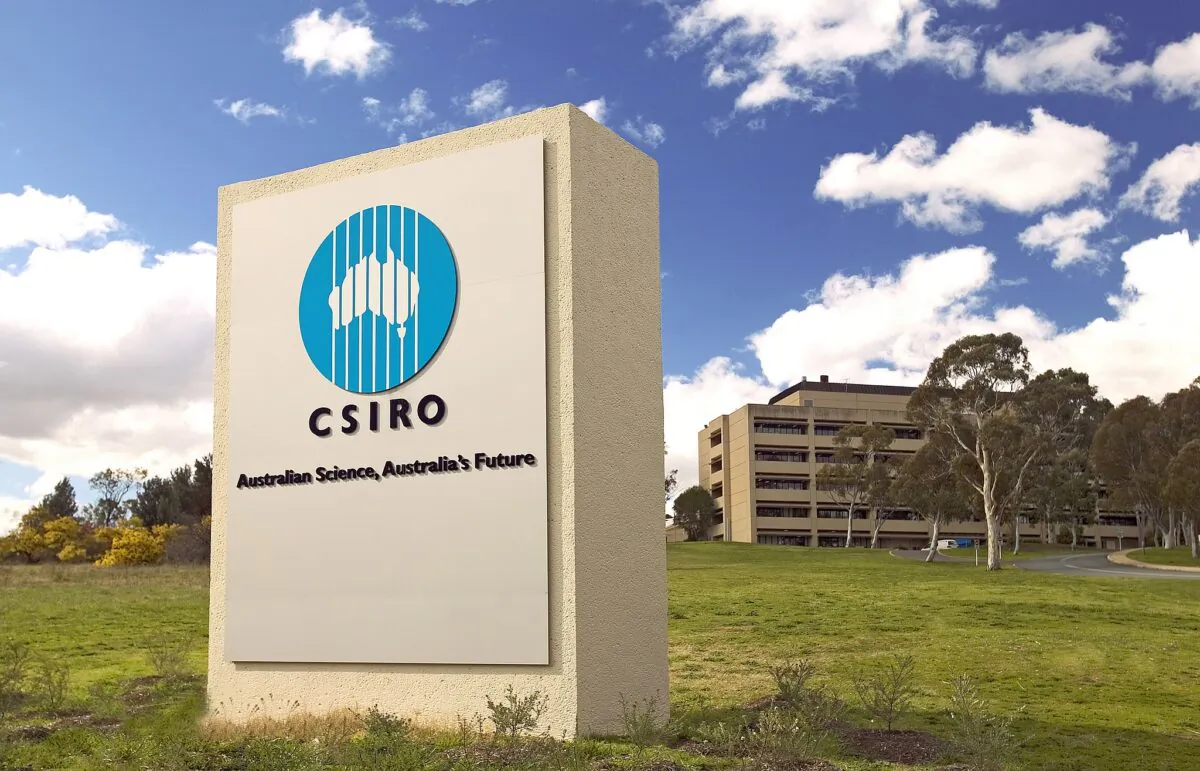

Australia’s national science agency CSIRO has locked in plans to cut 92 full-time positions from its climate and environment division, despite a major injection of federal funding aimed at stabilising the organisation.
The loss of 92 full-time equivalent (FTE) roles within the Environment Research Unit is part of a broader, agency-wide cull of 350 jobs first flagged in November 2025 due to rising operating costs.
The cuts have drawn attention from staff and climate advocates, who question why critical environmental and climate research capability is being eroded while Australia races to meet ambitious emissions targets.
However, the CSIRO insists its climate science work will continue.
“In response to consultation feedback, there are 10 fewer roles impacted than in the original change proposal, resulting in a reduction of 92 FTE roles in the Research Unit,” a CSIRO spokesperson told The Epoch Times.
The agency stated the restructure was designed to sharpen research priorities rather than dismantle key teams.
“CSIRO will retain its climate science capability and continue to provide the data, models, and scenarios needed to support decision-making in Australia and internationally,” the spokesperson said.
The Environment Research Unit will remain one of the agency’s largest divisions, overseeing freshwater, marine, climate adaptation, and social science research.
Funding Boost Raises Questions
The decision to press ahead with job losses has raised eyebrows, coming just days after the federal government committed an additional $387.4 million to the CSIRO in the 2026–27 Budget.
The new funding package builds on CSIRO’s existing $1 billion annual government allocation and an extra $278 million injected in 2025.
A large portion of the new budget cash is earmarked for upgrading cybersecurity, modernising facilities, and supporting the Australian Centre for Disease Preparedness.
Following the budget announcement, CSIRO Chief Executive Doug Hilton defended the organisation’s financial strategy, arguing the funding was about long-term stability rather than maintaining previous staffing levels.
“This additional investment will allow us to become a more sustainable organisation and a more stable organisation,” Hilton said.
“Those two things are important. It allows investment into our facilities, our equipment, and our cybersecurity. And it provides confidence to our staff that they have the long-term ability to do the creative science that this country so desperately needs.”
Staff Push Back on Cuts
The CSIRO Staff Association has criticised the cuts, pointing out that the agency’s average staffing levels are projected to plummet from 5,300 to 5,100.
During the pandemic, the federal government gave the CSIRO extra funding to grow its team and hire more scientists. The union warns that these new cuts will completely erase that progress, shrinking the workforce right back down to pre-pandemic levels.
Staff Association Secretary Susan Tonks said workers need more than vague promises of organisational sustainability.
“What’s required from Executive is a strong commitment to future employment security at CSIRO. Staff need a real guarantee that future job cuts are off the table until the end of the decade, at least,” Tonks said.
The agency said it finalised the decision after an extensive consultation period with employees and stakeholders, adding that feedback from staff helped them figure out which key skills they needed to keep to protect their research priorities.
 Friends Read Free
Copy
Facebook
Tweet
Friends Read Free
Copy
Facebook
Tweet