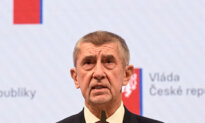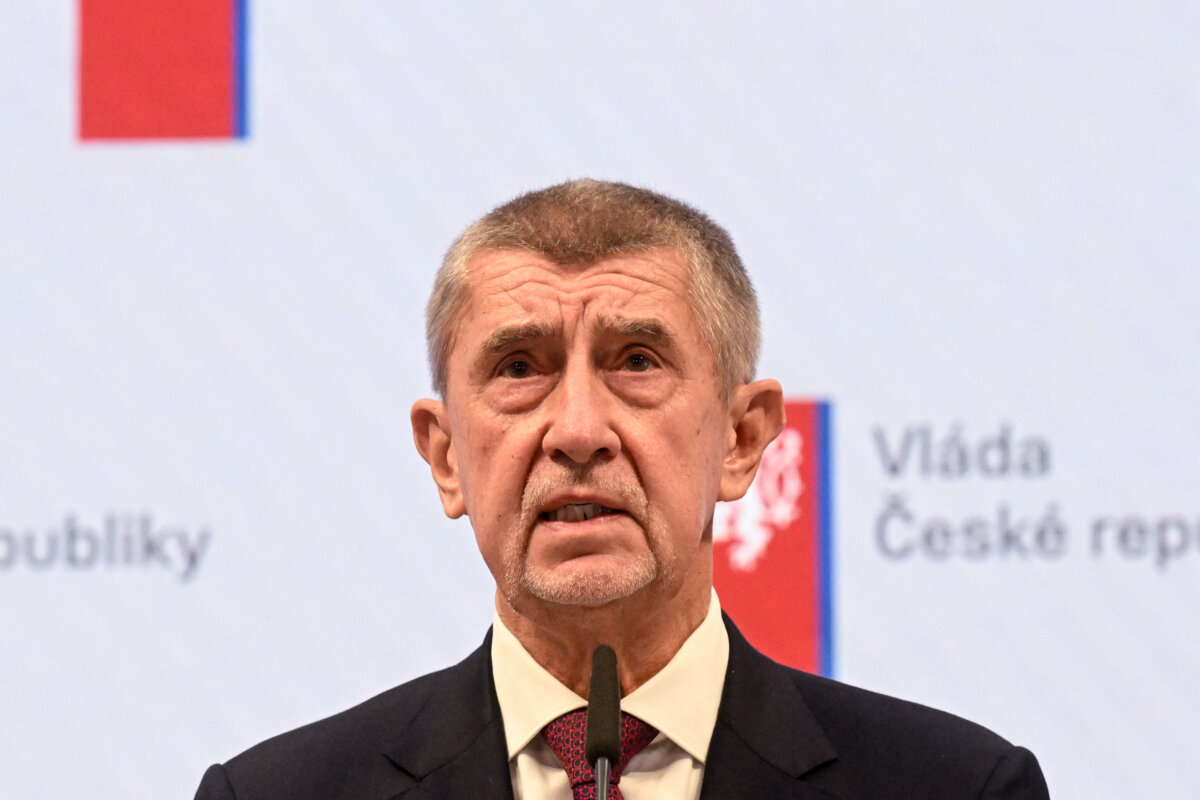

Czech Prime Minister Andrej Babis said on Feb. 26 that his country is not on track to increase defense spending at the target rate set by NATO in 2025, as his government focuses on other domestic policies.
In June 2025, NATO allies agreed to raise defense spending targets from 2 percent of gross domestic product (GDP) to 5 percent by 2035, split into 3.5 percent for core defense and 1.5 percent on other related areas such as security and infrastructure.
When asked in an online interview with Denik, a newspaper, whether the Czech Republic was on track for the 3.5 percent target, Babis said, “We are definitely not going to do it.”
“The budget is a coalition decision, and we have decided that after the previous government kept talking about war and Ukraine and made very non-transparent defense contracts, we will not proceed in this way,” he said.
Babis, who leads the populist ANO party that took power in December 2025, said before last year’s election that the NATO target was unrealistic.
He won the election with the promise of prioritizing the improvement of the Czech people’s standard of living by increasing wages, implementing new social benefits, and cutting some taxes.
“We mainly need money for people, for security on the streets, so that our army has a sufficient number of soldiers, so that fighter pilots do not have low salaries,” Babis said during the interview.
“So we will definitely do it, but a number has not been set yet, and it will be the subject of coalition negotiations, but only when it is on the table. We do not even have a budget for 2026 yet.”
Babis’s proposed new budget includes a lowering of defense spending plans from 2.35 percent of GDP—as had been proposed by the previous government—to 2.1 percent.
The previous administration had sought to increase defense spending gradually to 3 percent of GDP by 2030.
In response to Babis’s comments, former Prime Minister Petr Fiala said that security should be a leading concern for the government.
Army Modernization to Proceed
On Feb. 24, Defense Minister Jaromir Zuna said that the change in plans to spending would not negatively affect army modernization projects.
“Our government is convinced that the security of the state is not measured in percentages of GDP, but by actual defense capabilities, the achievement of which is supported by an adequate defense rate,” Zuna said at a meeting with army chiefs.
“Lowering the budget for 2026 versus the original plan does not threaten any army modernization projects underway.”
However, the army’s chief of general staff, Karel Rehka, said at the meeting that greater investment was needed to reach required defense capabilities in the future.
“Yes, defense security is expensive. But without it there is no prosperity,” Rehka said.
Europe’s NATO members are under pressure from U.S. President Donald Trump to increase their defense spending to ensure the security of their continent, as the United States reorients its security focus to the Americas.
The Pentagon’s National Defense Strategy, released on Jan. 23, outlines the United States’ prioritization of homeland defense, including “defending America’s interests throughout the Western Hemisphere.”
It also said the United States would encourage partners in other parts of the world, including Europe, to take responsibility for their own defense “with critical but limited support from U.S. forces.”
 Friends Read Free
Copy
Facebook
Tweet
Friends Read Free
Copy
Facebook
Tweet