

Roughly four hours after being released from an involuntary psychiatric hold, 61-year-old Donna Duncan received medical assistance in dying (MAID) at her home in Abbotsford, B.C.
Donna Duncan, a retired psychiatric nurse who had attempted suicide days earlier, had been approved for MAID after two independent assessors determined that her weight loss and frailty made her death reasonably foreseeable.
Her daughter, Alicia Duncan, disputes that assessment, saying her mother was experiencing a psychiatric crisis and needed treatment rather than euthanasia.
“My mom was not dying. She was in crisis,” Alicia told The Epoch Times. “She had just attempted suicide, yet days later that same wish to die was treated as an autonomous medical decision.”
Nearly five years after her mother’s death on Oct. 29, 2021, Alicia is renewing calls for changes to Canada’s MAID system, including independent review of disputed cases and other safeguards to prevent people in psychiatric crisis from being approved for the procedure.
In her new book, “The Other Side of the Straitjacket: A Daughter’s Story of Mental Illness and Assisted Dying,” Alicia details her mother’s case.
Final Days
Donna suffered a concussion following a car accident in February 2020 and subsequently developed anxiety, paranoia, and an aversion to food, Alicia said. Her physical and mental health deteriorated, and she became significantly underweight. The family has said her symptoms included increasing sensitivity to touch, sight, and smell, and pain associated with eating.
 Donna Duncan with her daughters Alicia and Christie in their childhood, in a handout photo.(Courtesy Alicia Duncan)
Donna subsequently sought an assessment by a MAID practitioner on Oct. 24, 2021, and was approved for MAID after a nurse practitioner independently conducted a second assessment on Oct. 26 as required under federal law.
After learning that their mother had been approved for MAID, Alicia and her sister brought an emergency application before a B.C. provincial judge to have Donna assessed. The judge issued a warrant for Donna’s apprehension under the Mental Health Act for further assessment, temporarily postponing the MAID appointment.
Donna subsequently attempted suicide but survived, according to Alicia. She was admitted involuntarily to the psychiatric unit she had previously managed as a psychiatric nurse.
Donna was released on Oct. 29, 2021, and received MAID at her home later that day, according to her family. The family has said she died less than four hours after being released from the psychiatric unit.
Police Investigation
Following Donna’s death, Alicia and her sister asked the Abbotsford Police Department to investigate, including why she was allowed to be released from psychiatric care.
A police spokesperson confirmed to The Epoch Times that its Major Crime Unit looked into “all available evidence” in the case in 2022, including “family statements and expert reports from partner agencies such as the BC Coroner Service, Fraser Health, the College of Physicians and MAID.”
“Upon reviewing the evidence, the investigative team has determined that no criminal offence has occurred,” the spokesperson added, noting that investigators had met with members of the Duncan family to explain their assessment, and the case is now closed.
Alicia said her family is still unsure if all required legal safeguards were actually followed in the case as the underlying MAID assessment records have not been provided to them. She told Parliament’s Special Joint Committee on May 5 that families have no clear way to challenge a MAID approval before it happens or find out afterward whether the rules were followed.
The case was raised several times in Parliament by former Conservative MP for Abbotsford, Ed Fast, who retired in 2025. He said in an Oct. 5, 2023, House of Commons debate that Donna did not get proper mental health treatment before being approved for MAID.
Fast raised the case again in February 2024, while stating that MAID eligibility for those whose sole underlying condition is mental illness should continue to be paused.
Daughter Calls for MAID Reforms
Alicia is calling for an independent review requirement before disputed MAID cases can proceed.
“The safeguards existed on paper, but no one was independently checking whether they had actually been met,” Alicia said.
“The public assumes someone is independently checking these decisions. They aren’t,” she added. “MAID assessments are completed by the practitioners involved, and oversight largely takes place after the person is dead.”
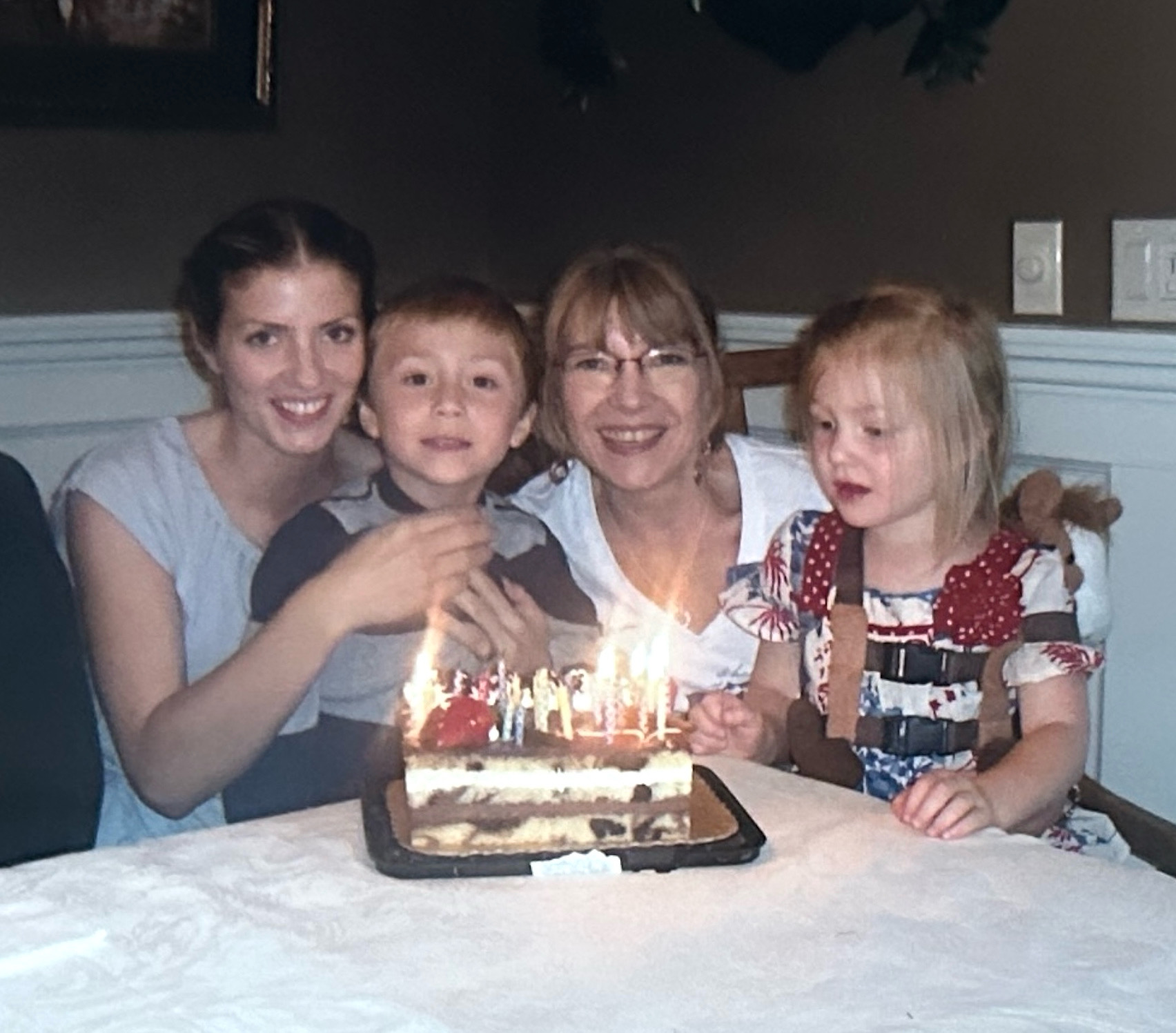 Donna Duncan with her daughter Alicia and her children, in a handout photo.(Courtesy Alicia Duncan)
Federal law requires two independent practitioners to assess MAID eligibility but does not bar one of them from also carrying out the assisted death.
Canada’s MAID regime has two sets of procedural safeguards. Track 1 applies when a person’s natural death is reasonably foreseeable. Track 2 applies when it is not and the person meets the eligibility requirements, including having a grievous and irremediable medical condition that causes intolerable suffering that cannot be relieved under conditions they consider acceptable. Track 2 requires a minimum 90-day period between the start of the first eligibility assessment and the provision of MAID in most circumstances, while Track 1 has no mandatory minimum assessment period.
Health Canada told The Epoch Times it cannot comment on individual MAID cases, but that federal law puts strict limits and safeguards on MAID eligibility.
“A person whose sole underlying condition is mental illness is not currently eligible, although someone with both a physical condition and mental illness may qualify if all criteria are met,” the agency wrote in a Sept. 25 statement.
Health Canada added that federal law “does not require a person to undergo or exhaust all available treatments before receiving MAID,” and that provinces and territories oversee how MAID is delivered within their health systems.
Requests for comment from the Canadian Association of MAID Assessors and Providers (CAMAP), Fraser Health, and the B.C. Ministry of Health were not returned by time of publication.
The government of B.C. says on its website that the procedure is only provided to “legally eligible persons” in the province.
“To ensure this service is provided in a safe manner, a system of safeguards has been designed to protect vulnerable people and support all people to make an informed decision,” the province says.
Other Cases
Other families have also raised concerns about the MAID assessment and consent processes in recent cases.
In December 2025, 26-year-old Kiano Vafaeian received MAID in British Columbia under Track 2 after his requests for MAID were denied in Ontario.
Vafaeian had Type 1 diabetes and significant vision loss. His mother, Margaret Marsilla, previously told The Epoch Times that her son’s ongoing mental-health struggles drove his desire for MAID.
“I strongly feel that if he wasn’t approved for MAID, he would have still been around,” Marsilla said.
Dr. Ellen Wiebe, who carried out the procedure and was one of two practitioners who approved Vafaeian for MAID, previously told The Epoch Times she could not comment on an individual case. She said she and her colleagues only approve people for MAID “who have grievous and irremediable medical conditions (not psychiatric) who are suffering unbearably.”
In another case, 83-year-old Brigitte Stegemann received MAID at a long-term care home in Cannifton, Ont., on July 10, 2026. Her granddaughter, Brigitte Kranendonk, said Stegemann had previously declined MAID and later expressed regret after understanding that the procedure would result in her death.
Kranendonk said her grandmother was sobbing and told family members she had made a mistake before receiving MAID. Kranendonk has asked Ontario’s chief coroner to review the case.
Kranendonk said MAID providers proceeded because Stegemann had already been approved and assessed as capable of making the decision, despite the family’s objections and what she described as her grandmother’s change of mind.
Belleville police have confirmed that Stegemann’s death is under investigation. The allegations concerning her capacity and the circumstances surrounding the procedure have not been tested in court.
Canada expanded eligibility for medical assistance in dying in 2021, removing the requirement that a person’s natural death be reasonably foreseeable. The legislation created two tracks based on whether death was reasonably foreseeable and included a temporary exclusion for people whose sole underlying medical condition is mental illness. That exclusion was originally set to expire in 2023 but has since been extended twice. Most recently, Bill C-62, which received royal assent in February 2024, extended the exclusion until March 17, 2027.
In a case related to the planned expansion, Ontario Superior Court Justice Carissima Mathen denied a constitutional exemption sought by Claire Brosseau, 49, of Toronto, that would have allowed her to apply for MAID solely on the basis of mental illness. Mathen, however, allowed Brosseau’s broader Charter challenge to the exclusion of people with mental illness from MAID to proceed.
 Friends Read Free
Copy
Facebook
Tweet
Friends Read Free
Copy
Facebook
Tweet