
The number of confirmed deaths in Congo’s Ebola outbreak has gone past 4,000, government data showed on Friday.
According to Doctors Without Borders (MSF), the virus was spreading like wildfire in North Kivu province.
In total, 8,300 people are confirmed to have contracted the disease, with 4,018 dying. More than 2,000 patients have recovered.
The current outbreak is caused by the rare Bundibugyo ebolavirus and was detected in mid-May in Congo, which has dealt with more than a dozen Ebola outbreaks in the past.
It has become the deadliest in Congo’s history after surpassing the 2018–2020 epidemic, in which 2,299 people died.
Across Africa, this epidemic is now second only to the 2014–2016 West African outbreak, which infected at least 28,600 people and killed more than 11,000 across Guinea, Liberia, and Sierra Leone.
The current outbreak is active in seven provinces: North Kivu, South Kivu, Haut-Uélé, Bas-Uélé, Ituri, Tshopo, and South Ubangi.
Last month, the World Health Organization (WHO) said that there were signs that transmission was going down in the most affected areas of Ituri Province, the epicenter of the outbreak.
But it continues to spread quickly across eastern Congo, including in neighboring North Kivu.
There is no approved treatment for the Bundibugyo strain of the virus, but the WHO has said clinical trials are underway to develop a vaccine.
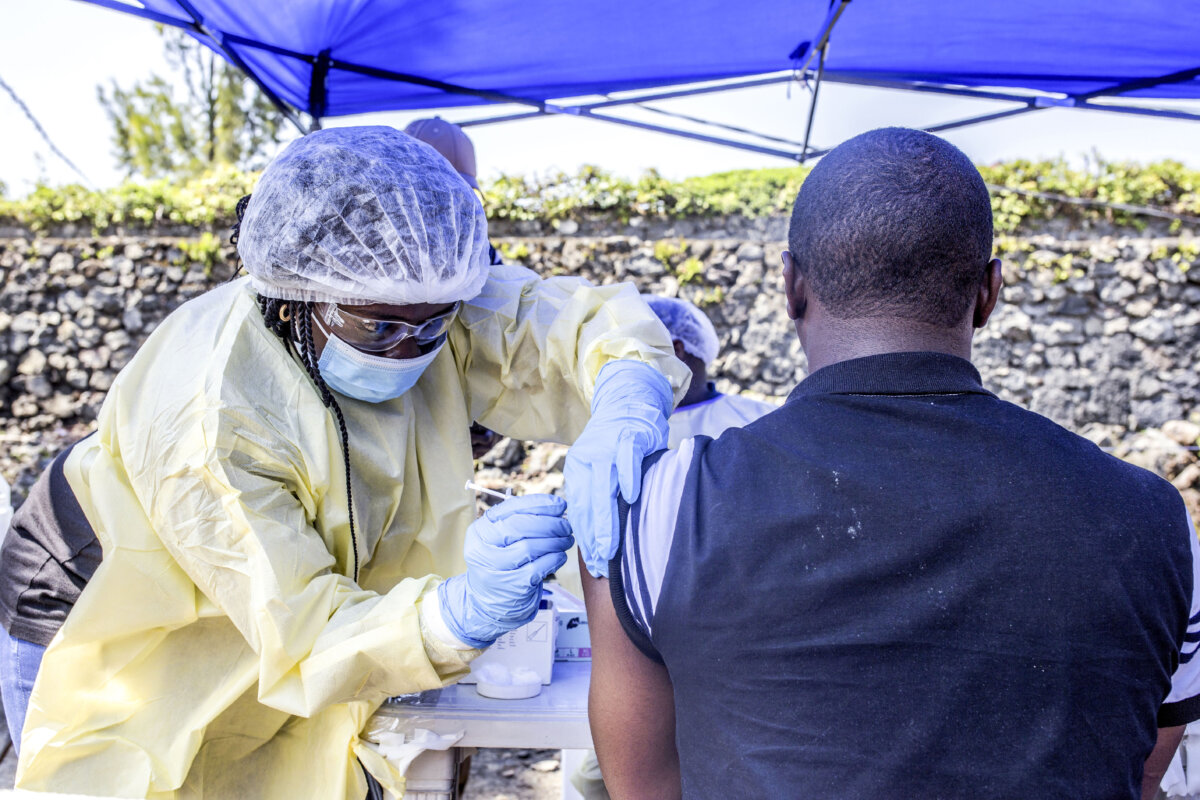
Congolese authorities in August launched a targeted Ebola vaccination program for healthcare staff and frontline workers.
These workers received the Ervebo vaccine, which was effective in past Ebola outbreaks caused by a different, more common type of the virus.
Spreading Like ‘Wildfire’ in North Kivu
In an Oct. 2 statement, Doctors Without Borders said that since the start of September, North Kivu has seen a surge in Ebola, with the province now accounting for nearly 40 percent of new confirmed cases, compared to 24 percent at the end of August.
Stéphanie Hoffmann, the head of the MSF’s Ebola Treatment Center in Butembo, North Kivu, said it is “impossible to contain this large-scale epidemic as long as new outbreaks continue to multiply as the virus spreads in northern North Kivu.”
“We can only fear a worsening of the situation in the coming weeks,” she said.
The organization is currently operating in Ituri, North Kivu, Tshopo, and Haut-Uélé.
MSF confirmed on Oct. 1 that one of its staff members working in the Ebola response in Congo had tested positive for the Bundibugyo disease and had been evacuated to the Netherlands to receive treatment.
The charity did not give further details.
Conflict, Poor Infrastructure
The WHO said in its latest report that while the number of newly reported cases each day remains high, the situation varies across Congo.
In the Sept. 25 report, the WHO said that the continuously high case fatality ratio “highlights the seriousness of the disease and the persistent challenges in timely case detection and access to early and adequate patient care.”
The organization said that factors affecting outbreak control include ongoing conflict in the region and limited access to basic services.
Specifically, these and other problems are impeding surveillance and monitoring of the disease, as well as hampering efforts to ensure patients get crucial timely care.
The United Nations noted in May that efforts to contain the outbreak were being affected by conflict involving multiple armed groups, including the Allied Democratic Forces, CODECO militias, and the Rwanda-backed M23 armed group.
The U.N. also highlighted poor roads and damaged infrastructure, as well as a lack of trust in authorities by communities.
Reuters contributed to this report.
 Friends Read Free
Copy
Facebook
Tweet
Friends Read Free
Copy
Facebook
Tweet