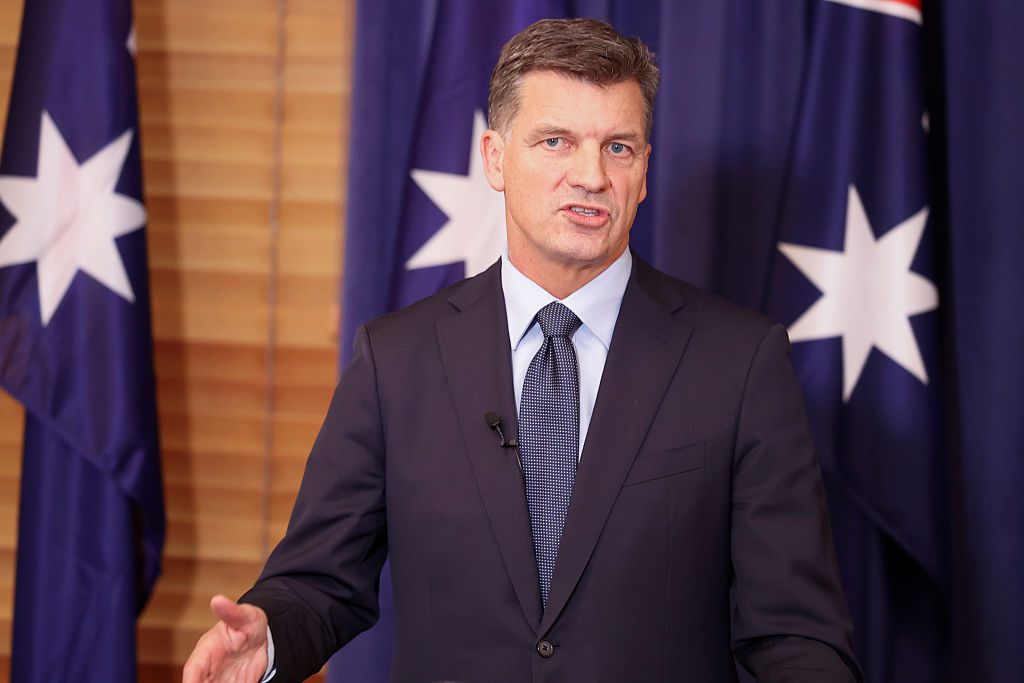

Australian Opposition Leader Angus Taylor has pledged a tough overhaul of the country’s migration policy aiming to deal with migrants with “subversive intent.”
Amid pressure in the polls from the conservative-leaning One Nation, the centre-right Liberal Party leader outlined his “Australian Values Migration Plan.”
The focus includes removing people who have overstayed visas or broken laws, stopping those who don’t share Australian values from entering the country, and giving authorities more power to scrutinise the social media history of visa applicants.
The Liberals have also pledged a multi-agency taskforce similar to the U.S. Immigration and Customs Enforcement.
What’s in the Liberal Party Plan?
In the address to the Liberal Party’s Menzies Research Centre on April 14, Taylor described the “first part” of his party’s immigration policy to help alleviate housing and cost of living pressures, with more to come.
The opposition leader says he will crack down on around 65,000 people who have remained in Australia despite being on expired student or protection visas.
Taylor proposed the Australian Values Statement that all new migrants must sign should become a legally binding document, meaning breaching the statement’s conditions could lead to visa cancellation and deportation.
Under the Coalition policy, loopholes would also be tightened to make it easier to deport long-time residents who commit serious offences or fail to live by Australians values, like embracing democracy.
Permanent visa holders would also be required to learn English and taxpayer-funded initiatives such as the five percent housing deposit would be limited only to citizens, rather than be extended to permanent residents as per current policy.
The plan would also see the development of a “safe country list” of nations generally free of persecution from their governing authorities to help filter frivolous refugee claims.
Temporary protection visas, rather than those allowing permanent settlement, would also form part of the plan.
A joint taskforce between the Australian Border Force, Australian Federal Police, and domestic spy apparatus, the Australian Security and Intelligence Organisation would be funded to increase surveillance and remove people on overstayed visas.
And in a move mirroring the Trump administration, all visa applicants will have to give up access to their social media accounts for scrutiny.
Taylor Points to European Experience, Migrants of ‘Subversive Intent’
Taylor said Australians were deeply concerned about the immigration and assimilation situation.
“Australians see the erosion of national culture and the balkanisation of communities that has come from immigration policies that have not prioritised values,” he said.
“Indeed, Australians are worried we’re on the same disastrous road as those parts of the world, and they want change, and the Coalition is determined to deliver change for the better.”
Taylor said the Bondi Beach terror attack, radical Islamic preachers, and pro-Palestine marches in major cities were the result of flawed immigration.
“Broadly speaking, migrants fall into two categories,” Taylor said.
“There’s those of noble and patriotic intent … overwhelmingly, the vast majority of people who come to this great country fall into that category.
“And then there is the migrant of subversive intent, someone who rejects our way of life, who doesn’t want to change for Australia and wants Australia to change for them, who’s here for transactional reasons and transactional intent, and worse, declining immigration standards have seen our door open to migrants of subversive intent.”
Taylor Outlines Issues With Extremism, Foreign Interference
Australia has long been too indiscriminate with its migration requirements, opening the door to people who believe in hate and violence.
“For too long, we’ve turned a blind eye to the reality of immigration and integration,” Taylor said.
“Those who migrate from liberal democracies have a greater likelihood of subscribing to Australian values compared to those coming from other places ruled by fundamentalists, extremists, and dictators.
“And in that vein, the Gazan cohort of 1,700 people here on visas [allowed under Labor] presents a high risk to our nation. That cohort must be reassessed entirely with far greater scrutiny.”
The opposition leader also said Australia was not doing enough on foreign interference.
“Our door has been open to people who, far from having an allegiance to Australia, are actively working against our nation,” he said.
“People intimidating migrant communities, people trying to undermine our democracy, people sowing social discord.”
What is One Nation’s Immigration Policy?
One Nation’s migration policy includes a number of heavy measures against mass migration.
They include deporting about 75,000 illegal migrants, capping entry visas to 130,000 per year, and scrutinising student and work visas more heavily.
One Nation would also shut down the Administrative Review Tribunal to prevent visa appeals, reintroduce temporary protection visas, deport law breakers, introduce an eight-year wait for citizenship and welfare benefits, and refuse entry to nations known to foster extremist ideologies.
The Pauline Hanson-led party would also withdraw from the United Nations Refugee Convention.
One Nation has led consistently across multiple polls for over six months now, eroding the Liberal Party’s vote.
Labor’s Response
In response, Labor Minister Pat Conroy called the opposition’s announcement a “race to the bottom” with One Nation.
“We’re just seeing desperate dog-whistling from Angus Taylor who’s desperately trying to compete with One Nation in a race to the bottom,” frontbencher Pat Conroy told ABC TV.
“He has to be honest with the Australian public about what industries won’t get workers through their policies.
“Who’s going to lose doctors, who’s going to lose nurses, who’s going to lose aged-care workers?”
 Friends Read Free
Copy
Facebook
Tweet
Friends Read Free
Copy
Facebook
Tweet