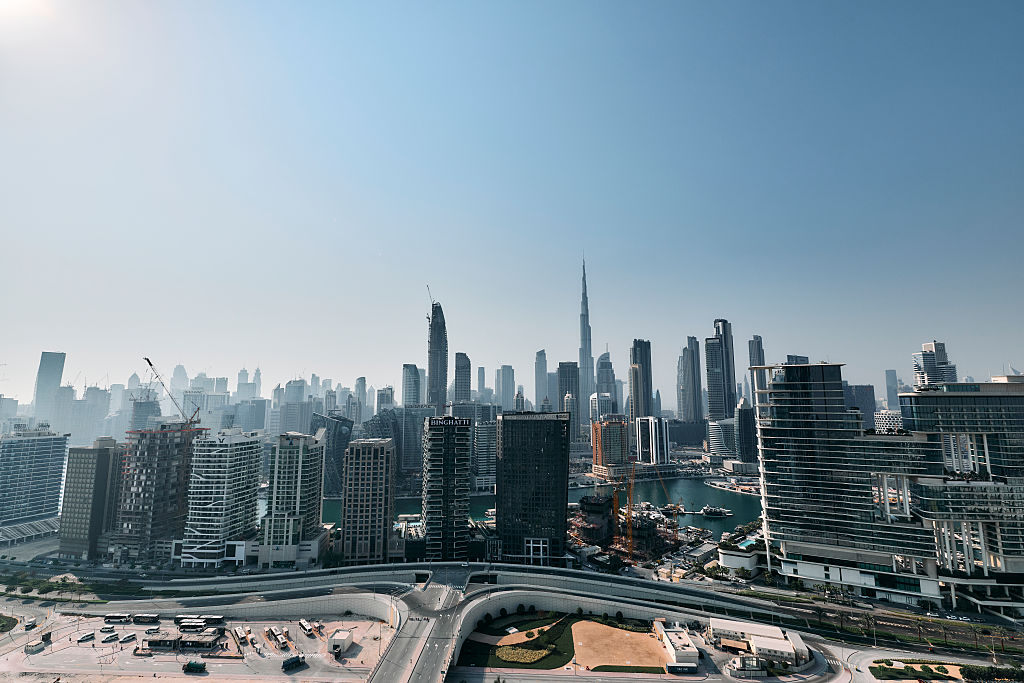

Property developer BNW Developments has opened its first Australian office in Bella Vista, in Sydney’s northwest, targeting Australians interested in property investment in Dubai and the industrial port city of Ras Al Khaimah.
Ankur Aggarwal, chairman and founder of BNW Developments, told The Epoch Times the Sydney office was established in response to growing interest from Australian buyers seeking to diversify their investments and capitalise on super-low tax regimes.
“We have seen growing interest from Australian buyers who are looking beyond their domestic market and exploring opportunities for international diversification,” he said.
“For us, having a physical presence in Sydney is about more than expanding our sales network.
“It allows us to better understand the needs of Australian investors, build relationships with local advisers and property networks, and provide access to our development portfolio in Dubai and Ras Al Khaimah through a team on the ground.”
Aggarwal said investing internationally involved decisions around market conditions, property type and long-term objectives, which could be easier for investors to navigate with a local representative.
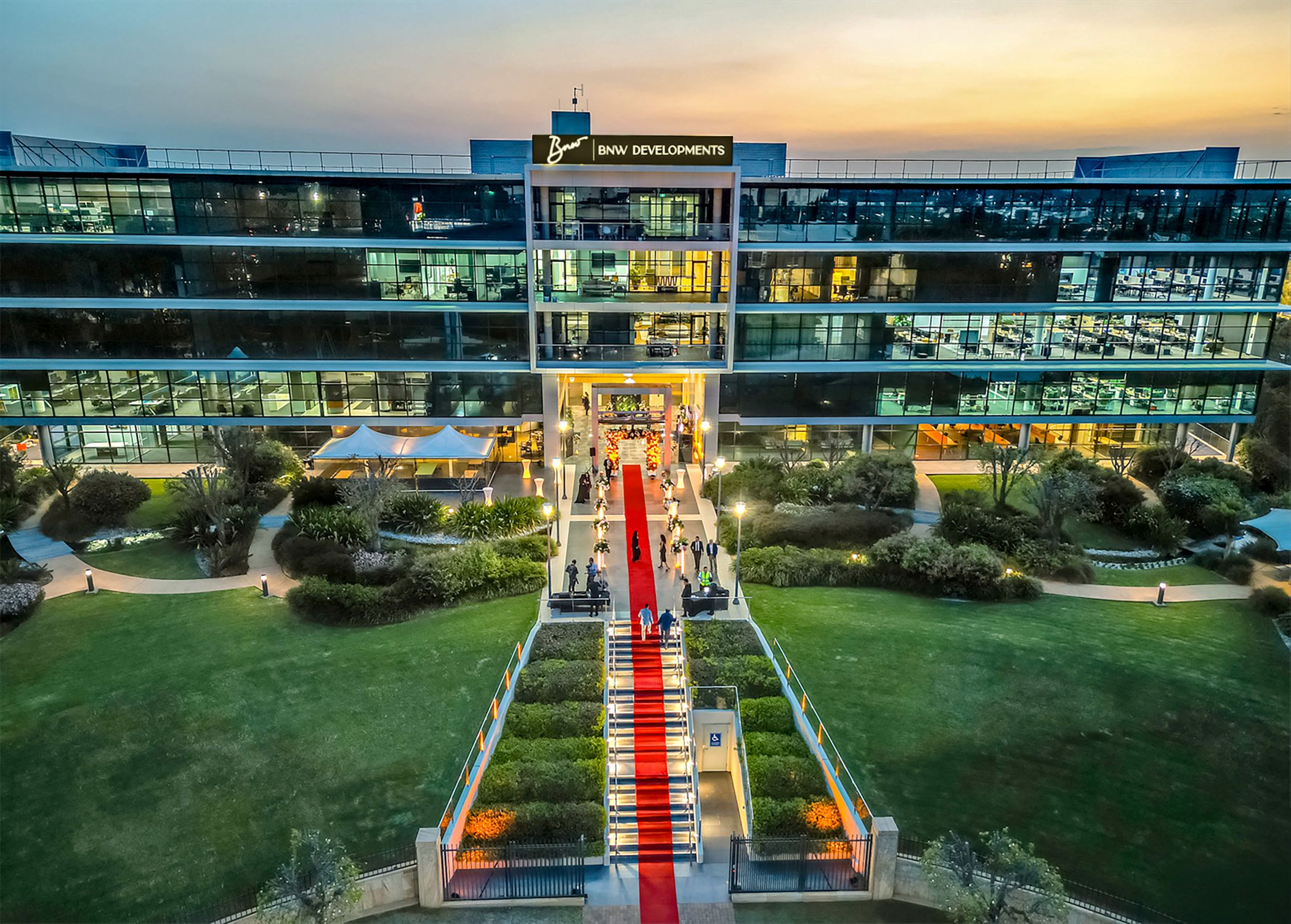 BNW Developments has set up an office in Sydney amid surging interest in investing in Dubai and Ras Al Khaimah in the United Arab Emirates. (Courtesy of BNW Developments)
Australians Account for Nearly 6 Percent of Foreign Buyers
There were several reasons Australians were looking to the United Arab Emirates (UAE).
Australians reportedly account for 5.7 percent of foreign property investors in Dubai, according to the Khaleej Times.
“Rental yields can also compare favourably with those available in major Australian cities, although returns vary significantly by location, property type and individual asset,” Aggarwal said.
 A view shows the interior of Mercato Mall in Dubai, the United Arab Emirates on Aug. 24, 2026. (Giuseppe Cacace/AFP via Getty Images)
“There is also growing interest in the UAE’s tax environment and residency framework, alongside the opportunity to gain exposure to a market with a large international population and strong cross-border demand,” Aggarwal said.
He said BNW had seen an increase in enquiries from Australians asking about potential rental income and how overseas property could fit into their wider portfolios.
 Ankur Aggarwal, chairman and founder of BNW Developments. (Courtesy of BNW Developments)
Two-way trade was worth $12.7 billion (US$8.9 billion) in the 2024-25 financial year, while two-way investment stock reached $23.7 billion in 2024, according to the Department of Foreign Affairs and Trade.
The UAE’s tax system has also been cited as a potential attraction.
Unlike Australia, the UAE does not impose personal income tax or a general personal capital gains tax.
However, tax residents in Australia are still liable to pay local taxes on overseas income and relevant capital gains.
Buying property in Dubai does not, by itself, remove an investor’s Australian tax obligations.
High Inflation Dampens Growth in Australia
Australia suffers from one of the highest inflation rates in the democratic world with the International Monetary Fund predicting it will exceed the United States (3.2 percent in 2026 and 2.1 in 2027), the UK (3.2 and 2.4), Germany (2.7 and 2.3), New Zealand (3.1 and 2.3), Japan (2.2 and 2.3) in the coming years.
On the ground, small businesses have grappled with higher costs, while average Australians struggle with building their individual wealth.
In fact, the federal government’s 2026-27 budget included major changes to negative gearing that will restrict the practice to newly built properties.
Meanwhile, the existing 50 percent capital gains tax discount for investors will be replaced with an indexation-based system, alongside a minimum 30 percent tax rate on real capital gains.
In September, Master Builders Australia, the Housing Industry Association, the Property Council of Australia and the Real Estate Institute of Australia released modelling estimating that the reforms could result in 10,700 fewer new dwelling starts, increase rents by about $10 a week, reduce cumulative GDP by about $1.05 billion and reduce construction employment.
The groups said the figures reinforced concerns that policies affecting property investment could make it harder to finance and supply rental housing.
Economist Warns of Risks
However, economist Saul Eslake said he was not convinced that Australians were rushing to invest overseas because of the budget changes.
“I’m a bit sceptical of these claims that people are investing in properties outside of Australia as a result of the changes to the tax system announced in this year’s federal budget,” he told The Epoch Times.
“As long as they are Australian residents for tax purposes, Australians are subject to the same rules regarding the tax treatment of their investments irrespective of where they are located, and irrespective of the tax laws in the countries where they may have investments.”
Eslake also pointed out that Australians investing in countries without capital gains tax (CGT), such as Dubai, could still be liable for Australian capital gains tax when the property was sold.
“The only way an Australian resident can avoid Australian capital gains tax is by moving to one of those locations where there is no CGT, or where the CGT is lower than in Australia,” he said.
He said investors would also need to consider the costs and other risks associated with moving overseas to reduce their Australian tax liabilities.
Financial expert Shane Shmuel, however, said Australia’s economic outlook could make overseas markets attractive to some investors.
“Australia is offering little confidence,” he said.
“Dubai exudes hope, aspiration and productivity—the opposite to Australia into the future.”
 Friends Read Free
Copy
Facebook
Tweet
Friends Read Free
Copy
Facebook
Tweet