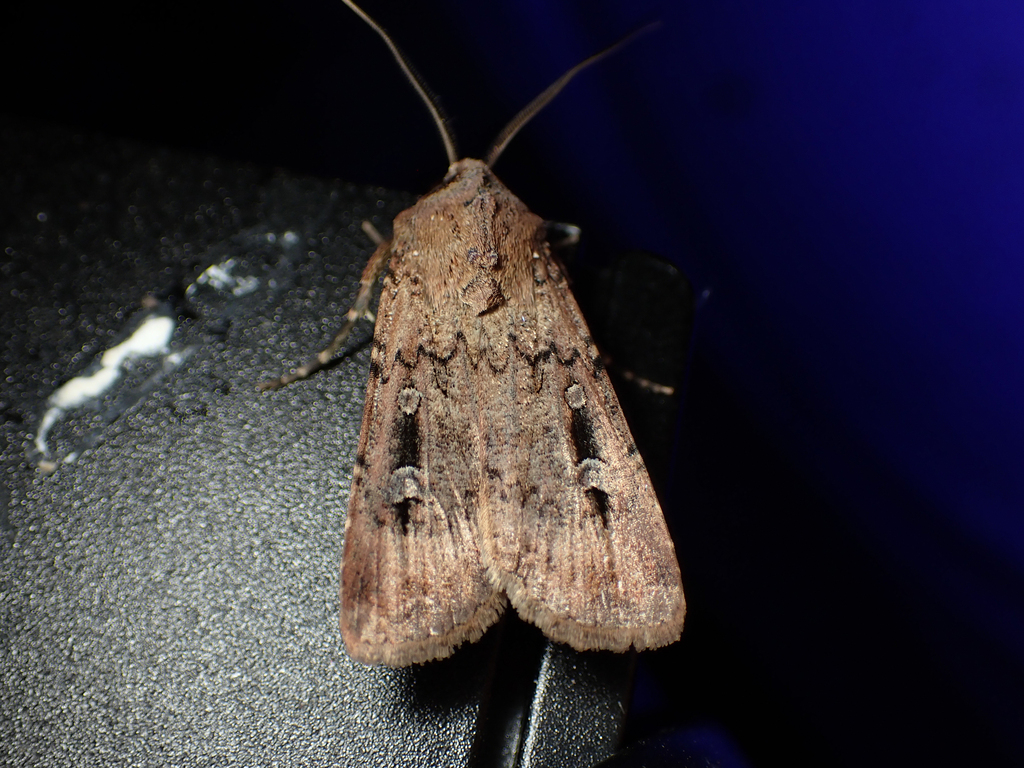

Endangered bogong moths are turning up in homes along Australia’s east coast as they make their annual migration to the Australian Alps.
Northern Beaches Council said swarms have been reported across Sydney’s Northern Beaches, the South Coast and regional New South Wales.
The council said northerly winds and a warmer climate appear to have pushed the moths off their usual route. It urged residents to turn off indoor lights, leave one outdoor light on, and use a glass and a piece of cardboard to move moths outside.
Bogong moths are legally protected, and the council asked people not to spray them with insecticide.
The bogong moth (Agrotis infusa) breeds across southern Queensland, central New South Wales and western Victoria.
Zoos Victoria said the moths fly up to 1,000 kilometres to the alpine zone each spring before heading back in autumn.
Research has found they can navigate using the night sky and Earth’s magnetic field.
Eggs hatch in autumn or early winter in the soil, according to a national threatened species research report (pdf). The larvae, known as cutworms, feed through winter, and the adults emerge in early to mid-spring.
According to the Australian Museum, the adults rest in cool mountain caves and live off stored fat over summer. Each moth completes the cycle in about a year and dies after laying eggs.
The report said adult moths feed on the nectar of native plants such as eucalyptus, grevillea, and epacris during their journey. Their arrival in the Alps also represents ‘a huge nutrient transfer’ as the snow melts, it said.
The critically endangered mountain pygmy possum relies on the moths, at least in part, to regain its body condition after winter dormancy.
But bogong moth numbers have fallen sharply.
The Epoch Times reported in 2023 that the population had dropped by 99.5 percent between 2017 and 2018 due to severe droughts, light pollution and changing land use. The International Union for Conservation of Nature listed the species as endangered in December 2021.
Zoos Victoria runs a Moth Tracker website where the public can upload photos of bogong moth sightings, which are checked and shared with researchers and government agencies.
There is also a website dedicated to conserving and eventually tagging the moths during next year’s migration.
 Friends Read Free
Copy
Facebook
Tweet
Friends Read Free
Copy
Facebook
Tweet