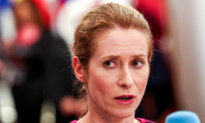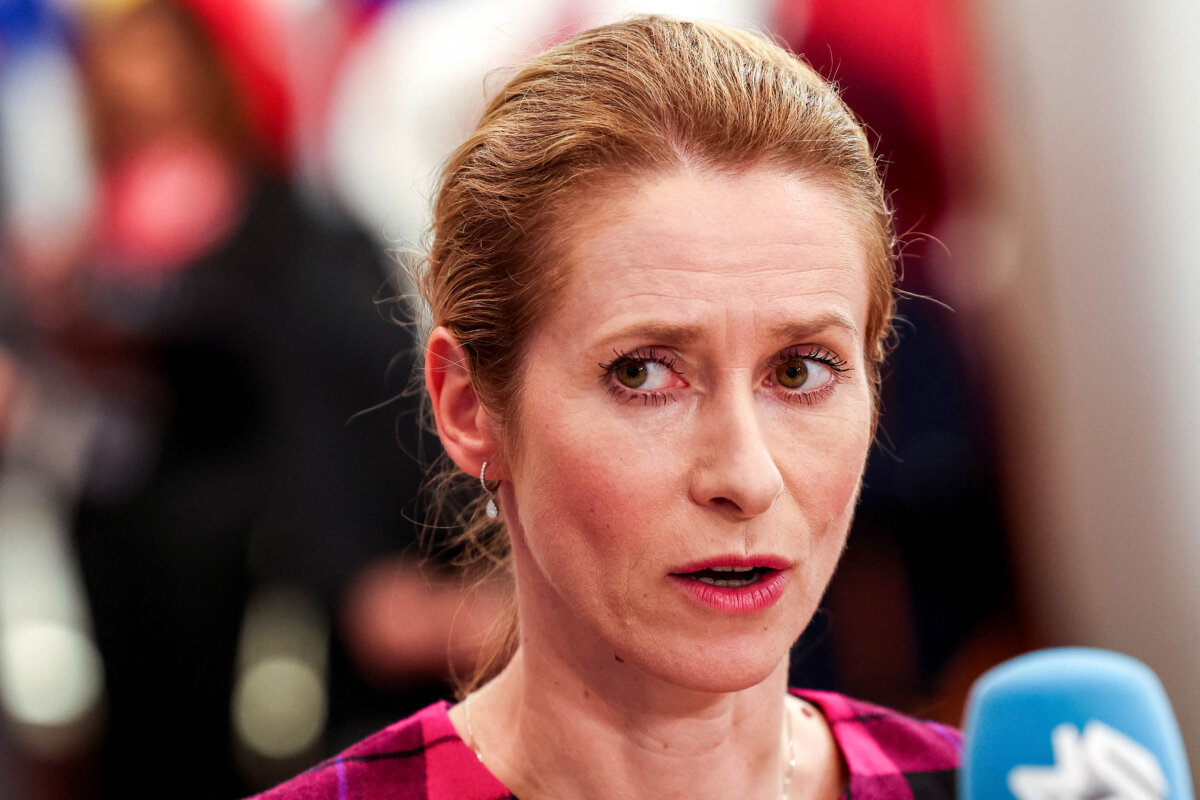

EU countries are close to reaching an agreement on a new package of sanctions against Russia, the bloc’s foreign policy chief Kaja Kallas said on Tuesday.
In June, the European Commission proposed the eighteenth package of sanctions against Russia, targeting the country’s energy and banking sectors over its role in the ongoing conflict in Ukraine.
“We really welcome the news that comes from the United States that they will provide weapons to Ukraine, so that they can defend themselves,” Kallas said on July 15 before a meeting with foreign affairs ministers from the 27 EU countries in Brussels. “Of course, we hope to reach also a political agreement on the eighteenth sanctions package. We are very, very close. I hope it comes today.”
The proposed sanctions package included a plan to lower the oil price cap from $60 to $45 per barrel. Oil exports account for one-third of the Russian government’s revenue.
“It’s alive,” Kallas said when asked about the proposal. “We have made proposals, but it is a question whether we can overcome the veto of one Member State or not, but we are trying to work on that.”
Sanctions require the unanimous approval of the 27 EU member states.
Slovak Prime Minister Robert Fico and Hungarian Prime Minister Viktor Orban previously signaled they would block future EU sanctions against Russia. Slovakia and Hungary are recipients of Russian gas and oil supplies.
The sanctions package also proposes banning transactions with Russia’s Nord Stream gas pipelines. This means that no EU operator will be able to engage directly or indirectly in any transactions regarding the Nord Stream pipelines.
“The Russian economy is deeply affected by the sanctions,” EU Commission President von der Leyen said in June, adding that 210 billion euros ($245 billion) worth of reserves of the Central Bank of Russia are “immobilised.”
Von der Leyen said that Russia’s oil and gas revenues have fallen by almost 80 percent compared to before the war and that its deficit is “skyrocketing.”
“Interest rates are prohibitively high. Inflation is on the rise, well above 10 percent. The price of importing technologies and critical goods is six times higher than before the war and compared to global average prices,” she said
“In short, Russia’s economy is limited to a war economy and sacrificing future prospects.”
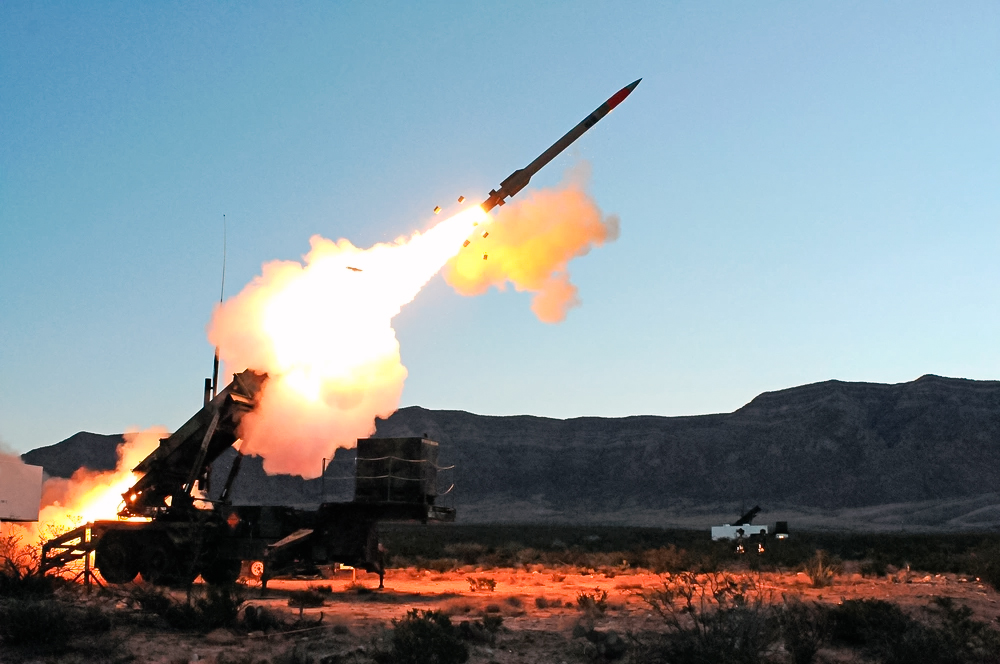
On Monday, President Donald Trump said that the United States will deliver Patriot air defense missiles to Ukraine, with the European Union covering the cost.
“We basically are going to send them various pieces of very sophisticated military equipment,” he said.
“I haven’t agreed on the number yet, but they’re going to have some because they do need protection, but the European Union is paying for it. … We will send them Patriots, which they desperately need.”
Trump criticized Russian President Vladimir Putin for continuing to launch attacks against Ukraine, despite previously signaling support for ending the war that has been going on since February 2022.
“Putin really surprised a lot of people,“ Trump said. ”He talks nice and then bombs everybody in the evening. There’s a little bit of a problem there. I don’t like it.”
Trump also said that he would impose “very severe” secondary tariffs on Russia if Putin does not agree to a cease-fire with Ukraine in 50 days.
“We’re going to be doing secondary tariffs if we don’t have a deal in 50 days,” Trump said. “It’s very simple, and they’ll be at 100 percent.”
Former Russian President Dmitry Medvedev said in a July 15 post on social media platform X that Trump had issued a “theatrical ultimatum to the Kremlin” and that “Russia didn’t care.”
Ukrainian President Volodymyr Zelenskyy said in a July 13 post on the social media platform X that the Russians “are intensifying terror against cities and communities to increasingly intimidate our people.”
He said that there have been “seven days of large-scale Russian attacks on Ukraine: over 1,800 drones, more than 1,200 guided aerial bombs, and 83 missiles of various types.”
On July 6, the Russian Ministry of Defence said anti-aircraft systems downed 120 Ukrainian drones overnight, mostly in regions bordering Ukraine.
The ministry said the intercepted drones included 30 over the western Bryansk region, 29 in the Kursk region, and 17 in Belgorod.
Days later, the defense ministry said that a Ukrainian drone attack on a beach in the Russian city of Kursk on July 8 killed three people and wounded seven. Another two people were injured in a drone attack “on the central district hospital, an ambulance service building and the administrative building of an agricultural company,” according to state-owned news agency TASS.
Aldgra Fredly and Andrew Moran contributed to this report.
 Friends Read Free
Copy
Facebook
Tweet
Friends Read Free
Copy
Facebook
Tweet