
The European Union has designated Iran’s Islamic Revolutionary Guard Corps (IRGC) as a terrorist organization and approved new sanctions against 15 Iranian individuals and six entities.
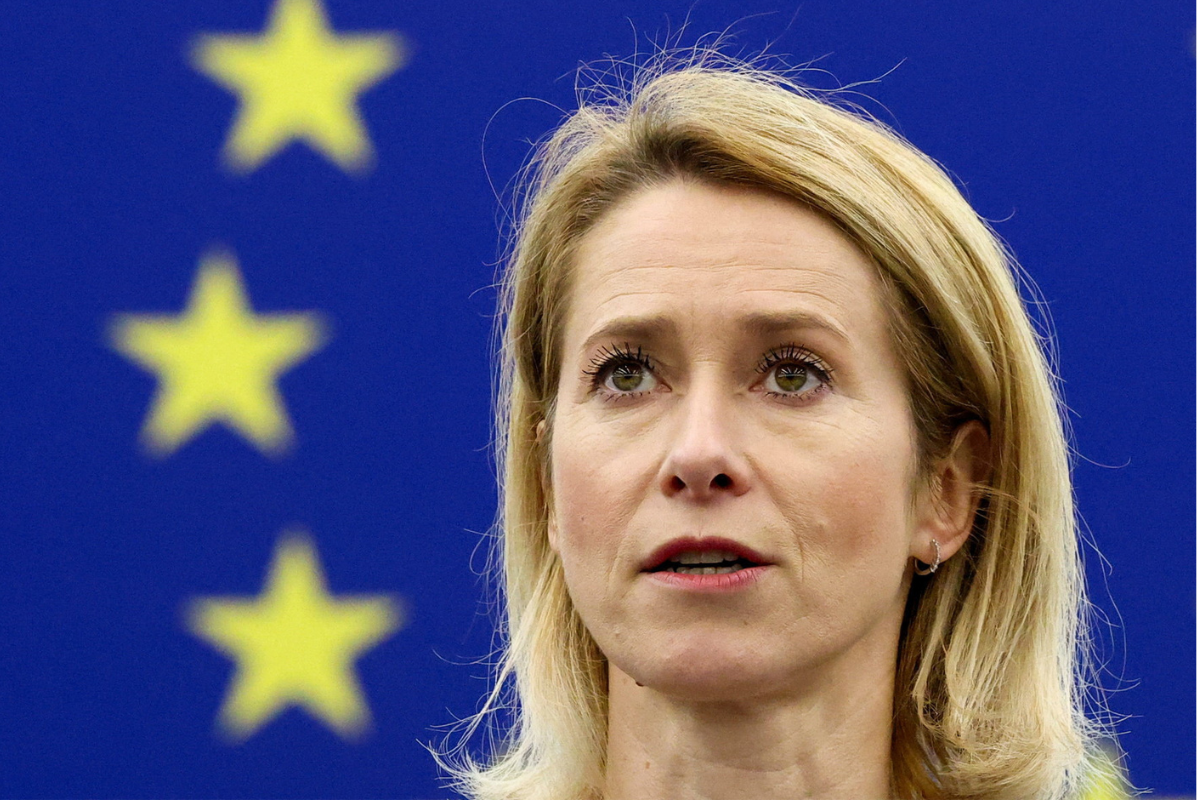
EU foreign policy chief Kaja Kallas announced the move in a Jan. 29 statement on X, following an EU Foreign Council meeting in Brussels.
“Repression cannot go unanswered. EU Foreign Ministers just took the decisive step of designating Iran’s Revolutionary Guard as a terrorist organisation,” she said. “Any regime that kills thousands of its own people is working toward its own demise.”
EU foreign ministers also approved new sanctions against individuals and entities, which the bloc said were “responsible for serious human rights violations in Iran.”
The new listings include Iranian Interior Minister Eskandar Momeni and members of Iran’s judicial system, including Prosecutor General Mohammad Movahedi-Azad and Iman Afshari, a presiding judge.
The new sanctions also cover some IRGC commanders and high-ranking officers of the police and the Law Enforcement Force (LEF).
“They were all involved in the violent repression of peaceful protests and the arbitrary arrest of political activists and human rights defenders,” the EU said.
Iranian Audio-Visual Media Regulatory Authority (SATRA), Seraj Cyberspace Organization, the Working Group for Determining Instances of Criminal Content (WGDICC), and several software companies were also on the list.
EU officials alleged these entities were “involved in censoring activities, trolling campaigns on social media, spreading disinformation and misinformation online, or contributed to the widespread disruption of access to the internet by developing surveillance and repression tools.”
The sanctions include asset freezes, bans on travel to the European Union, and a prohibition on making funds or economic resources available to those listed, according to the statement.
The EU also maintains a ban on exports to Iran of equipment that could be used for internal repression, including technology for monitoring telecommunications.
EU restrictive measures linked to human rights violations in Iran now apply to 247 individuals and 50 entities, the council said Jan. 29.
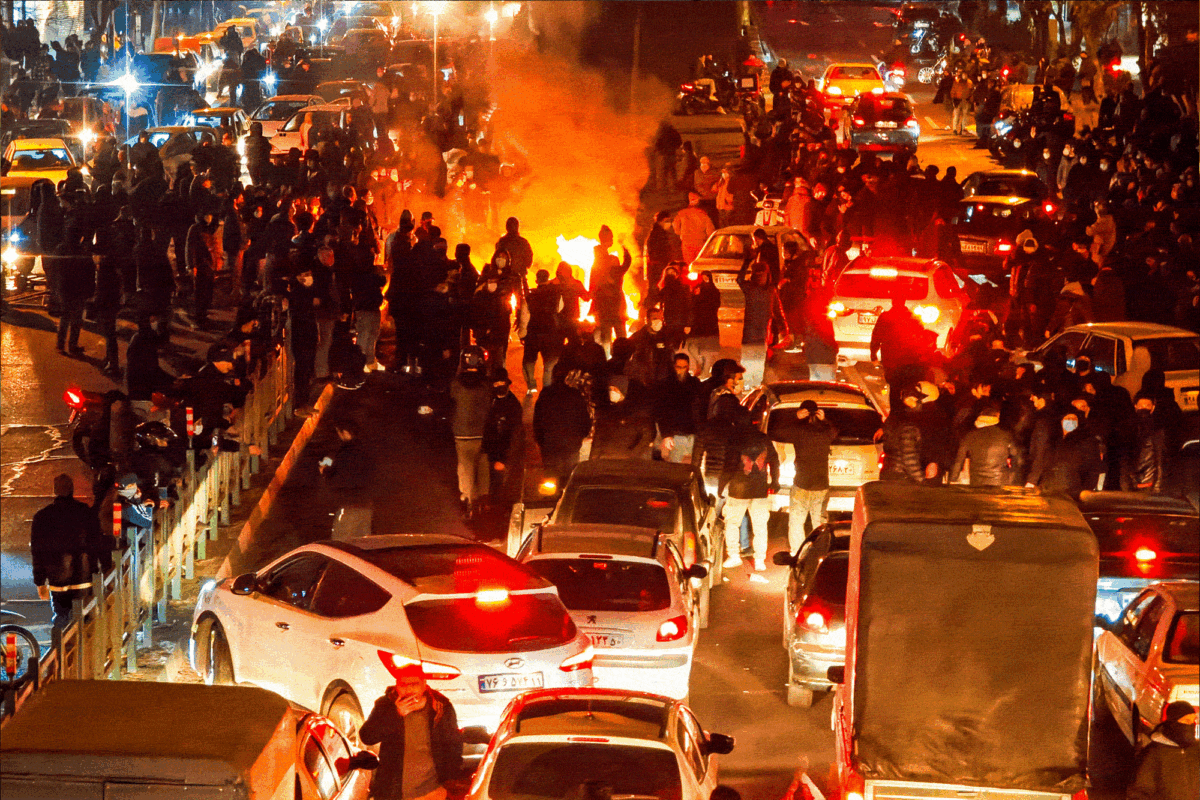
The measures followed widespread protests that erupted across Iran that started in late December and were initially triggered by rising living costs and economic decline. In response to anti-government protests in the country, Iranian authorities shut down the internet and communications.
EU officials said Jan. 29 they stand in solidarity with the Iranian people “as they voice their legitimate aspiration for freedom and dignity.”
The designation comes after France backed the move on Jan. 28 and amid intensifying pressure by the United States.
French Minister for Europe and Foreign Affairs Jean-Noël Barrot said in a Jan. 28 post on X that “the unbearable repression of the peaceful uprising of the Iranian people cannot go unanswered.”
The IRGC has been designated as a Foreign Terrorist Organization by the United States since April 2019.
U.S. President Donald Trump has repeatedly warned Tehran against executing protesters, signaling that further escalation could provoke a military response.
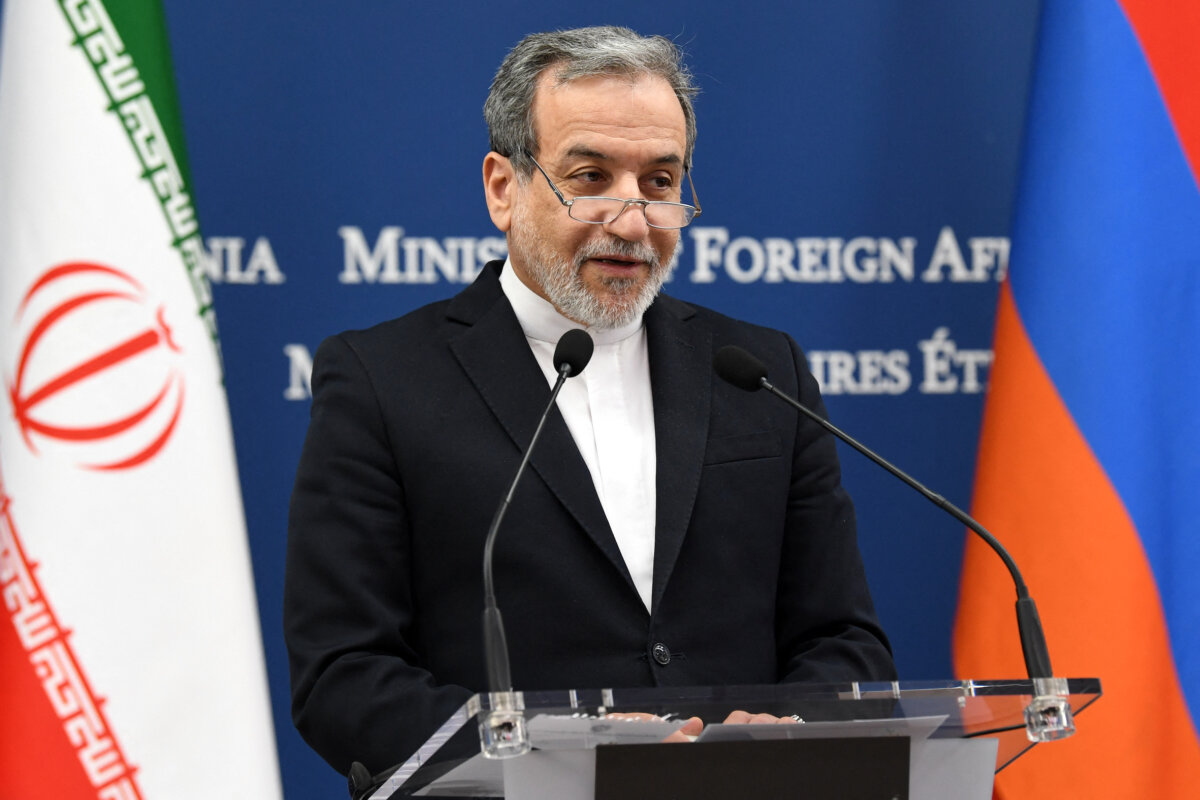
Iranian Foreign Minister Abbas Araghchi described the EU’s designation as a “PR stunt” in a Jan. 29 post on X.
“Putting aside the blatant hypocrisy of its selective outrage—taking zero action in response to Israel’s Genocide in Gaza and yet rushing to ‘defend human rights’ in Iran—Europe’s PR stunt mainly seeks to cloak that it is an actor in severe decline,” he said.
He accused Europe of “fanning the flames” and noted that “an all-out war in our region” would lead to “surging energy prices.”
“The EU’s current posture is deeply damaging to its own interests,” Araghchi said. “Europeans deserve better than what their governments have to offer.”
 Friends Read Free
Copy
Facebook
Tweet
Friends Read Free
Copy
Facebook
Tweet