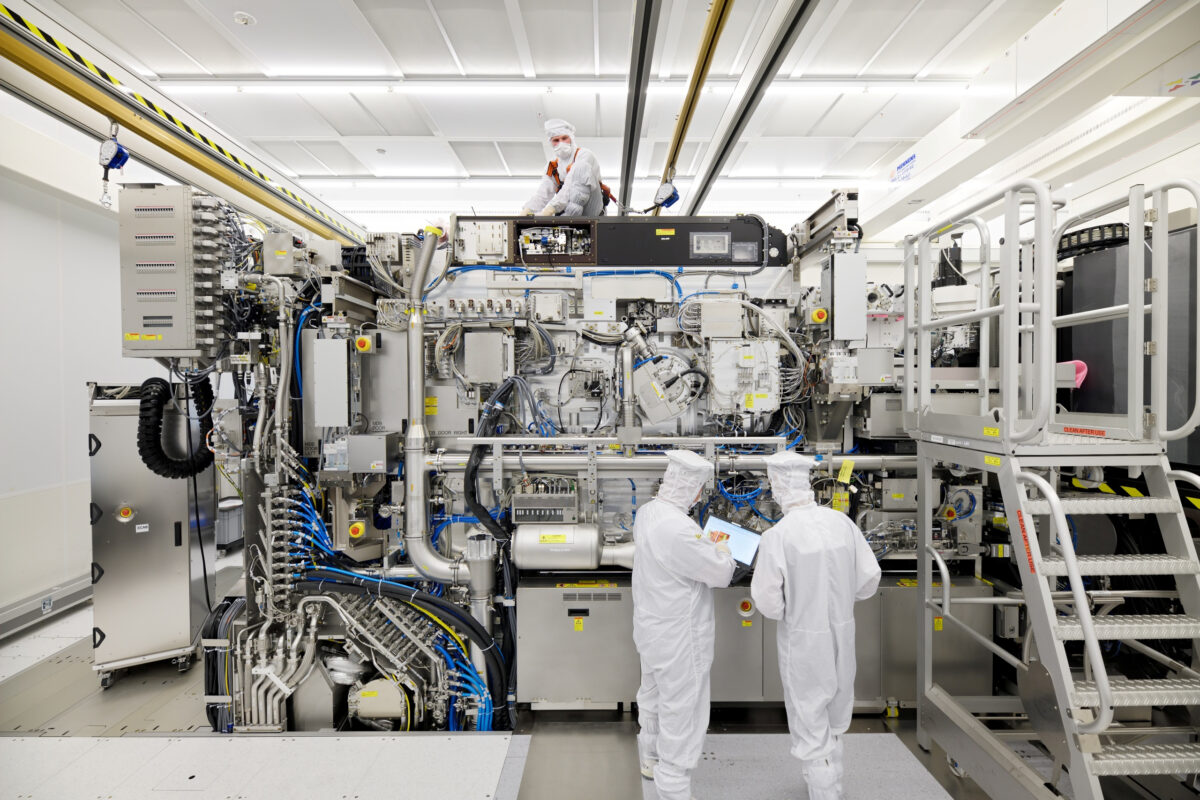

The European Union presented a plan on June 3 to expand its domestic technology supply chains, which involves pursuing greater independence in semiconductors and artificial intelligence (AI).
The EU remains heavily dependent on suppliers outside the bloc for core digital technologies as demand for computing capacity rises sharply with the spread of AI.
EU Commission President Ursula von der Leyen said the bloc cannot afford to depend on others for technologies.
“This is about protecting our citizens, defending our interests and making our own choices. Europe has the talent, the research excellence, the industrial base and the Single Market,” she said on June 3. “Together, we must turn these strengths into technological sovereignty.”
The European Technological Sovereignty Package includes two legislative proposals, the Chips Act 2.0 and the Cloud and AI Development Act, as well as the Open Source Strategy and a Strategic Roadmap for Digitalisation and AI in Energy.
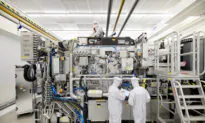
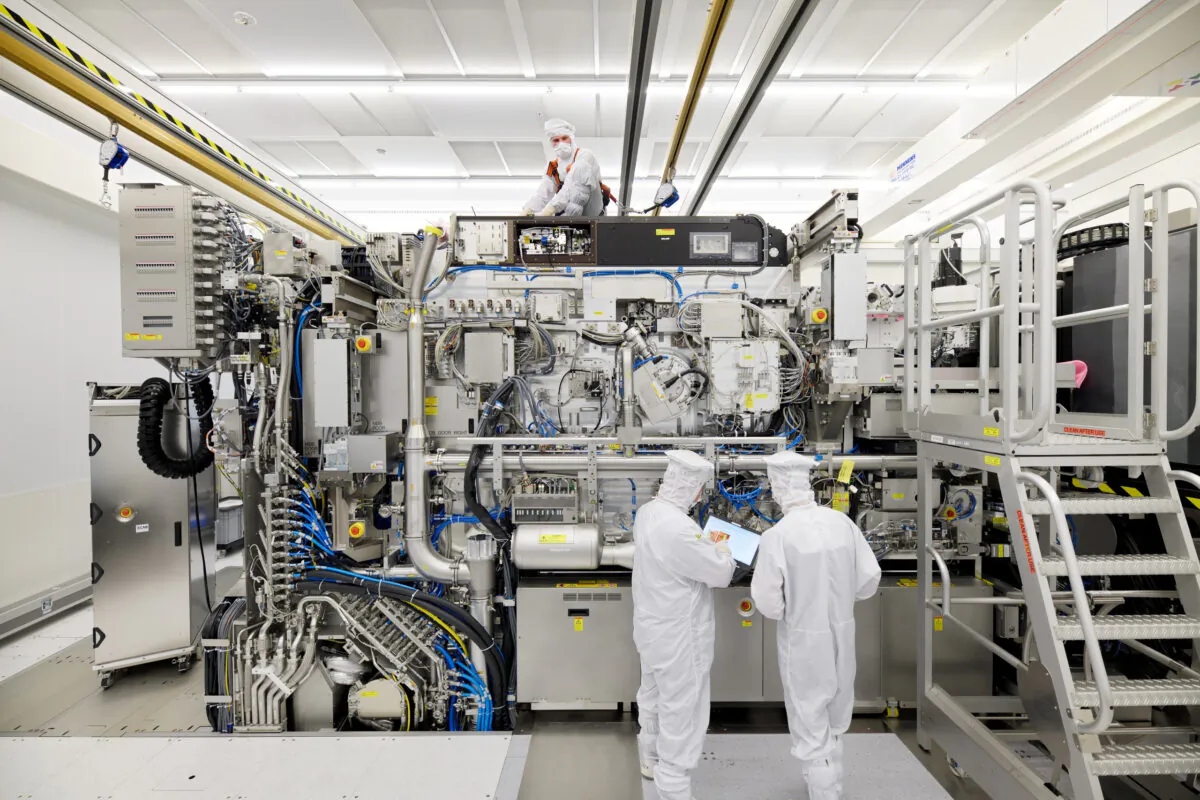
The commission said that semiconductors are essential for AI and for technologies Europeans use every day. The European Union currently produces 10 percent of the world’s microchips, but it wants to double that share.
In force since 2023, the European Chips Act was the EU’s first response to “critical vulnerabilities in the global semiconductor supply chain,” the commission said.
The EU said Europe still relies heavily on “third countries” for advanced production and chip design. The commission did not mention the United States, China, Taiwan, or Asia.
It said it expected AI-related components to drive future growth and account for more than 70 percent of the semiconductor market by 2030.

The EU said that the new Chips Act 2.0 will speed up permitting in Europe’s mainstream chips and build capacity in semiconductor technologies.
The Cloud and AI Development Act aims to triple data center capacity in Europe over the next five to seven years, and its Open Source Strategy aims to support greater use of open source ecosystems in public administrations.
The commission said its AI Continent Action Plan aims to make Europe a global leader in artificial intelligence, and it plans to launch a call for AI gigafactories in July. It also said that it wants the roadmap to enable a faster rollout of smart meters.
The package comes amid a wider push in Europe to reduce dependence on foreign technology providers.
Earlier in the year, the French government said it planned to phase out U.S.-made video-conferencing tools such as Zoom and Microsoft Teams by 2027.
In a statement on Jan. 26, officials said the move is intended to end reliance on non-European technology.
The policy applies only to government bodies and public institutions, not to private citizens or businesses.
According to French authorities, the current patchwork of platforms, including Teams, Zoom, GoTo Meeting, and Webex, weakens data security, creates strategic dependencies on foreign infrastructure, and complicates cooperation between ministries.
The government also stated that relying on non-European providers exposes sensitive communications to legal, technical, and geopolitical risks beyond France’s control.
In a June 3 post on X, Valérie Hayer, a French member of the European Parliament and deputy secretary-general of French President Emmanuel Macron’s Renaissance party, said the bloc must “break loose from foreign dependencies to become its own digital giant.”
“Recent geopolitical tensions have made one thing clear: when technology becomes a tool of power, dependence becomes a vulnerability,” she said. “Europe must not only invent the technologies of tomorrow. We must produce them, scale them and lead with them.”
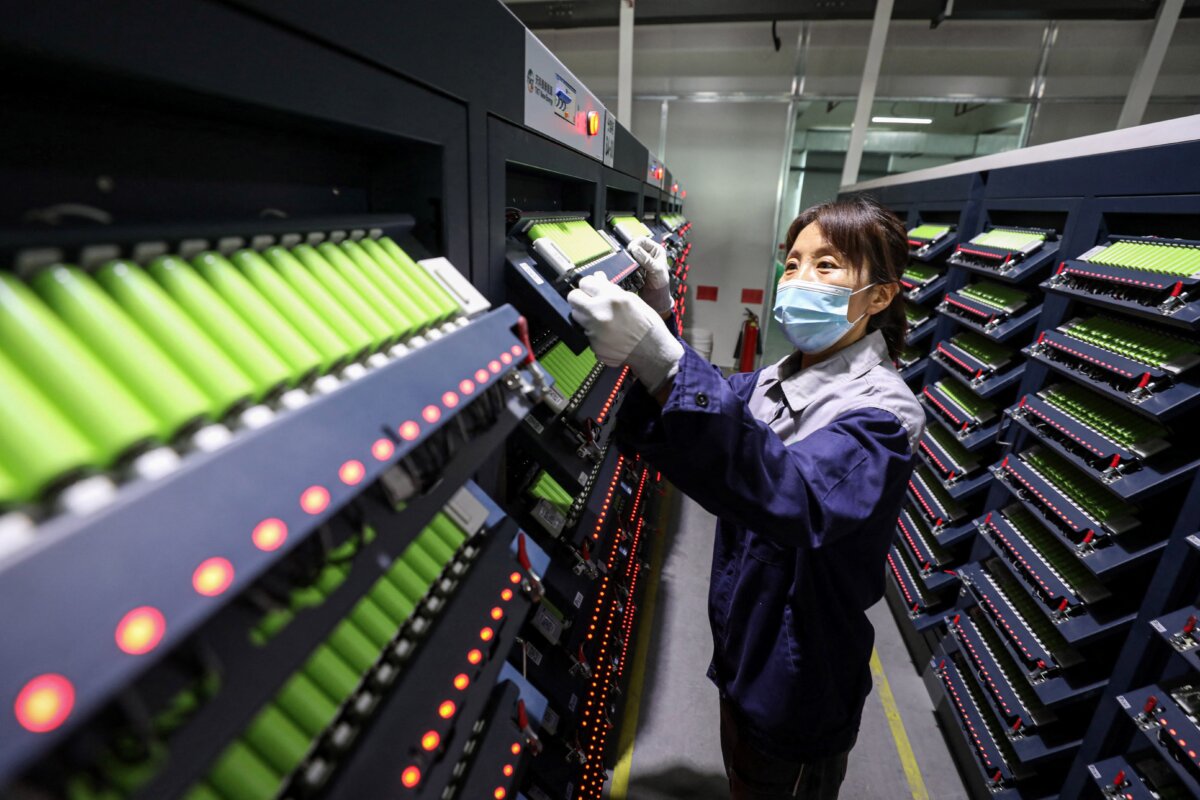
Europe is mainly dependent on China for its batteries, from materials to production.
The European Battery Alliance, which was started in 2017 by the European Commission, has the political objective of ensuring that European manufacturers meet 90 percent of the EU’s annual battery deployment needs in 2030.
The European Commission said on May 29 that the European Union’s current trade and investment relationship with the Chinese communist regime is no longer sustainable.
The commission reiterated that it would continue engaging with China while pursuing a strategy of “de-risking” rather than full economic decoupling.
“China is a critical partner, and engagement and dialogue will continue,” the commission stated at the time. “At the same time the current state of the trade and investment relationship is not sustainable.”
James Xu contributed to this report.
 Friends Read Free
Copy
Facebook
Tweet
Friends Read Free
Copy
Facebook
Tweet