
European leaders gathered in The Hague, Netherlands, on Dec. 16 to launch an International Claims Commission designed to compensate Ukraine for the damage and alleged war crimes perpetrated in the country by Russia.
Scores of senior figures from across the continent descended on the International City of Peace and Justice to formally approve plans to create the compensation body. They included Ukrainian President Volodymyr Zelenskyy, Dutch Acting Prime Minister Dick Schoof, and European Union foreign policy chief Kaja Kallas.
A total of 34 countries, as well as the EU, became signatories to the document establishing the commission, which is being set up under the auspices of the Council of Europe, which was founded in 1949 to promote democracy, human rights, and the rule of law across the continent.
It is Europe’s longest-standing intergovernmental organization and comprises 46 member states, 19 more than the EU.
“The goal is to have validated claims that will ultimately be paid by Russia. It will really have to be paid by Russia, this commission offers no guarantee for the damages,” Dutch Foreign Minister David van Weel said, though details of how any damages awarded by the commission would be paid are yet to be thrashed out.
Early discussions have mooted using assets belonging to Moscow, which the EU has frozen, to fund potential payments with supplementary funds to be provided by member contributions.
The Register of Damage for Ukraine, now two years old, will form part of the claims commission and has already received more than 86,000 claims submitted by individuals, organizations, and public bodies in Ukraine under a raft of categories.
“That’s exactly where the real path to peace begins,” Zelenskyy told the Dutch parliament.
“It’s not enough to force Russia into a deal. It’s not enough to make it stop killing. We must make Russia accept that there are rules in the world.”
“We hope the Tribunal for Russian aggression will truly begin its work—not just for us, but for everyone who wants peace in Europe,” he added later in a post on X.
“We expect that every mechanism for compensation from the Register of Damage and Claims Commission to the actual payments will start working and receive strong and sufficient international support, so that people can truly feel that any kind of damage caused by the war can be compensated.”
He added that the war and Moscow’s culpability for starting it must serve as a “clear example,” so others will not “choose aggression.”
“Russia will not escape the bill for the homes, schools, and hospitals it has destroyed,” Kallas wrote on X.
“Today in The Hague, we take a major step toward accountability by establishing a commission to address claims for Russian war damages.”
Kallas added that the EU will support the commission’s work, including with an initial contribution of 1 million euros ($1.8 million).
The commission, which forms the second part of an international compensation mechanism for Ukraine, will review, assess, and decide on claims submitted to the Register of Damage for Ukraine, which was created by the Council of Europe in 2023, and determine compensation on a case-by-case basis.
Claims can be filed for damage, loss, or injury caused by Russian acts committed in or against Ukraine on or after Feb. 24, 2022, and there is currently no time limit for submitting these claims.
Plans to compensate victims of war crimes could, however, founder if the total amnesty proposed in U.S. President Donald Trump’s original 28-point peace plan were to be brought in.
The World Bank has estimated the cost of reconstruction in the coming decade at $524 billion, nearly three times Ukraine’s 2024 economic output.
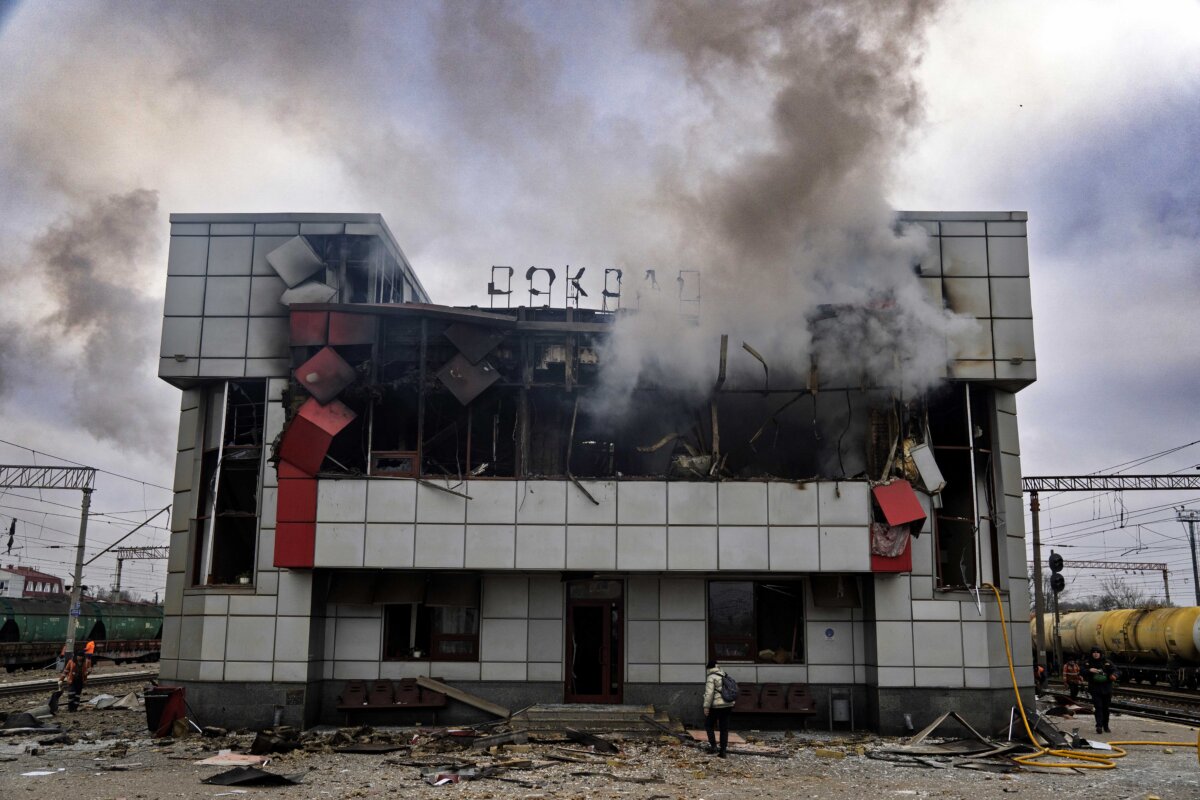
However, that figure does not include damage caused this year, which saw an escalation in Russian drone and missile strikes on utilities, transport, and civilian infrastructure.
Russia has not yet made any public comments on the commission’s launch.
Reuters contributed to this report.
 Friends Read Free
Copy
Facebook
Tweet
Friends Read Free
Copy
Facebook
Tweet