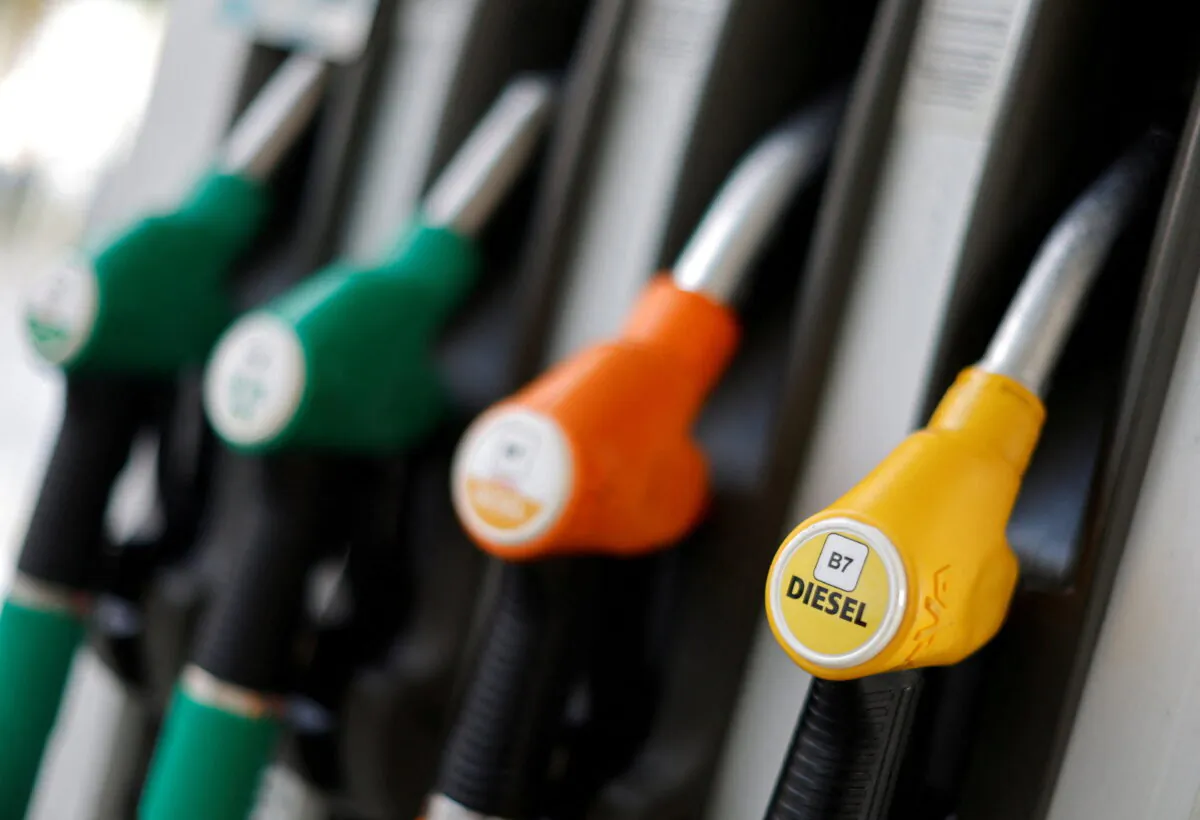

Eurozone inflation rose more than expected in May, driven by higher energy prices and a sharp pickup in services costs, according to a flash estimate from the European Union’s statistics office.
Eurostat, the European Union’s statistical office, said on June 2 that energy inflation had the highest annual rate among the main components, rising to 10.9 percent in May from 10.8 percent in April.
Services inflation also rose to 3.5 percent from 3 percent, while underlying inflation, which excludes volatile energy and food prices, increased to 2.5 percent from 2.2 percent.
The figures were released as European manufacturers report renewed cost pressures linked to higher energy prices, shipping disruption, and rising raw material costs, raising concerns that inflation could remain above the European Central Bank’s (ECB) target.
“The further increase in headline and particularly services inflation in May reinforces the case for the ECB to raise interest rates next week and suggests that upside risks to underlying inflation may be higher than we had anticipated,” Andrew Kenningham at Capital Economics said.
Financial markets have fully priced in a 25-basis-point rate hike on June 11, with one or two more expected in the autumn.
“While inflation risks have increased, a rate increase in June would be an insurance one, but not due to entrenched inflationary pressures,” Finnish central bank chief Olli Rehn, who is on the ECB’s Governing Council, said.
European manufacturers raised prices at the fastest pace in nearly four years in May as the war in the Middle East pushed up energy costs, disrupted shipping routes, and squeezed supply chains.
Manufacturing surveys released by S&P Global on June 1 showed that factories across the UK, Germany, France, and the eurozone overall reported higher costs for fuel, electricity, transportation, and raw materials.
Many companies said delays in global shipping routes, particularly around the Strait of Hormuz, were making it harder and more expensive to obtain supplies.

As a result, businesses increasingly passed those costs on to customers.
The reports suggest that the conflict is beginning to ripple through Europe’s industrial economy, creating new inflation pressures while slowing demand and weakening a manufacturing recovery that had only recently begun to take hold.
France’s private sector shrank in May at the sharpest pace since 2020, as services activity declined faster and manufacturing output fell again, according to preliminary S&P Global survey data released on May 21.
The fall was due to the war in the Middle East, according to French firms, who frequently cited fuel and energy cost pressures, as well as broader economic angst, as reasons for lower output.
S&P Global said that price indices continued their ascent in May, signaling a further rise in inflationary pressures across France, and that input costs and output charges rose at their quickest rates in at least three years.
S&P Global’s flash PMI surveys are closely watched by markets because they offer the earliest monthly readings on private-sector activity and are seen as an early gauge of economic health.
Joe Hayes, principal economist at S&P Global Market Intelligence, said in a statement last month that its survey for France provided a “dire set of numbers.”
He said that the inflationary impact of the “oil-price shock” continues to spread, with price indices in both manufacturing and services rising once again.
Hayes said that another concern is “that a broader uplift in the economy’s overall price level raises the risk of further demand destruction.”
Demand destruction is when prices rise so high that consumers and businesses are forced to reduce their use of a product.
Separate S&P Global surveys, also both released on May 21, showed similar pressure in Germany and the UK.
In Germany, private-sector business activity fell for a second consecutive month in May amid weakening demand and elevated inflationary pressures.
Evgenia Filimianova and Reuters contributed to this report.
 Friends Read Free
Copy
Facebook
Tweet
Friends Read Free
Copy
Facebook
Tweet