
The federal government is making $1.5 billion available to support Canadian companies affected by U.S. metal tariffs.
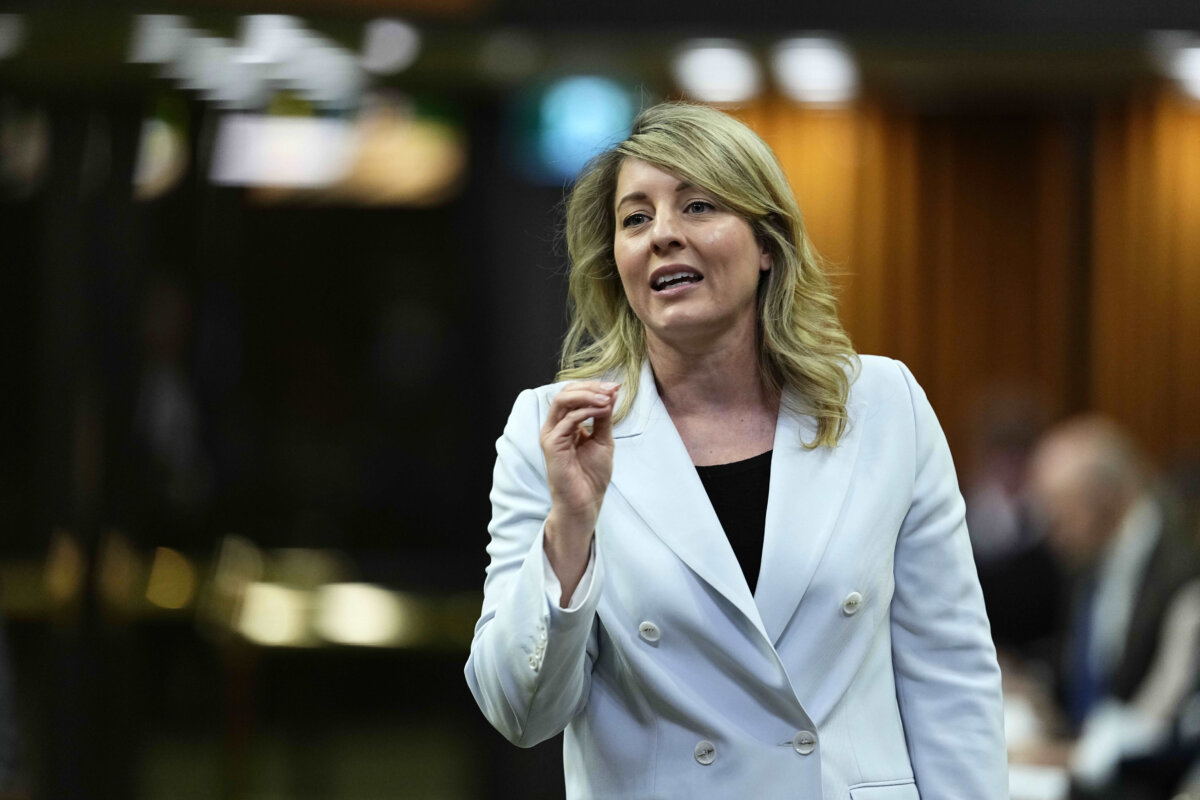
Industry Minister Mélanie Joly and Artificial Intelligence Minister Evan Solomon made the announcement on May 4 while visiting a manufacturing facility in Vars, Ont.
The support includes a new Business Development Bank of Canada program offering $1 billion in loans to companies that produce and export goods containing steel, aluminum, and copper.
A separate $500 million program managed by the federal Regional Development Agencies will provide funding to small- and medium-sized enterprises.
The measures come after U.S. President Donald Trump strengthened his country’s universal tariffs on steel, aluminum, and copper in early April. Trump imposed the tariffs on national security grounds to energize domestic manufacturing.
Tariffs are now applied to the full customs value of derivative goods made with the targeted metals. Previously, they only applied on the value of the metals contained in a product.
Joly said the new measures are required to safeguard jobs, critical industries, and supply chains, and are key to Canadian sovereignty.
“Should Canada be one day in conflict, we need to be having these capabilities, particularly on the steel and aluminum side,” she said.
The Business Development Bank of Canada (BDC) program will provide three-year loans of between $2 million and $50 million on favourable terms to impacted businesses.
Interest rates will be at zero for the first year, with “very low” rates for the two following years, Joly said. No loan repayments will be required for three years.
Asked by reporters whether safeguards will be in place to prevent abuses similar to those seen among government relief programs during the pandemic, Solomon said strict rules will ensure the funds are used properly.
“Those are carefully followed up and scoped and tracked very carefully,” Solomon said of funding provided through the Regional Development Agencies. Solomon and Joly oversee economic development agencies in Southern Ontario and Quebec, respectively.
“And of course, BDC… has very strict regulations and follow-up for all their loans. So we’re very confident that this money is going to where it’s needed,” Solomon added.
The Conservatives said the Liberal government’s new measures indicate that Ottawa will not be able to reach a trade agreement with Washington “anytime soon,” even though Prime Minister Mark Carney was elected on a pledge to negotiate a deal with Trump.
“Real relief does not come from government loan programs. It comes from getting tariffs reduced or eliminated,” said Tory MP Raquel Dancho, who serves as her party’s industry critic, in an April 4 statement.
Carney said in late April that Canada is ready to enter detailed negotiations with the United States, but is also ready to wait “if that’s what has to happen.”
The Bloc Québécois criticized the Liberals for not acting sooner, noting that the modified tariffs are severely impacting Quebec businesses. The party proposed different relief measures.
Bloc MP Gabriel Ste-Marie said businesses do not need loans, but rather temporary and targeted payroll subsidies to help impacted industries keep their employees amid a skilled labour shortage. The Bloc is also asking Ottawa to set up a helpline to help businesses navigate U.S. tariffs instead of having to rely on advice from expensive trade attorneys.
 Friends Read Free
Copy
Facebook
Tweet
Friends Read Free
Copy
Facebook
Tweet