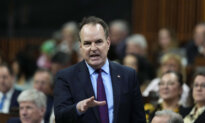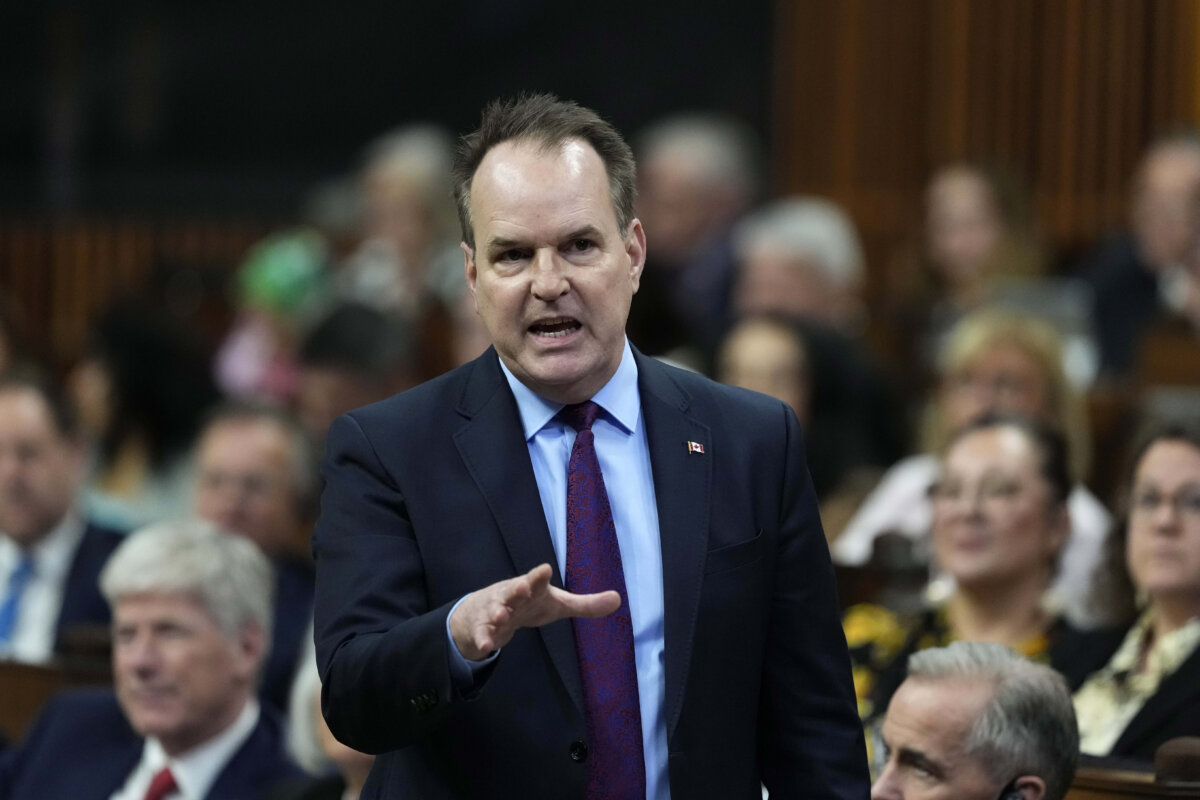

Liberal House leader Steven MacKinnon says the government is proposing a debate March 9 on unrest in the Middle East, after members of cabinet discussed the issue over the weekend.
“The government has proposed to other parties in the House of Commons that a debate on the hostilities in Iran and the Middle East and the impact for Canadians abroad be held Monday evening in the House,” MacKinnon, who is also transport minister, said in a March 8 X post.
The NDP and Conservative parties did not immediately respond to a request for comment about the proposed debate, and the office of Prime Minister Mark Carney did not confirm if the prime minister would participate in the debate.
The Prime Minister’s Office (PMO) said in a March 8 readout that Carney convened the Incident Response Group with ministers and senior officials earlier that day to discuss the ongoing conflict between Iran and the United States and Israel.
The war erupted on Feb. 28 as the United States and Israel launched major strikes on Iran, and Iran responded with retaliatory strikes against Israel and U.S.-related military installations in nearby Arab Gulf countries.
The PMO also said in a separate readout that Carney and U. S. President Donald Trump spoke on March 8 “on a range of issues,” including the Iran operation.
Carney referenced the phone call in a brief social media post.
“I spoke with President Trump this afternoon on a range of issues, including the economy, developments in the Middle East, and trade relations between our two countries — and we agreed to stay in close contact,” he wrote.
The PMO said Carney and his ministers are concentrating Ottawa’s efforts on safeguarding Canadians in the region and collaborating with partners to “de-escalate the conflict.”
“Canada was not consulted, did not participate, and has no plans to participate in the offensive actions against Iran that are being undertaken by the U.S. and Israel,” the PMO readout about the Incident Response Group meeting said.
“The initial conflict has spread widely as a result of attacks by Iran and its proxies on other countries across the broader Middle East.”
The weekend statement from the PMO comes after Carney has made some conflicting remarks about Ottawa’s stance on the joint American-Israeli operation.
Carney initially released a statement on Feb. 28, shortly after the onset of the war, to say Canada supported the U.S. action to prevent Iran from obtaining a nuclear weapon.
Carney said during a March 3 news conference in Sydney, Australia, that the airstrikes “appear to be inconsistent with international law” and said he supported Washington’s strikes on Iran “with regret” as they demonstrated the continued decline of the rules-based international order.
The following day he told reporters the United States and Israel acted without consulting allies, including Canada. He said he didn’t agree with how the two countries have conducted the operation and called on all sides of the conflict to “respect the rules of international engagement.”
He then said during a March 5 press conference in Canberra, Australia, that Canada will “stand by our allies” and would “never categorically rule out participation” in the operation.
Opposition parties have criticized Ottawa on its messaging around the Middle East conflict, saying its confusing and at times contradictory.
The Conservatives said on March 5 that if Ottawa does decide to become militarily involved in the Iran conflict, the issue should first be debated in the House of Commons. The NDP has expressed opposition to the war, and the Bloc Québécois says the strike wasn’t done in accordance to international law.
The Middle East has been in turmoil since the attack began at the end of last month.
Initial airstrikes launched by the United States and Israel against Iran on Feb. 28 left Iranian leader Ayatollah Ali Khamenei dead, as well as several leaders of the Islamic Revolutionary Guard Corps (IRGC).
Iranian state TV announced over the weekend that Mojtaba Khamenei, son of the country’s late supreme leader, has been named his successor. Hours before Iran’s announcement, Trump, who has said that he will be involved in picking Iran’s next leader, warned the Iranian regime that if their appointed successor is not approved by the United States, “he’s not going to last long.”
White House press secretary Karoline Leavitt said on March 6 that Washington expects its offensive against Iran—dubbed Operation Epic Fury—“to last four to six weeks” to achieve its objectives, and said “we are well on our way to achieving those objectives.”
She said the United States has eliminated the ballistic missile threat posed by Iran, and that retaliatory ballistic missile strikes from Iran were “down 90 percent” within six days of the start of the war.
Trump said during a March 8 interview with The Times of Israel that the decision on when to end the Iran War will be a mutual one that he will make with “a little bit” of input from Israel.
The Canadian Press contributed to this report.
 Friends Read Free
Copy
Facebook
Tweet
Friends Read Free
Copy
Facebook
Tweet