
News Analysis
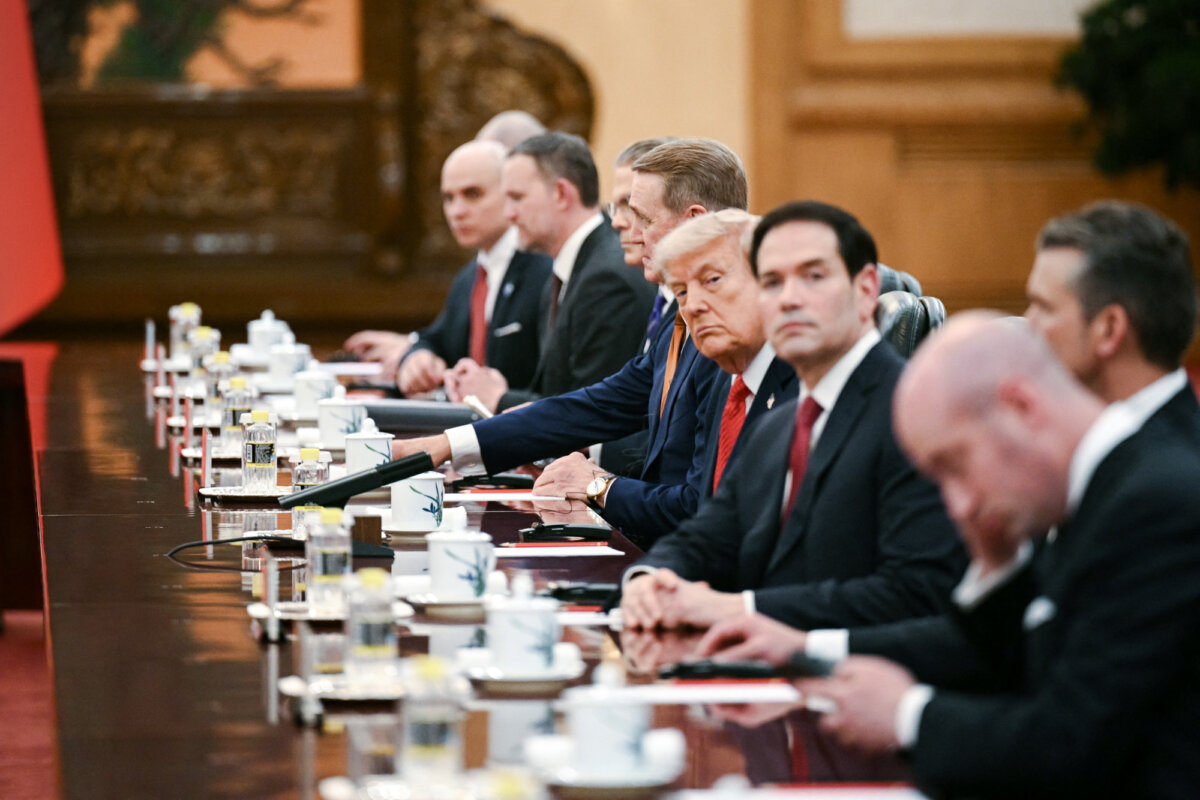
When the White House and China’s Ministry of Commerce released their summaries of last month’s Trump–Xi summit in Beijing, they read in places like accounts of two different meetings.
The White House said Beijing had committed to buying at least $17 billion a year in U.S. agricultural products through 2028, ordering 200 Boeing jets, and addressing U.S. shortages of four specific rare-earth elements: yttrium, scandium, neodymium, and indium.
China’s Ministry of Commerce confirmed the Boeing order but stripped out the numbers on agriculture, did not name a single rare-earth element, and said the aircraft purchase would proceed “in accordance with commercial principles and its own needs.”
The gaps are not random, said Davy J. Wong, a U.S.-based political economist.
He told The Epoch Times that the divergence is deliberate stage management on both sides.
Washington needs concrete, countable wins—purchase volumes, aircraft orders—to show Americans, he said, while Beijing builds vagueness into its pledges to avoid looking like it caved to U.S. pressure.
Notably, the summit produced no joint communiqué, no joint statement, and no joint press conference; each government simply published its own version of what happened.
What looks vague is by design, Chinese Communist Party (CCP) insiders told The Epoch Times of Beijing’s strategy: promise broadly in public, deliver slowly in practice, and keep any real leverage in reserve.
The result, Wong said, is two governments using the same summit—and the same agreed-upon phrase, “constructive, strategic stability”—as cover for the separate structures each is building underneath.
The CCP insiders interviewed by The Epoch Times requested the use of pseudonyms, citing fear of reprisal.
Old Tactics, New Tools
Guan, a source within the CCP’s political establishment familiar with its diplomatic contacts with Washington, told The Epoch Times that Beijing has shifted from the openly confrontational “wolf warrior” diplomacy of recent years to a quieter, old-but-enhanced playbook.
“Now it’s no longer about directly turning hostile,” Guan said. “Instead, they maneuver with the United States through a method of making promises first and adjusting later. If you say one thing and do another, then Beijing can also ‘change its face’ at any time. Reducing rare earth supplies is an example. ‘I agree to provide rare earths but I extend the approval timeline and, when necessary, hold things up.’”
Many countries are already familiar with the CCP’s old playbook—to promise big, deliver little, and blame “market conditions.” Chinese negotiators have used variations of this tactic since at least the country’s entry into the World Trade Organization in 2001. For example, under the 2020 U.S.–China Phase One trade deal, China fulfilled only about 60 percent of its purchase commitments, according to the Peterson Institute for International Economics.
What is new, according to Wong, is the “toolkit” now supporting this old strategy. He called it a shift from focusing on purchasing power to structural denial: Instead of using the promise of China’s vast consumer market as leverage, Beijing now relies on its ability to selectively cut off critical supplies.
During the first trade war in U.S. President Donald Trump’s first term, Beijing had no comprehensive legal infrastructure for economic retaliation; its main levers were retaliatory tariffs and purchase promises used to buy time.
By 2026, Wong said, the CCP had built an “interlocking set of export-control laws” specifically designed for this purpose. The bargaining chip is no longer how much China agrees to buy—it is the state’s “codified authority to legally and selectively cut off or restrict” the supply chains that U.S. industry and defense depend on.
The instruments are recent and stackable, he said.
Beijing’s 2020 Export Control Law gave the CCP its first unified framework for restricting strategic exports.
Its 2024 Regulations on Export Control of Dual-Use Items went further, extending the state’s controls to goods made abroad from China-origin inputs. That authority, under Article 49, was used for the first time in October 2025, when Chinese Ministry of Commerce Announcement 61 placed 13 categories of rare-earth metals and alloys under control.
In January 2026, Beijing added samarium, gadolinium, and lutetium to its licensing catalogue. In March, the Chinese State Council issued Order No. 834, the country’s first dedicated supply chain security framework, folding export controls, countermeasures, data security, and investment screening under one national security mandate.
Guan said the Americans should expect this to continue.
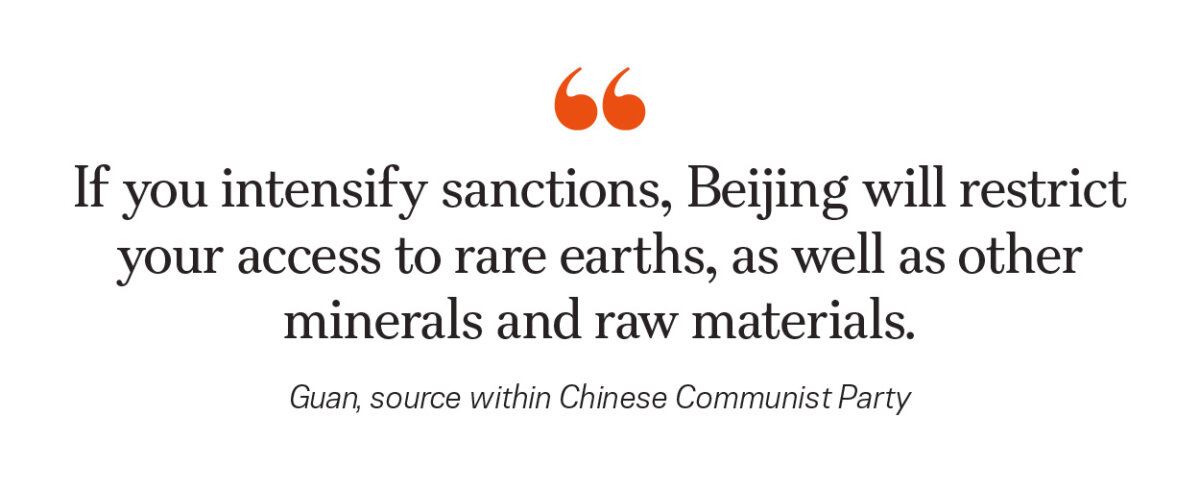
“Today, they promise. The day after tomorrow, they change their mind. But they won’t publicly admit it. The things you want simply won’t be given to you,” he said. “If you intensify sanctions, Beijing will restrict your access to rare earths, as well as other minerals and raw materials.”
Proof in the Data
The squeeze can be seen in customs records.
According to an April 2026 report by the Center for Strategic and International Studies (CSIS), China exported just 17 metric tons of yttrium to the United States in the eight months between April and December 2025, against 333 metric tons in the eight months before Beijing’s April 2025 controls—a roughly 95 percent drop.
Yttrium is a heat-resistant coating used on jet engine parts.
The CSIS analysis said that U.S. aerospace manufacturers are “facing shortages and rationing material, and may need to pause production of certain products if exports do not rise to previous levels.”
Even after Beijing pledged in fall 2025 at the Asia-Pacific Economic Cooperation summit in Busan, South Korea, to suspend new export controls and keep shipments moving, the U.S. share kept shrinking.
The Silverado Policy Accelerator, a Washington think tank that tracks the trade, found that U.S. imports of Chinese rare-earth magnets have fallen every month from October 2025 through March 2026—even as China’s global exports returned to roughly historical levels. The decline was concentrated in the United States.
That divergence, Wong said, goes beyond ordinary market forces and reflects the two economies pulling apart in strategic supply chains.
Rare earths have become the leading edge of a new trade architecture shaped by deliberate, targeted decoupling, Wong said. The decoupling has two main drivers: Beijing’s selective pressure on U.S.-bound shipments, and Washington’s own push to build magnet supplies outside of China.
Underneath the numbers, Beijing’s export-control regime remains fully in place.
The pause in export controls that Beijing agreed to in Busan covered only its sweeping October 2025 controls; the Ministry of Commerce said it would suspend those measures from Nov. 7, 2025, to Nov. 10, 2026, while leaving untouched the original April 2025 licensing regime, which was never lifted. The general licenses that Beijing has issued to let some civilian shipments through do not extend to defense or aerospace buyers.
Wong traced the leverage that Beijing now wields to a Western mistake made decades ago.
In the globalization wave of the 1990s and 2000s, he said, Western industry offshored the dirtiest, most labor-intensive links in the supply chain—rare-earth separation, heavy metallurgy—to China, while promoting clean-energy messaging at home. Because Beijing answers to no labor unions, voters, or environmental liability, it built a cost advantage in upstream processing that the West now cannot easily rebuild.
The choke point, he said, was handed over—not seized.
Washington’s Epiphany
Beijing has been refining an old tactic. Washington, by contrast, has now abandoned an old assumption—and is saying so openly.
At a Council on Foreign Relations event on May 26, U.S. Trade Representative Jamieson Greer said the United States has given up expecting China to fundamentally change under the CCP.
“We’ve just come to terms with the fact that there’s not going to be some giant comprehensive reform of the way the Chinese political system works,” Greer said.
Asking China to abandon its export-driven model, he said, would be like China asking the United States to “get rid of the Republican Party.”
“Some of these things we’ve been asking them for decades are, in fact, part and parcel of their political system,” Greer said.
Council on Foreign Relations President Michael Froman, himself a former U.S. trade representative, asked whether Washington was done with that approach.
Greer’s answer: “I would say, mostly.”
Wong called the remarks a clean break.
For decades, he said, Washington had bet that trade and integration would push Beijing toward reform; the country’s top trade negotiator is now saying that bet is over.
In Wong’s view, economic integration did not move communist China toward Western-style markets—it strengthened a centralized system that was never going to converge with them.
That view now shapes how Washington treats Beijing’s promises: as something to be checked rather than trusted.
Greer’s office opened a formal Section 301 investigation in October 2025 into China’s failure to meet its Phase One obligations and said it will continue regardless of the truce.
“With China, it’s always: We verify and we monitor and we watch the commitments,” Greer told Fox News on Dec. 7, 2025.
A Managed Firewall
The two new bodies—the U.S.–China Board of Trade and the U.S.–China Board of Investment—at the center of the deal from the recent summit are narrow by design.
Greer said the trade board will deal only with “non-sensitive goods”—farm products, energy, aircraft, medical devices—with an initial target of about $30 billion on each side for tariff cuts. Semiconductors, artificial intelligence, and military equipment are out of scope.
Wong calls that line-drawing the formalization of a “geopolitical firewall.”
The point of keeping advanced technology out of the room, he said, is to signal that chip restrictions, outbound-investment screening, and export controls are no longer chips to be traded for soybean orders; they are permanent containment lines.
What the board is actually for, he said, is managing low-stakes interdependence—keeping baseline commodity trade flowing to hold down U.S. inflation and to control the pace of decoupling.
Xie Tian, a professor at the University of South Carolina’s Aiken School of Business Administration, reads the same from the new U.S. approach.
“Washington has kept the sensitive issues out,” he told The Epoch Times, “because it did not want to box in the president or surrender the tools he uses on national security matters through other channels.”
But Xie sees a catch.
Beijing, he said, likely views the move to a standing trade body as a concession—a chance to turn an open tariff fight into endless dialogue that it knows how to stall.
“Once talks begin, the CCP will surely resort to stalling, as it always has,” Xie said, with the aim of dragging out negotiations until Trump leaves office.
Xiao, another insider within the Chinese system, told The Epoch Times that this reflects a deliberate new emphasis inside the party.
No longer is the goal whether talks happen but who controls them—“controlling negotiation speed, controlling the direction of issues, and ultimately controlling the outcome,” he said.
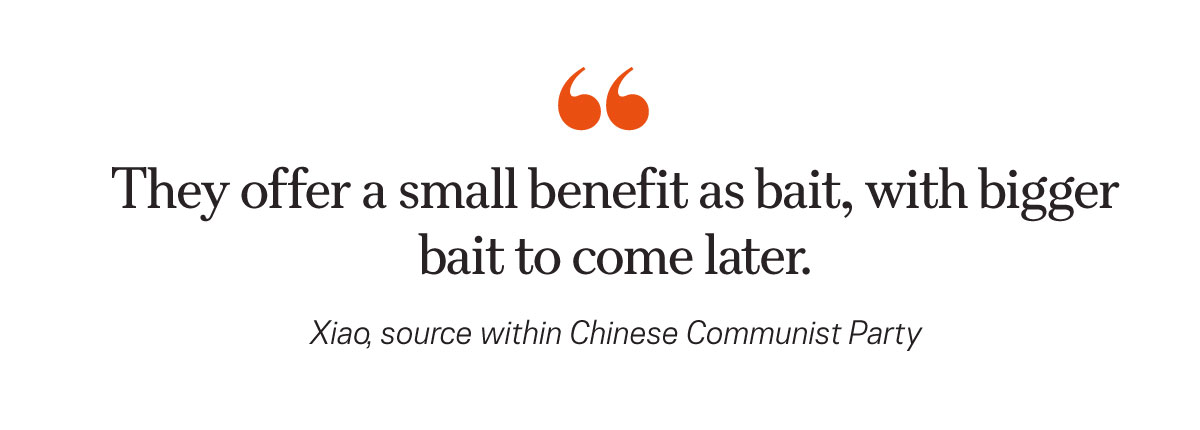
Xiao called the tactic a baiting sequence.
“They offer a small benefit as bait, with bigger bait to come later, depending on whether the United States takes it,” he said. “Once America accepts, it is expected to keep moving forward.”
The American Hand
What looks like a deal in shared ambiguity, Wong said, is really the “synchronized construction of two fortified economic systems”—each built to survive a long decoupling and, in his view, even the risk of armed conflict.
Washington, he said, is using high interest rates and its lead in advanced computing to pull global capital home and choke China’s access to the most advanced chips, while Beijing seals its financial exits to brace for a long stretch of sanctions.
But the two are not evenly matched, according to Xie, and several of the advantages run Washington’s way.
Start with the weapon that Beijing leaned on hardest. Xie said China’s rare-earth coercion has begun to backfire, shocking the United States and its allies into building alternatives.
Washington has signed rare-earth supply arrangements with partners including Japan, Malaysia, and Thailand, he said, and domestic mining and processing have started to come online. The shift is visible in the rush by U.S. and allied firms to build mine-to-magnet supply chains outside of China, with several backed by U.S. government purchase guarantees.
“As a weapon, it will become less and less effective,” Xie said.
He said that U.S. dependence on Chinese rare earths, in his view, has started to fall and will keep falling.
Washington’s tariff leverage has also proved more durable than a single court ruling, Xie said.
In February, the Supreme Court struck down the emergency powers tariffs that Trump used as his main leverage, and within hours, the administration shifted to other trade law authorities.
Treasury Secretary Scott Bessent said at The Economic Club of Dallas on Feb. 20 that the new combination would leave 2026 tariff revenue “virtually unchanged.”
The tariffs on Chinese goods themselves have held—those under Sections 232 and 301 rest on firmer legal ground and remain in force. A broader 10 percent surcharge imposed under Section 122 was struck down by the U.S. Court of International Trade in May, but the administration has appealed and the duties are still being collected for now. Either way, that surcharge was always a stopgap—capped at 150 days and set to expire on July 24.
Greer was blunt about what that preserved.
“I get to keep tariffs on China, which is pretty awesome,” he said at the May 26 Council on Foreign Relations event, adding that U.S. tariffs on Chinese goods “will likely always be higher than for other countries.”
What to Watch
Wong pointed to three things that will reveal whether the summit’s promises are being honored or quietly sidelined.
The first is whether China’s Ministry of Commerce begins using Order No. 834—the supply chain security framework that it issued in March—to punish companies outside China, in Europe or Asia, that are caught re-exporting controlled materials to U.S. defense contractors.
The second is whether the Office of the U.S. Trade Representative shifts from broad tariff reviews to targeted, product-by-product duties driven by monitoring data—a sign that the verify-and-monitor model has gone operational.
The third is whether the dirtiest, heaviest manufacturing can actually move back to the West or the Global South—neither of which can replicate China’s union-free, regulation-light model, and both of which will meet resistance on labor, environmental, and human-rights grounds.
If reshoring stalls while Beijing keeps its grip on the mining and processing of rare earths, Wong said, the two economies will continue decoupling regardless of what its leaders have agreed to.
For now, the new Board of Trade and Board of Investment have not met.
The Busan truce—the one-year ceasefire on tariffs and export controls that the two sides reached in October 2025—expires in November, and its renewal is now in question.
The Office of the U.S. Trade Representative is expected to publish a call for public comment within days, asking which China-origin goods should qualify for lower tariffs.
And the basic problem that the summit was supposed to ease—that neither side believes that the other will do what it says—remains exactly where it was.
 Friends Read Free
Copy
Facebook
Tweet
Friends Read Free
Copy
Facebook
Tweet