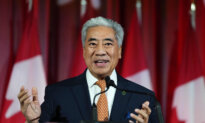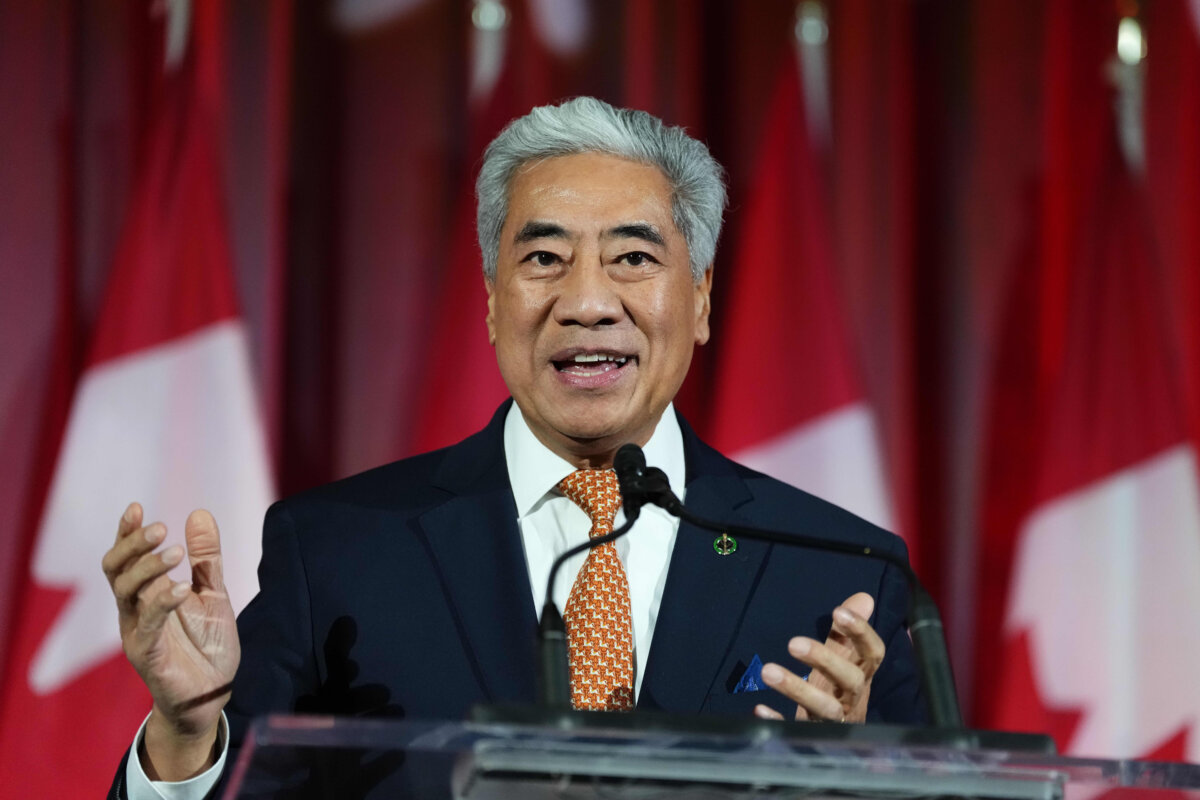
Liberal MP Michael Ma is facing criticism for casting doubt on reports of China’s forced labour practices.
The former Conservative MP, who crossed the floor to the Liberals in December, later apologized for his remarks as he faced backlash from human rights activists and opposition MPs, but didn’t confirm if he believes there is forced labour in China.
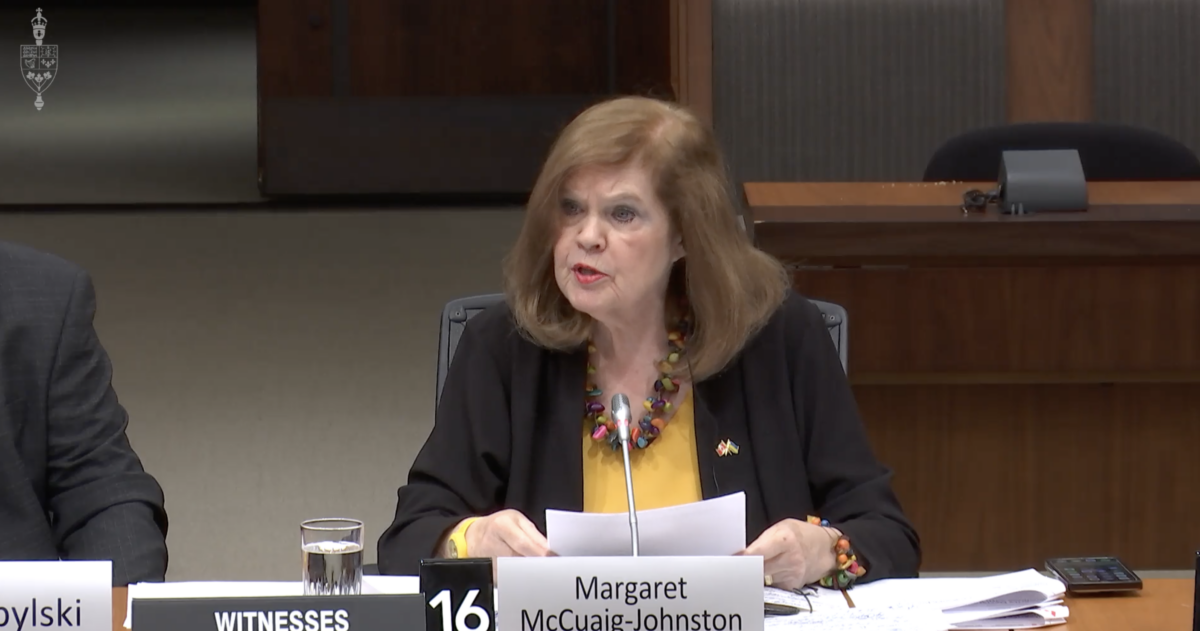
In a series of rapid-fire questions during a House of Commons committee meeting on March 26, Ma asked an expert questions that suggested skepticism about forced labour practices in China, but didn’t give her time to elaborate.
The exchange with Margaret McCuaig-Johnston, a China expert and former senior public servant, occurred at the House of Commons industry committee, which is studying the government’s electric vehicle policies.
The feds recently signed a series of agreements with China, including allowing up to 49,000 Chinese EVs to enter Canada with low tariffs in exchange for Beijing lowering tariffs on Canadian canola. McCuaig-Johnston is among the experts raising security concerns over the move, saying Beijing routinely targets diaspora and Chinese dissidents in Canada for transnational repression.
McCuaig-Johnston told MPs that dozens of parts used in Chinese electric vehicles are made with aluminum using forced labour by Uyghurs in China. She referenced a 2024 report by advocacy group Human Rights Watch that says it found “credible evidence” that both Chinese manufacturers as well as Western companies with plants in China are “failing to minimize the risk of Uyghur forced labour being used in their aluminum supply chains.”
Ma asked McCuaig-Johnston, “Your claim about forced labour in Shenzhen—have you witnessed this yourself? Have you been there ever?” Shenzhen, an industrial hub in China, and Xinjiang, where the persecuted Uyghur people live, are pronounced similarly. After many media reports covered the exchange and said it was about Xinjiang, Ma later said in a statement that he meant Shenzhen, not Xinjiang.
McCuaig-Johnston responded that she has been to China “many times” over the last nearly 50 years. Ma cut her response short and asked again whether she has witnessed the forced labour herself.
“I work closely with Human Rights Watch where researchers did witness it,” she said. Ma then moved on to ask the other witnesses questions.
Canada sanctioned Chinese officials in December 2024 for persecuting Uyghurs, Falun Gong practitioners, and Tibetans, noting that these groups are subject to various forms of suppression by the Beijing regime, including arbitrary detention and forced labour.
Journalists and human rights organizations have reported facing visa restrictions when visiting China, particularly when trying to access sensitive regions, and say it is difficult to obtain information from the country.
“We are also continuing to follow closely the current human rights situation in China, despite the difficulties posed by limited access to information and the fear of reprisals against individuals who engage with the United Nations,” says a 2024 report by the office of the U.N. High Commissioner for Human Rights.
‘Unacceptable’
McCuaig-Johnston said on social media after the committee meeting that she told Ma “the Chinese would never show him forced labour,” but that Human Rights Watch “has people on the ground.”
“Mr Ma says he doesn’t believe it because it was written in a report. He has to see it with his own eyes,” she said.
She later shared an excerpt from a Chinese state publication praising Ma’s exchange, adding that Ma “designed his rapid fire questions at me so they could be used by Chinese state media showing that he went up against a critic of the regime.”
“That’s what Chinese state media is reporting. It failed spectacularly here, but state media won’t report that,” she said.
Mehmet Tohti, executive director of the Canada-based Uyghur Rights Advocacy Project, said Ma “is once again positioning himself as a cheerleader for denialism—downplaying the reality of the Uyghur genocide, forced labour, and transnational repression carried out by China against Uyghurs.”
“Forced labour is a widespread, state-imposed practice targeting Uyghurs,” Tohti said in a March 26 social media post. “There is even a specific term—hashar—used to describe forms of coerced labour. The Chinese government officially refers to this system as ‘labour allocation,’ masking its coercive nature.”
The House of Commons voted unanimously in favour of a motion tabled by the Conservatives in February 2021 declaring Beijing’s persecution against Uyghurs and other Turkic Muslims in China a genocide. The Tories, Bloc Québécois, NDP, Green Party, and non-cabinet Liberal MPs supported the motion, while cabinet abstained from the vote.
Several Conservative MPs also commented on Ma’s remarks, including MP Shuvaloy Majumdar, who accused Ma of “parroting CCP propaganda.”
Tory MP and industry critic Raquel Dancho said on social media that the exchange between Ma and McCuaig-Johnston was “disturbing.”
“Did this Liberal MP really just deny that forced labour practices are taking place in China?” Dancho said. “This is a documented problem. Why is this MP carrying water for the Chinese regime?”
Conservative MP Michael Guglielmin said Ma’s behaviour is “unacceptable.”
“Canadians expect MPs to stand up for human rights, not run cover for the Chinese regime,” Guglielmin ssaid.
Conservative MP and foreign affairs critic Michael Chong raised the issue in the House of Commons during question period on March 26. He asked whether the government still assesses that Uyghur forced labour has taken place, and whether the sanctions will remain in place.
Chong later said in a social media post that if the government no longer assesses forced labour is taking place, it would have implications for the sanctions imposed on the Chinese entity and officials, the import of products from Xinjiang into Canada, the review of the United States-Mexico-Canada Agreement, and Canada-U.S. trade.
Ma issued an apology over the exchange, saying in a statement that he “inadvertently came across as dismissive of the serious issue of forced labour.”
“I regret this mistake and apologize to Ms. McCuaig-Johnston and my fellow committee members,” he said. “To be clear, my line of questioning referred to auto manufacturing in Shenzhen, China, and not in Xinjiang.”
His statement did not mention whether he believes there is forced labour in China. The MP was asked by a CBC reporter, as he was leaving Parliament, whether he believes there is forced labour in China. Ma said he believes “there is forced labour all over the world.”
When pressed by the reporter on whether he thinks there is forced labour specifically in China, he responded, “Well, all over the world.”
Ma was born in Hong Kong and immigrated to Vancouver at the age of 12. He entered politics by becoming MP after the general election last April. He has attended events or taken part in initiatives in recent years with people who express views in line with Beijing.
Earlier this month, U.S. Trade Representative Jamieson Greer launched an investigation into imports produced with forced labour targeting 60 countries, including Canada. The investigation could result in a ban on imports of such goods into the United States.
“These investigations will determine whether foreign governments have taken sufficient steps to prohibit the importation of goods produced with forced labor and how the failure to eradicate these abhorrent practices impacts U.S. workers and businesses,” Greer said in a March 12 statement.
 Friends Read Free
Copy
Facebook
Tweet
Friends Read Free
Copy
Facebook
Tweet