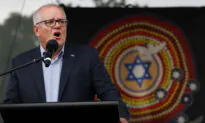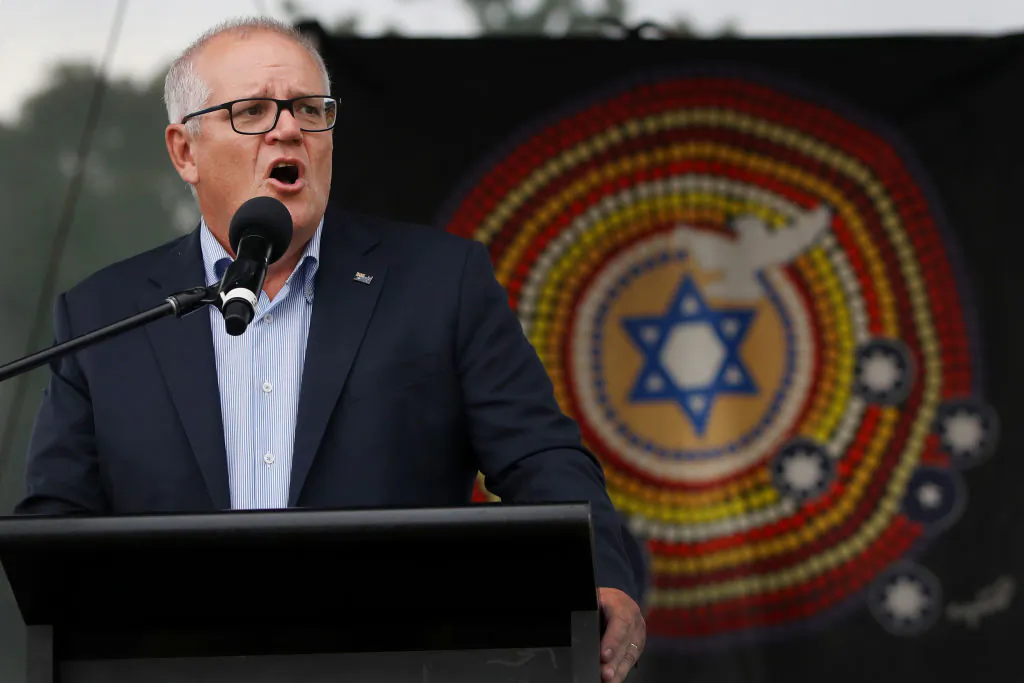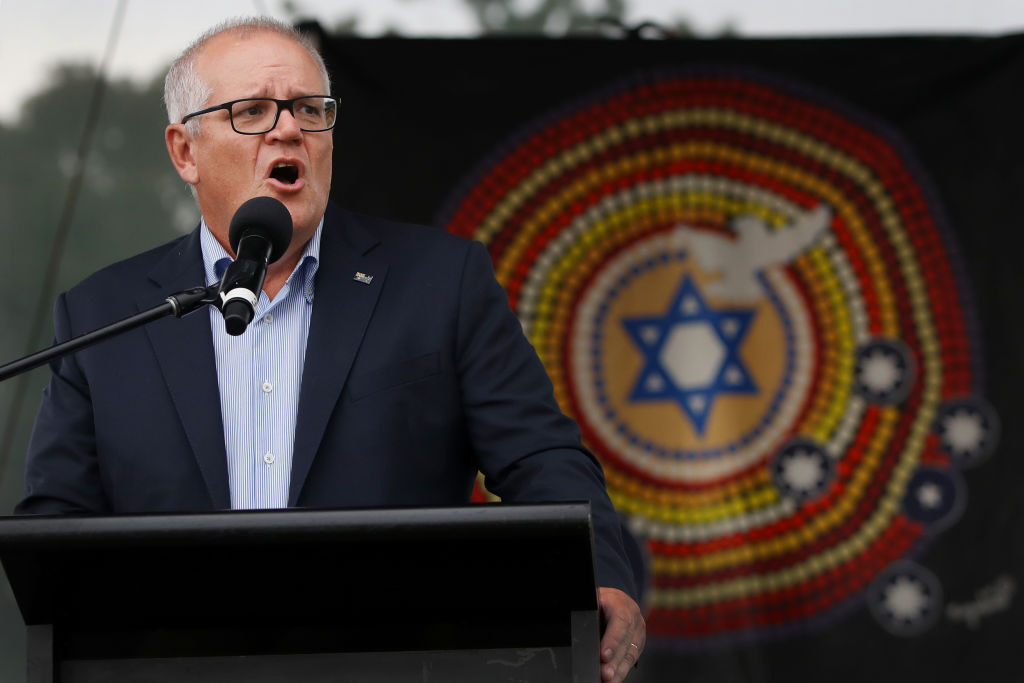

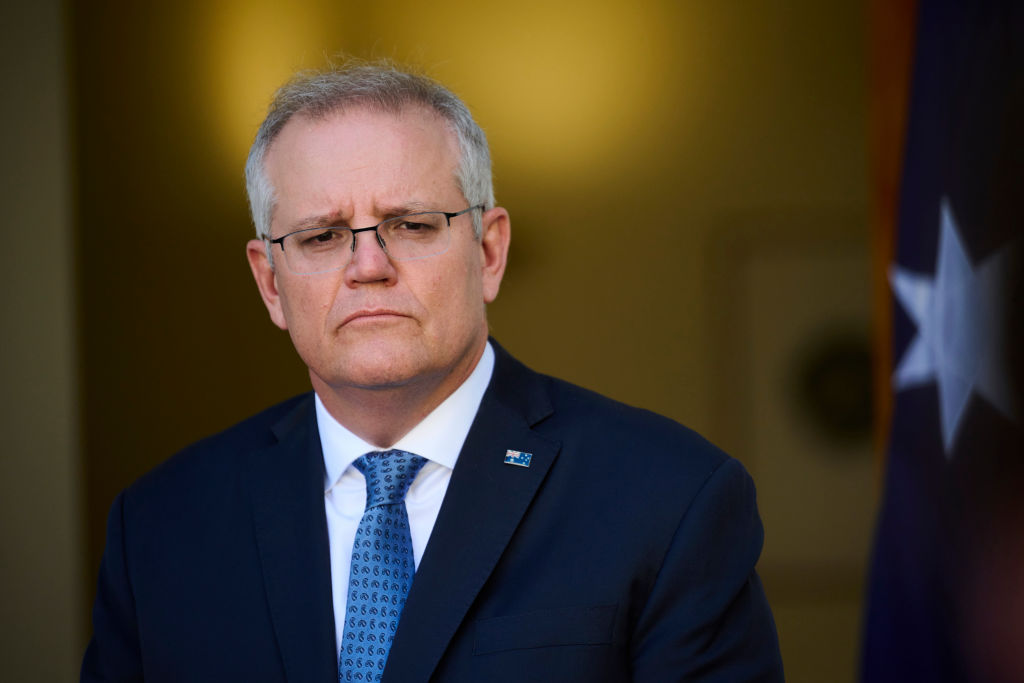
Former Australian Prime Minister Scott Morrison has advocated for expanding the AUKUS security pact to strengthen Australia’s space defence capabilities by cooperating with the Trump administration.
In an opinion piece for The Wall Street Journal, Morrison proposed establishing a third pillar of AUKUS, building on the foundation of the existing two pillars.
Under the agreement, the first pillar will allow Australia to acquire its own nuclear submarine fleet starting from the early 2030s.
The second pillar enhances cooperation on cutting-edge military technologies, including cybersecurity, AI, quantum computing, and hypersonic missiles and weapons.
The former prime minister stated that the third pillar should focus on developing space capabilities due to their strategic importance in future warfare.
“Establishing a Pillar III would ensure that space, the ultimate high ground, is secured by free nations, not our enemies,” Morrison wrote.
Morrison played a leading role in efforts that led to the creation of the AUKUS pact.
Why Space Is the Next Frontier
Citing a recent speech by General Stephen Whiting, commander of U.S. Space Command, Morrison said space superiority had become crucial to homeland defence and global deterrence as strategic rivals such as the Chinese Communist Party (CCP) and Russia are expanding their space programs.
“Space is no longer a benign domain. It is contested, competitive and strategically vital,” he wrote.
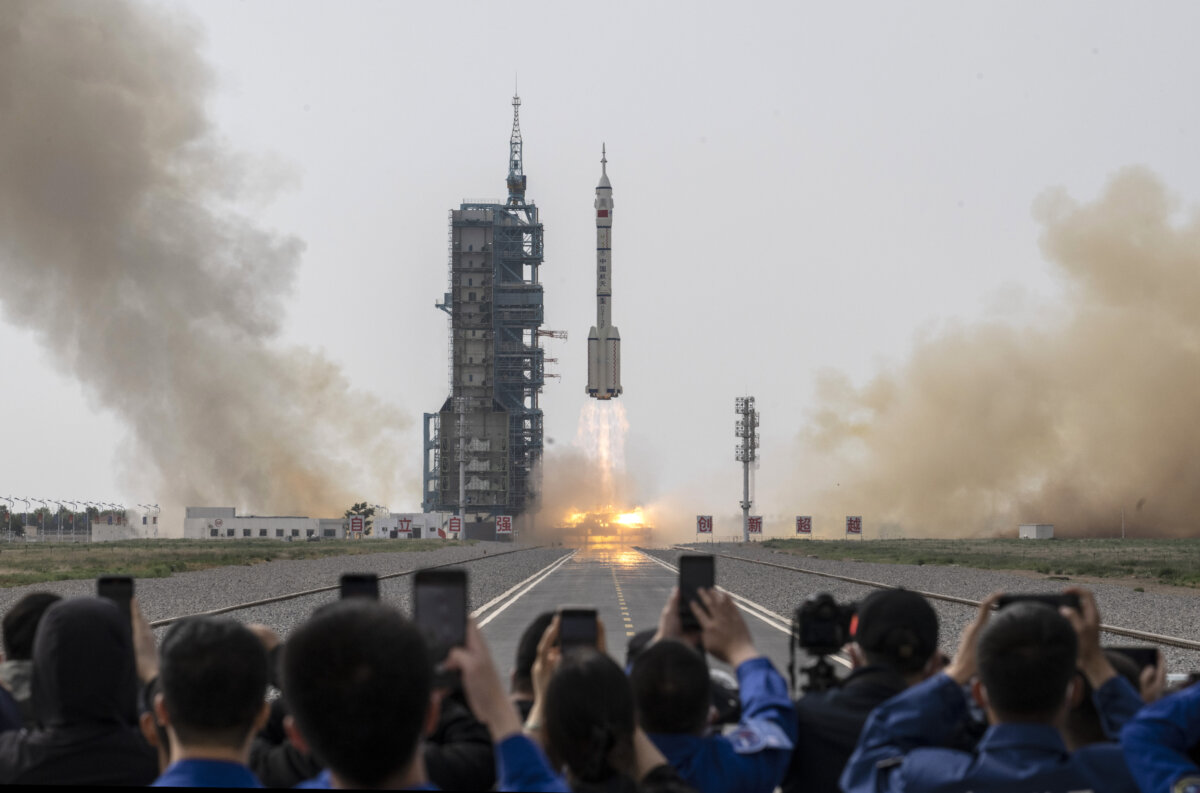
In 2022, the CCP published a white paper outlining a detailed plan to turn the regime into the world’s leading “space power” in an all-round manner.
At its core, the CCP focuses on developing dual-use technologies with both civilian and military applications, where developments in the civilian sector will boost military capabilities.
One example is a small but powerful laser system that was claimed to have been developed by a team of Chinese scientists in 2022.
The system is small enough to be deployed in satellites. While the Chinese scientists said it was not developed for military purposes, Western experts have pointed out that the system has the potential to become a space weapon.
The paper also highlighted the CCP’s approach of copying foreign technologies via what it called a “technology transfer” process.
“[The regime will] seize the opportunities presented by the expanding digital industry and the digital transformation of traditional industries, to promote the application and transfer of space technology,” the paper read.
The Rapid Development of CCP’s Space Program
In 2024, Tory Bruno, CEO of United Launch Alliance, raised the alarm about the rapid development of the CCP’s space program in the last two decades.
According to the CEO, the CCP currently has four to five times as many rockets, rocket launch sites, and space personnel as the United States.
The number of spacecraft sent to space by the regime also soared from a few dozen to 700 in just a few years.
While much of this progress was driven by technologies stolen from the United States, Bruno said massive Western investment in China since the 2000s had also directly contributed to its growth.
In the same year, Whiting revealed that the CCP had tripled the number of its intelligence, surveillance, and reconnaissance satellites in the past six years.
“[There are] hundreds and hundreds of satellites purpose-built and designed to find, fix, track, target, and yes, potentially engage U.S. and allied forces across the Indo-Pacific [area of responsibility],” he said.
Regarding its space arsenal, over the years, the CCP has developed anti-satellite (ASAT) weapons under the guise of rocket programs following the success of an ASAT missile test in 2007.
According to a 2025 report (pdf) on global counter-space capabilities, the CCP currently has as many as three direct-ascent ASAT systems, and is believed to possess significant electronic warfare capabilities for jamming Global Navigation Satellite Systems (GNSS) and satellite communications.
Why Cooperate with the Trump Administration
Morrison pointed out that the Trump administration presents the strongest opportunity for Australia to advance the third pillar of AUKUS.
“No American president since John F. Kennedy has shown more commitment to space than Mr. Trump, from backing the Artemis Moon to Mars program to creating the U.S. Space Force and promoting commercial innovation through public-private partnerships and now the Golden Dome,” he wrote.
“That leadership makes him the natural champion of an AUKUS Pillar III that consolidates cooperation across launch systems, satellite architecture, cybersecurity, data integration and industrial innovation.”
In December 2017, Trump signed the Space Policy Directive-1, which redirected the focus of the National Aeronautics and Space Administration (NASA) toward space exploration.
The directive led to the establishment of the Artemis program, which aims to return humans to the moon and set up a base on its surface, laying the groundwork for future Mars missions.
Apart from creating the U.S. Space Force and reestablishing the National Space Council, Trump also supported private companies, such as SpaceX and Blue Origin, in their involvement with the U.S. government’s space program by removing unnecessary regulations in his first term.
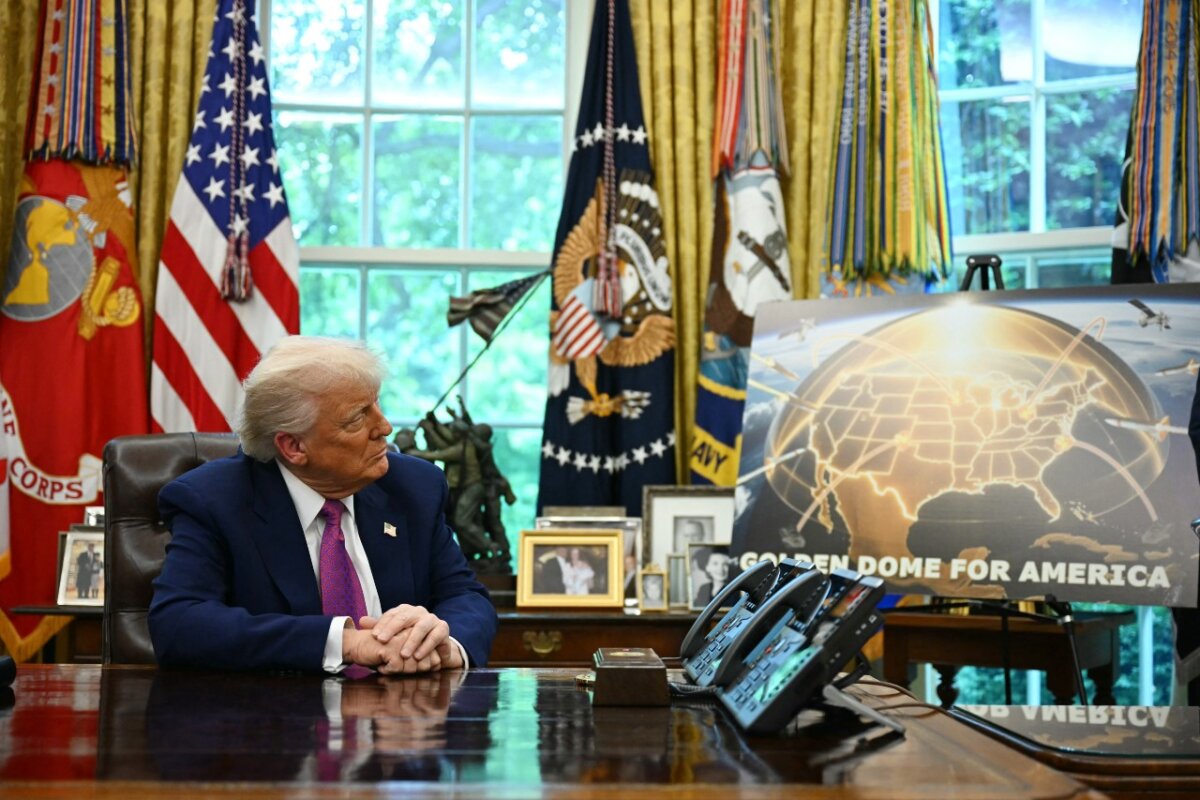
Within the first six months of his second term, Trump unveiled the Golden Dome, an ambitious missile defence initiative that involves the creation of a network of sensors and weaponry, both on Earth and in space, capable of intercepting a wide range of missiles, drones, and hypersonic threats from adversaries.
Among U.S. allies, Canada has expressed an interest in joining the US$175 billion (A$270 billion) project.
How Australia Uses Its Advantages for AUKUS’ Pillar III
Morrison noted that Australia has space infrastructures that can lay the foundation for the third pillar of AUKUS.
Specifically, he said the country is hosting several U.S. space assets, including the Space Surveillance Telescope and C-Band radar.
In addition, Australia has some of the most valuable satellite assets, which come from a deep-space advanced radar network project as part of the AUKUS agreement.
The former prime minister also stated that Australia’s geographic location offered a strategic advantage for space exploration initiatives.
For example, the proposed Atakani Spaceport in northern Queensland is considered a strong launch site due to its proximity to the equator and direct access to equatorial orbits.
Morrison said the port was superior in location to Florida’s Cape Canaveral or Texas’s Boca Chica.
The project is currently in the advanced planning stage and is expected to commence initial operation in 2029.
“America and Australia have stood shoulder to shoulder on land, at sea and in the skies. Now, we must do the same in orbit,” Morrison said.
 Friends Read Free
Copy
Facebook
Tweet
Friends Read Free
Copy
Facebook
Tweet