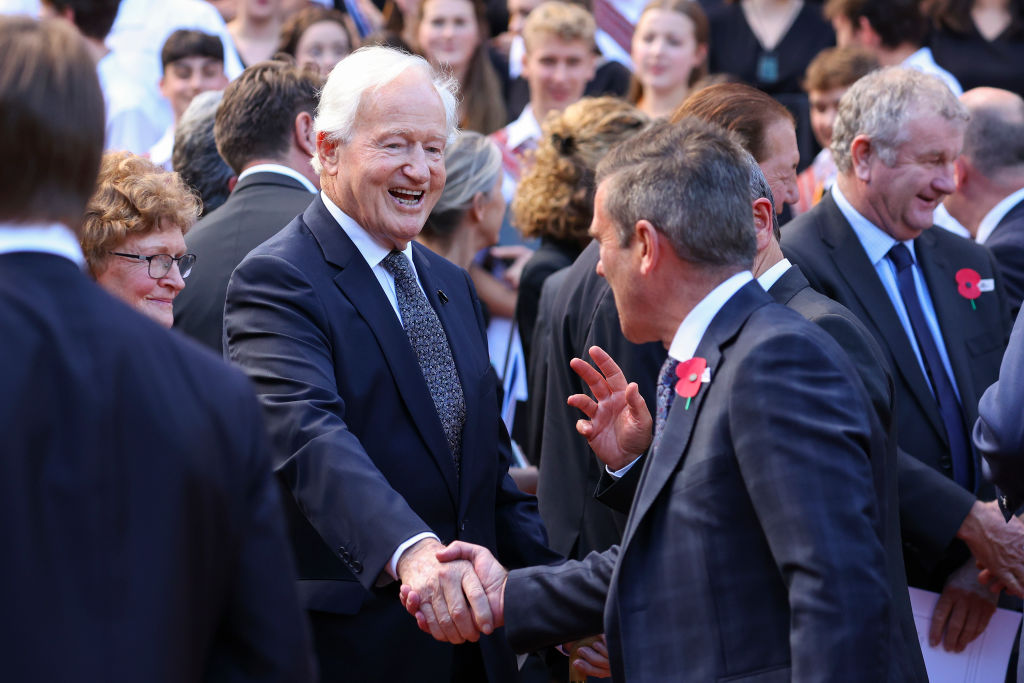

New Zealand’s prime minister from 1990 to 1997, Jim Bolger, has died at the age of 90.
He played a key role in transforming much of New Zealand society during his term in office, ushering in deep cuts to welfare, starting the process of compensating Māori tribes for land stolen in the 1800s, and bringing in mixed-member proportional (MMP) voting after it won support in a nationwide referendum.
He came to power in 1990 as leader of the National Party, having campaigned on providing New Zealanders with “The Decent Society.”
However, he found that the Bank of New Zealand (BNZ), which the government owned at that time, was on the verge of potential collapse and that the country faced a massive fiscal crisis with $3.2 billion of debt. So, although the party had initially criticised Labour’s New Right policies, his government extended them.
His finance minister, Ruth Richardson, saw cutting benefits and other government support as the quickest and simplest way to begin balancing the books. In 1991, she introduced what she called “the mother of all budgets,” which implemented a level of austerity that was so unpopular it nearly lost the National Party the next election.
Thirty-four years later, it is still viewed by many as the root cause of New Zealand losing the egalitarianism which had characterised it up to that point, entrenching poverty among the working poor and beneficiaries.
Re-elected in 1993, Bolger dropped Richardson and moved to soften the government’s image.
Later Expressed Regrets
In a 2017 interview looking back on his career, Bolger said neoliberal policies had failed. “They have failed to produce economic growth, and what growth there has been has gone to the few at the top,” he told RNZ. “That model needs to change.”
Four years later, he was even more outspoken, saying that the current model of free-market capitalism was “on the verge of destroying the planet” and that National needed to re-imagine and move away from the framework that is dividing society.
A referendum in 1993 came out in favour of proportional representation. This meant Bolger struggled to keep the National Party together, as some MPs defected to form their own small parties or left to join New Zealand First, led by Winston Peters, which had won two electorate seats and already had a presence in Parliament.
It was during this time that he earned the nickname “The Great Helmsman” for steering the ship of state through one of the most turbulent political periods in history.
In 1996, New Zealand First won enough seats to decide which of the two major parties could form a government. After protracted negotiations, he chose National, making Bolger the first MMP prime minister.
However, the coalition proved fractious, and Bolger’s support waned.
In a rare coup against a sitting prime minister, he was ousted in late 1997 by Jenny Shipley. He was appointed ambassador to Washington and later returned to become chairman of New Zealand Post, Kiwibank, and the state rail system under the Labour-led government.
Favoured Reparations to Māori
Bolger strongly favoured redress for Māori land seizures that had occurred under the colonial government.
His government is credited with significant progress on historical Treaty of Waitangi settlements, including two of the largest covering the entire South Island and the Waikato region, and the establishment of a funding agency to support Māori language broadcasting and education.
John Key, who was prime minister from 2008 to 2016, said Bolger would often call to offer advice.
“It wasn’t intrusive, but he wasn’t afraid to ring and say, ‘Look, here’s a perspective on something,’ or to offer a viewpoint, or encourage me to be courageous on certain elements of things, particularly around race relations.
“I think he was really keen to see Māori do well. And I think he saw the Treaty settlement process as a way of both bringing the nation together, as a sort of healing for what he saw as injustices, but also giving them financial independence.”
Winston Peters, currently the country’s foreign minister, said Bolger was “a man of his word.”
“He did what he said he would do, and we ran our coalition government with integrity, focus and a fidelity to New Zealanders who had delivered a majority to our two political parties.”
Prime Minister Christopher Luxon described Bolger as a “towering figure in New Zealand’s political landscape.”
“[He was] a leader of conviction, a reformer of consequence, and a servant of the people whose legacy has shaped our nation in profound and lasting ways.”
 Friends Read Free
Copy
Facebook
Tweet
Friends Read Free
Copy
Facebook
Tweet