France is set to begin reimbursing severely obese people for the cost of weight-loss drugs, French Health Minister Stéphanie Rist said on May 28.
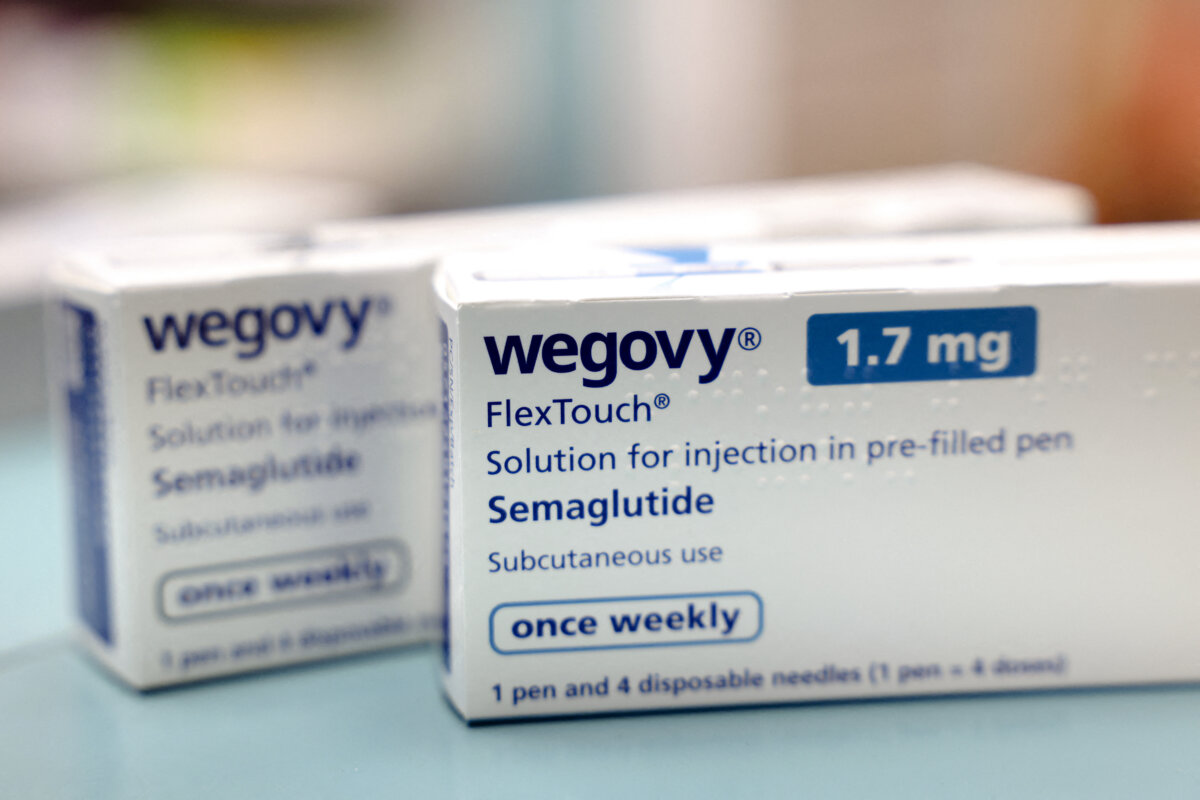
She said that Paris would subsidize the use of Danish company Novo Nordisk’s Wegovy and American pharma giant Eli Lilly’s Mounjaro starting in mid-June.
“I am quite proud, because we are the first country in the European Union to provide reimbursement … on a permanent basis,” Rist told French broadcaster TF1.
Officially, reimbursement will cover 65 percent of the cost of the weight-loss drugs, “but almost all patients will be covered” in full if they have “comorbidities, such as high blood pressure or diabetes,” she said.
“For the vast majority, it will be 100 percent reimbursement,” Rist said.
She said the eligibility criteria for the scheme would remain strict.
“It was decided to reimburse these medicines for people with severe obesity, with a body mass index above 35 with comorbidities, or above 40,” Rist said. “These are people who may be candidates for surgery, for an operation to treat their obesity, and who will be able to receive these medicines if the doctor considers that they should be prescribed.”
She estimated the cost to French public finances at “around 100 million euros [$116 million] annually.”
Elsewhere in Europe, although outside the EU, the UK and Switzerland both subsidize the use of similar weight-loss medications, known as glucagon-like peptide-1 receptor agonists (GLP-1s).
GLP-1s are hormones produced naturally within the body that regulate blood sugar and suppress appetite.

The UK’s National Health Service offers limited access to such drugs, with medications prescribed and a standard prescription fee of 9.90 pounds per item (about $13.26) or zero pounds, depending on the patient’s circumstances.
In Switzerland, people who meet certain criteria are also eligible for reimbursement for the use of Wegovy under the government’s mandatory health insurance scheme.
Farther afield, Japan operates a scheme similar to Switzerland’s, while Canada last month approved the sale of generic versions of semaglutide, the active ingredient in Ozempic and Wegovy, paving the way for more widespread subsidized prescriptions for the medication. In Canada, the availability of subsidized Ozempic varies by province.
In the United States, U.S. President Donald Trump said on May 1 that Medicare patients will soon be able to obtain coverage for weight-loss drugs for $50 per month.
Speaking at an event in Florida, Trump said coverage for weight-loss and diabetes medications will begin in July.

“Today, I’m thrilled to announce that starting on July 1, we will also provide Medicare patients with the coverage for weight-loss drugs like Ozempic, Zepbound, Wegovy,” he said. “So if it was $1,300, now it’s $50. And the $1,300 doesn’t cover a whole month. So it’s really even more than that. So it’s now down to $50.”
In December 2025, the Centers for Medicare & Medicaid Services (CMS) announced a voluntary model known as Better Approaches to Lifestyle and Nutrition for Comprehensive Health to expand access to GLP-1 medications for weight management and metabolic health, allowing Medicare Part D plans and state Medicaid agencies to cover the drugs while negotiating lower prices.
The model, which would enable the CMS to negotiate directly with pharmaceutical companies for lower prices and standard terms of coverage, was initially expected to launch in January 2027, but officials said in April that it would be delayed “pending further evaluation and data collection.”
The CMS said in April that it would extend its bridge program, a short-term solution to provide eligible Medicare Part D beneficiaries with access to certain GLP-1 drugs, until December 2027.
Part D refers to the prescription drug benefit run by private insurers approved by Medicare. CMS stated on its website that the bridge program would “operate outside of the Medicare Part D benefit’s coverage and payment flow.”
Aldgra Fredly contributed to this report.
 Friends Read Free
Copy
Facebook
Tweet
Friends Read Free
Copy
Facebook
Tweet