
News Analysis
Germany—the economic engine of Europe—enters the final stretch of 2025 in fragile condition. The world’s third-largest economy and the largest consumer market in the European Union, Germany last year generated roughly a quarter of the bloc’s gross domestic product (GDP) and stood as the United States’ top European trading partner.
In the second quarter of this year, it slipped back into contraction. Its GDP fell by 0.1 percent between April and June, erasing momentum from a surprise 0.3 percent expansion earlier in the year, according to an Aug. 25 report by consulting firm KPMG. A modest industrial rebound has done little to mask deeper structural strains, including rising unemployment and stagnant growth.
These pressures are pushing Berlin to rethink its economic model, by loosening the constitutional debt brake to allow greater fiscal flexibility, and to gamble on new waves of public and private investment under the business-led “Made for Germany” investment program, even as economists warn that stability could be sacrificed for short-term relief.
This year, German auto parts giant Continental’s ContiTech division announced plans to close four German plants, downsize two others, and eventually shift production abroad, part of a restructuring to cut more than 7,000 jobs.
The German tech conglomerate Siemens said in March it would slash 5,600 jobs globally, including 2,600 roles in Germany, amid weakened demand.
The wider corporate landscape looks equally grim, as insolvencies hit a decade high in the first half of 2025, with nearly 11,900 bankruptcies recorded. Businesses must grapple with high costs, falling demand, and uncertainty over the pace of the country’s green transition.
Pillars of Success
For decades, Germany’s economic success rested on three main pillars: cheap energy imports, a dominant car industry, and fiscal discipline symbolized by the “Black Zero” balanced-budget rule. Each has weakened to some degree.
The war in Ukraine exposed Berlin’s reliance on Russian gas. Energy prices remain volatile, tied to gas markets and political uncertainty. This strain collided with the government’s decision under Angela Merkel in 2011 to end nuclear power for electricity production by the end of 2022, a policy ultimately carried out under Chancellor Olaf Scholz’s government in 2023.
With renewables and imported gas left to fill the gap, Berlin now targets 80 percent renewable electricity by 2030 and climate neutrality by 2045. Renewables remain central to policy, backed by Chancellor Friedrich Merz’s coalition government, but the transition carries a hefty price tag.
The Chambers of Industry and Commerce (DIHK) estimates costs of 5.4 trillion euros ($6.3 trillion) by 2049.
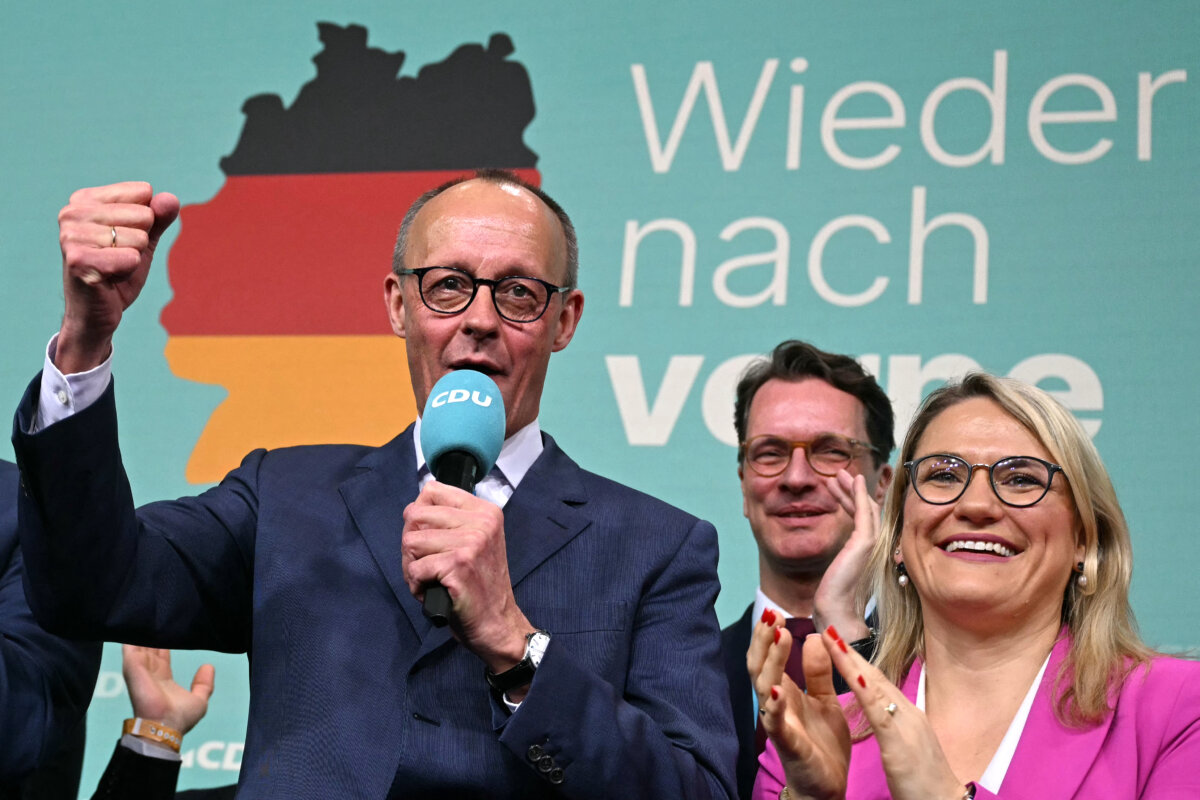
Current policy risks weakening Germany’s economic base, DIHK President Peter Adrian said.
Data from the International Energy Agency (IEA) show that in 2025, Germany had higher average wholesale electricity prices than France, Japan, India, Australia, the United States, the Nordic countries, and the European average. The country is projected to maintain higher prices in 2026, according to the IEA.
Economist and author Markus Krall told The Epoch Times that Germany has moved from relying on cheap energy to facing the highest power prices among industrialized economies.
This shift, Krall says, is not just the result of sanctions on Russia but also of domestic policies that “effectively intentionally made energy more expensive, not thinking about the macroeconomic consequences.”
Stalling Growth
Germany’s annual GDP growth slowed from 3.7 percent in 2021 to a contraction of 0.2 percent in 2024. The latest data show further weakening in the second quarter of 2025.
Munich-based Ifo Institute for Economic Research said the industrial production and exports were temporarily boosted by early U.S. orders in the first quarter, only to slip again in the second.
In its report on Sept. 4, the institute noted that corporate investment is picking up slightly, but construction remains in recession and households are slow to start spending again.
Consumer confidence fell for a third straight month in September, while retail sales dropped 1.5 percent from June to July, defying forecasts.
“Available income for the average citizen is shrinking, and it’s shrinking fast,” Krall said, adding that this partly reflects slower production growth and the demands of a larger population.
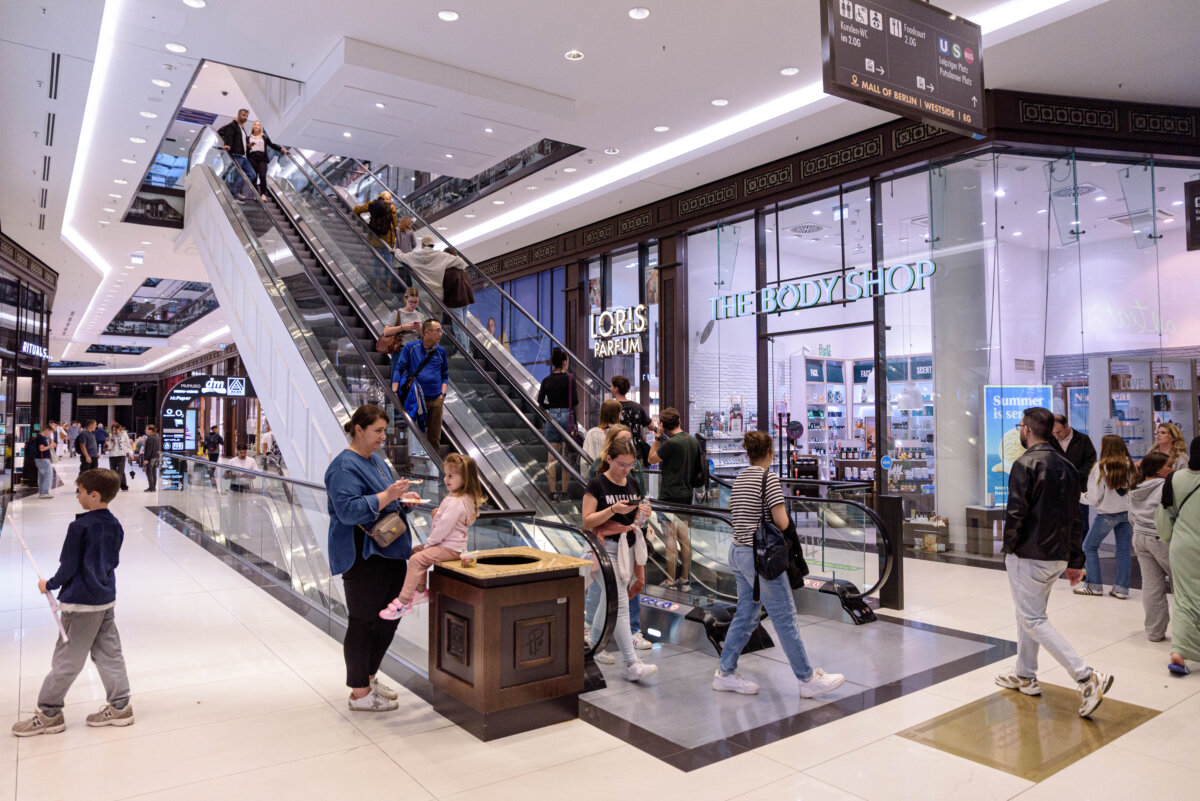
Unemployment is rising and job creation has stalled, while stable inflation masks signs of weakness in German industry, according to official data.
KPMG said that the first two quarters of the year were influenced by the U.S. tariff policy, which saw German exporters, including those who export vehicles and machinery, hit by higher duties and shifting trade flows.
Krall said tariffs worsened Germany’s difficulties, but they are “not the root cause.”
“Under normal circumstances, I would guess that the German industry would be able to digest that,” he said. “Under the current circumstances. It simply doesn’t.”
The Ifo Institute now expects growth of just 0.2 percent this year. KPMG forecasts up to 0.4 percent for 2025 and between 0.7 and 1.7 percent for 2026, not yet factoring in the trade deal the United States struck with the EU in July.
Autos: From Growth Engine to Drag
Economists also warn that the automotive sector—Germany’s leading growth engine through brands such as Volkswagen, BMW, Daimler, and Porsche—is struggling amid heavy competition from electric vehicle (EV) companies and digital technologies.
Last year, Volkswagen said it considered factory closures for the first time amid increasing pressure from cheaper Chinese electric vehicles.
Cars and car parts still made up 17 percent of exports last year, though that was down from 19 percent in 2016. Porsche being dropped this year from the blue-chip DAX index to the mid-cap MDAX underscored the sector’s struggles.

The German automotive industry once had clear competitive advantages, but those were built on the combustion engine, Ifo Institute President Clemens Fuest told The Epoch Times.
“Now there has simply been a major technical change and competition is increasing,” he said. “There is much to suggest that it will simply no longer be able to fulfill this role as a growth engine.”
Fuest said Germany must diversify beyond its traditional champions, adding that Porsche’s exit from the DAX and weak carmaker share prices show markets no longer expect strong growth. He urged policymakers not to pick winners but to “create better conditions across the board for entrepreneurial activity.”
Krall blamed both high energy costs and politics, which he said forced automakers into a premature EV shift.
“Consumers don’t demand electric cars in sufficient numbers, and there is effectively no working used electric car markets anywhere in Europe,” he said. “This is an industrial debt that politics forced onto the industry, and the industry complied.”
Political Decisions
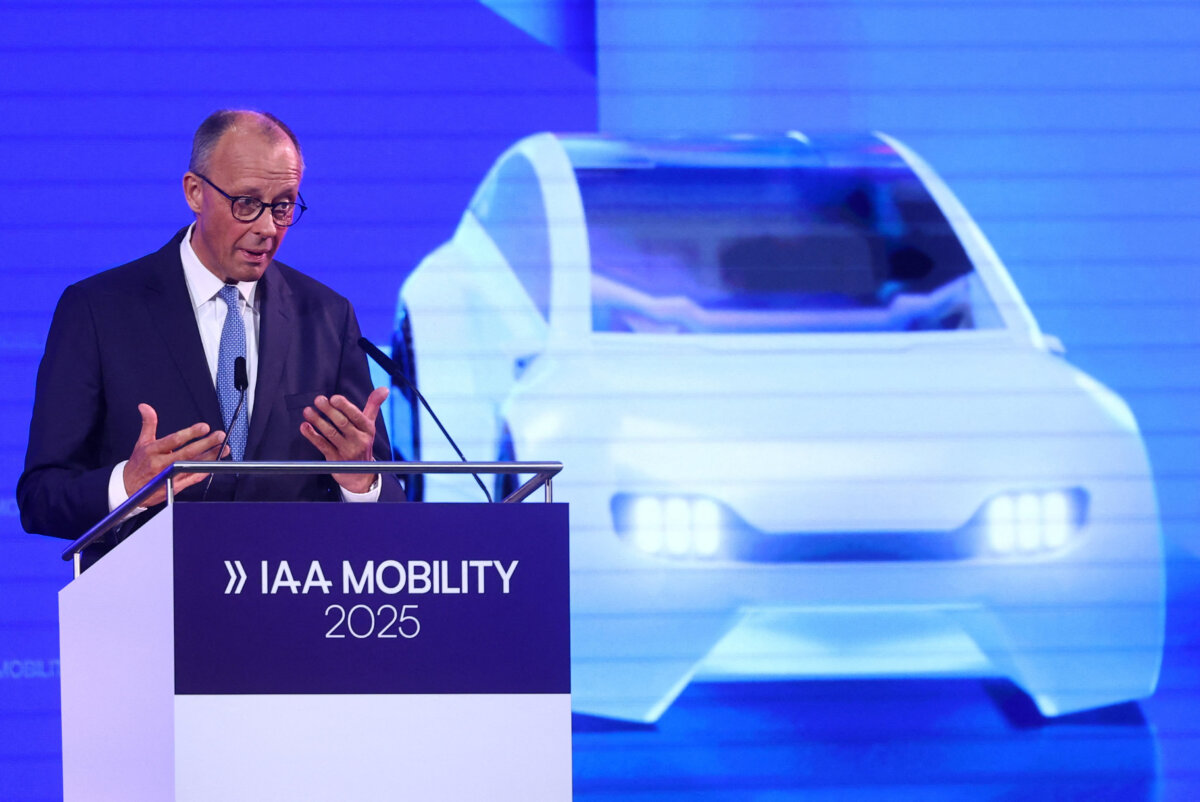
Against this backdrop, Merz has staked his political legacy on loosening Germany’s fiscal straightjacket.
In March, the government reformed the constitutional debt brake, exempting defense spending above 1 percent of GDP and creating a 500 billion euro ($550 billion) fund for infrastructure and green energy.
In June, parliament approved a 46 billion euro ($50 billion) relief package, faster tax write-offs for businesses, and a plan to gradually lower corporate tax rates from 15 to 10 percent by 2032.
“We are stimulating the economy with our new growth booster,” German Finance Minister Lars Klingbeil said in July. “We will make Germany more competitive internationally as a place to do business.”
Opposition parties, critical of weakening fiscal discipline, have challenged the debt reform in court, and the Greens warned of insufficient climate safeguards.
Krall dismissed the reform narrative, saying that weakening the debt brake pushes Germany into “a very dangerous area.”
Thorsten Polleit, an economics professor at the University of Bayreuth and publisher of the Boom & Bust Report, told The Epoch Times the government’s action fails to boost growth and will lead to “more waste and corruption.”
“What is really needed is more economic freedom, more entrepreneurial activity, more investment, not higher government spending,” Polleit said.
‘Made for Germany’
Merz said in July that the reforms laid the groundwork “to create more growth and investment incentives.” He also welcomed the launch of the Made for Germany initiative by 61 major companies, including Siemens, Deutsche Bank, BMW, and Airbus.
They pledged 631 billion euros ($733 billion) in investment by 2028, which Merz said was a powerful signal of renewed investor confidence, adding that “Germany is back.”
Supporters say the combined push is Germany’s best chance to reclaim a leading economic role, especially in digitalization and artificial intelligence. Krall noted that such commitments are not binding, and depend on unpredictable market factors.
“It’s basically a nice statement, but it doesn’t have any substance to it,” he said, adding that Germany should look beyond the EU for inspiration.
He pointed to Switzerland’s lower taxes, leaner state, and stronger infrastructure as a model.
Public Sentiment
Merz’s potentially fragile coalition is facing record public dissatisfaction. A new Infratest dimap survey for public broadcaster ARD found 75 percent of Germans were dissatisfied with the federal government’s performance, while 21 percent said they were satisfied with Merz’s performance.
Polleit said the ongoing economic decline, coupled with rising unemployment, is likely to put Merz and his allies under pressure.
“However, even if his government breaks down before the next election—a scenario I wouldn’t exclude—I am [skeptical] that a truly reform-oriented government can, and would be, formed,” he said.
 Friends Read Free
Copy
Facebook
Tweet
Friends Read Free
Copy
Facebook
Tweet