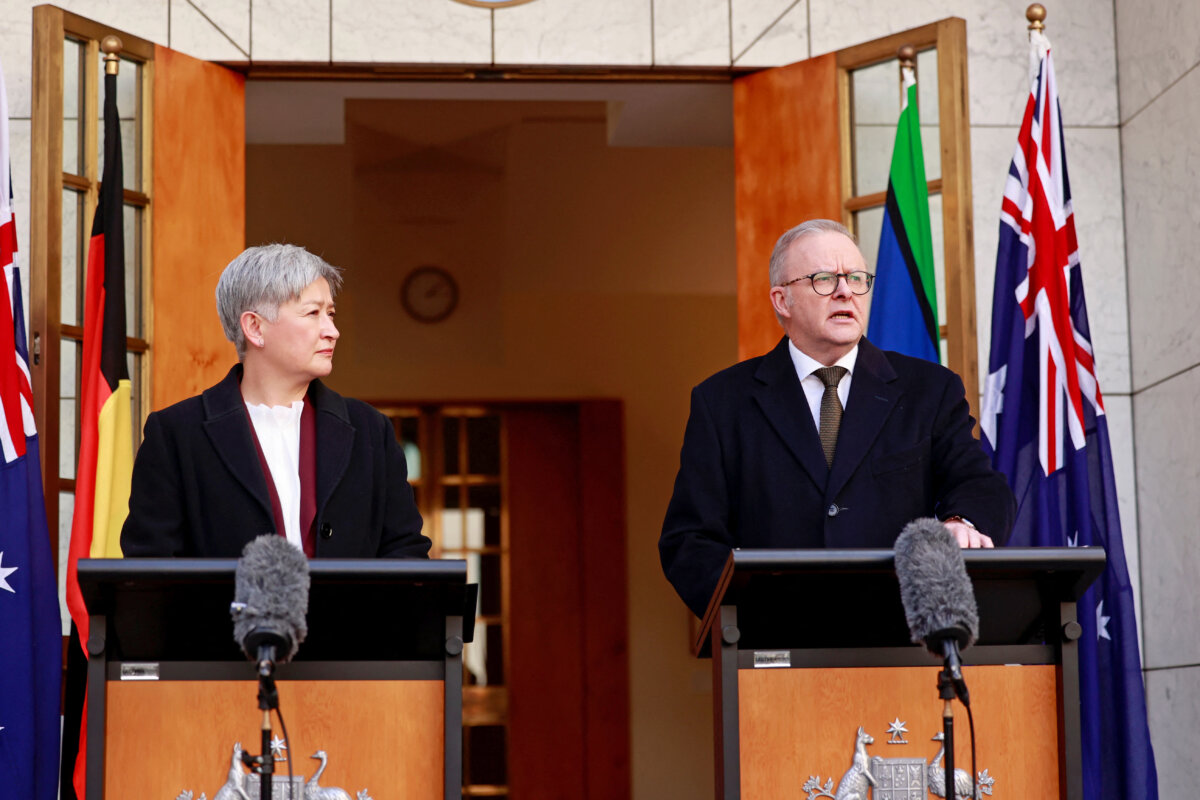

Prime Minister Anthony Albanese’s decision to recognise the State of Palestine has triggered a wave of sharply contrasting reactions—from praise for a “principled decision,” to accusations of betrayal and warnings it rewards terrorism.
While Albanese framed recognition as a step toward a two-state solution and confirmed assurances from the Palestinian Authority that Hamas would have no role in a future state, the announcement’s immediate impact has received political and diplomatic pushback at home and abroad.
The announcement on Aug. 11, makes Australia one of more than 140 countries to formally recognise Palestinian statehood, and follows in the footsteps of developed or Five Eyes countries like Canada, France, Spain, Ireland, and the United Kingdom.
Palestinian Diplomats Hail ‘Principled’ Move
The diplomatic representatives of Palestine praised the decision, calling it a “principled.”
“Recognition of the State of Palestine is not only a moral imperative—it is a necessary foundation for a future defined by freedom, sovereignty, human dignity, and a just and lasting peace in the region,” said the General Delegation of Palestine to Australia, Aotearoa New Zealand, and the Pacific
It said the decision reaffirmed Australia’s commitment to international law.
However, it pushed for stronger diplomatic engagement for concrete actions to take place, not just symbolism.
In turn, the Australia Palestine Advocacy Network (APAN) called the move a symbolic gesture to deflect from Australia’s obligations under the Genocide Convention.
It called for urgent measures—including sanctions on Israel, a two-way arms embargo, suspension of all trade agreements, and rejection of any framework conditioning Palestinian self-determination on Israeli security.
The organisation also urged Australia to support international legal proceedings against Israeli leaders, including Prime Minister Benjamin Netanyahu, and to actively oppose any diplomatic moves that undermine Palestinian sovereignty.
Israeli Ambassador Says ‘Symbolism Over Substance’
Israel’s ambassador to Australia, Amir Maimon, condemned the Albanese government’s decision, arguing it abandoned conditions the Australian prime minister had previously required.
“Only days ago, Prime Minister Albanese set clear conditions for recognising a Palestinian state—renouncing violence, freeing hostages, and establishing credible, accountable governance,” Maimon said in a statement posted on X.
“Today, however, the Australian government has abandoned those conditions and proceeded with recognition for symbolic reasons rather than genuine progress toward peace. Peace is not achieved through declarations; it is achieved when those who have chosen terror abandon it,” it added.
Maimon also warned the move risked emboldening extremists and eroding trust in Australia as a balanced player in the peace process, saying the decision “sends the wrong message at the wrong time.”
Jewish Leaders Say Decision ‘Abandons’ Israel
Senior Jewish leaders accused the government of undermining decades of bipartisan foreign policy.
Alex Ryvchin, co-CEO of the Executive Council of Australian Jewry, said the prime minister and foreign minister had failed to explain how commitments from the Palestinian Authority would be enforced.
He also said that despite best intentions, the decision is in the wrong direction.
“We knew this was coming at some point in time, so we’re not surprised. But as I said, it doesn’t lessen our disappointment. It doesn’t lessen the sense of betrayal or the feeling that the country is on the wrong path despite the best intentions to help resolve this conflict,” he told reporters in a press conference.
Australian Jewish Association CEO Robert Gregory went further, calling the recognition of a “non-existent state of Palestine” a reward for Hamas’s Oct. 7 attacks.
He warned the move placed Australia at odds with the United States and claimed it would embolden extremists, in a statement to The Epoch Times.
Gregory argued that recognising a state “governed in part by a proscribed terrorist organisation” undermines Australian national security and risks Australian lives.
Payman Claim Political Credit
Muslim independent Senator Fatima Payman, who crossed the floor in 2024 to support a motion recognising Palestine, claimed the decision was the result of sustained public and political pressure.
“Australia has finally recognised the state of Palestine 11 months since I crossed the floor … it feels amazing to have joined every single person who put pressure on the government to do what’s right,” she said in a video message.
Payman also thanked Labor members and unionists who “pushed and pressured” the government to act, calling the recognition “a step toward being on the right side of history.”
Lambie Urges Peacekeepers in Gaza
Tasmanian Senator Jacqui Lambie said the next step should be deploying peacekeepers to Gaza, arguing it was the only viable way to halt the humanitarian crisis.
Lambie said deploying an international stabilisation force would be difficult but necessary, adding that “without boots on the ground to enforce a ceasefire and aid delivery, the suffering will not stop.”
 Friends Read Free
Copy
Facebook
Tweet
Friends Read Free
Copy
Facebook
Tweet