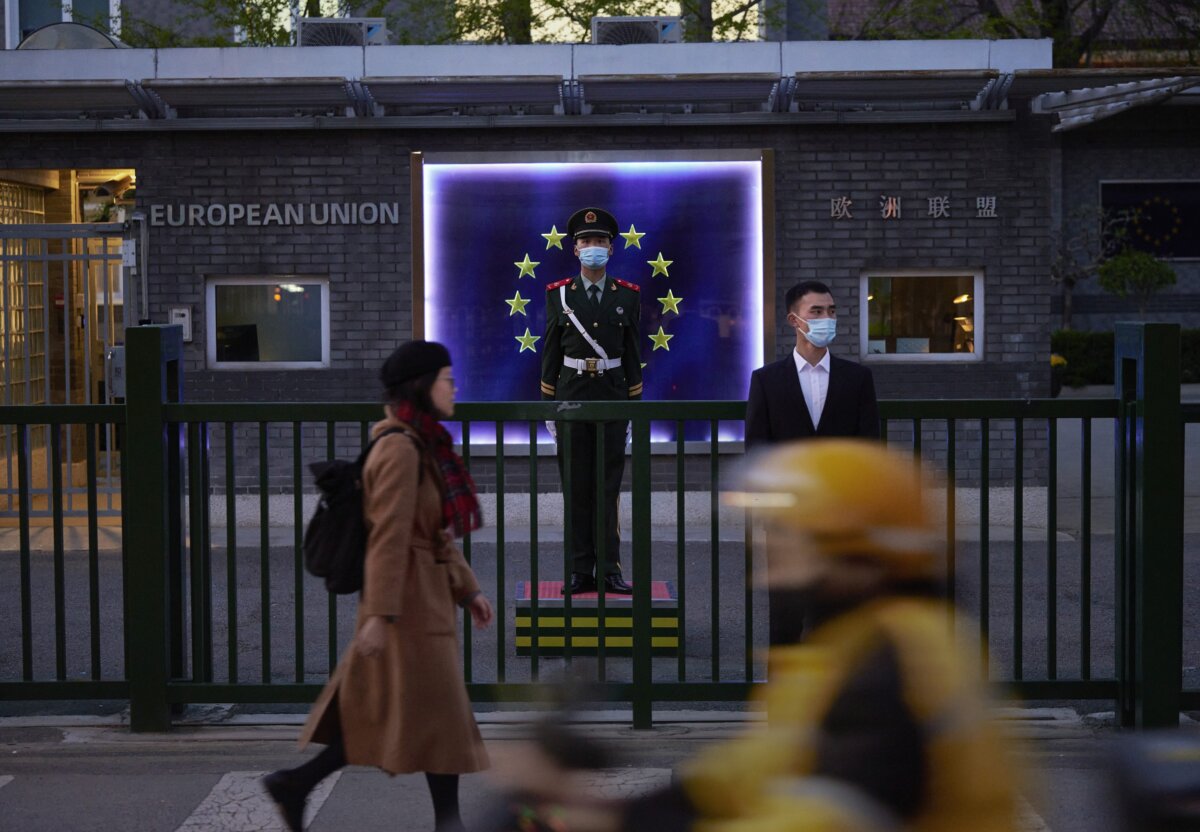

The European Union’s latest punitive measures against Russia over its war in Ukraine show that Chinese entities played a key role in fueling Moscow’s military campaign, with an expert warning that the bloc could grow increasingly hostile toward Beijing.
The European Commission unveiled its 20th package of sanctions against Russia on April 23, designating 58 companies and associated individuals involved in the development and manufacture of military goods.
The package targeted 16 entities, based in China and other countries, for providing “dual-use goods or weapons systems to the Russian military-industrial complex.”
Dual-use goods are materials, software, or technologies that have both civilian and military applications.
The European Commission also barred exports of dual-use goods and technologies to 28 third-country entities—including those from mainland China and Hong Kong—citing their roles as military end-users or close ties to Russia’s defense industry.
The new listings chiefly aim to “disrupt Russian energy revenues and military capacity,” it stated.
The move represents the EU’s largest expansion of sanctions against Russia in two years.
The Chinese Ministry of Commerce stated on April 24 that it added seven EU entities—primarily defense and aerospace firms—to its export control list, following the latest restrictions imposed by Brussels.
Export operators are prohibited from exporting dual-use items to these seven entities, the ministry stated.
Any related activities currently underway “must be halted immediately,” it stated.
Kyiv and its allies have repeatedly accused the Chinese Communist Party (CCP) of supplying lethal aid to Russian forces, and the regime has consistently denied the allegations.
As the Russia–Ukraine war has entered its fifth year, casualties on both sides may have already reached 2 million, according to a January report from the Washington-based think tank Center for Strategic and International Studies (CSIS).
Fueling the Invasion
Lin Tzuli, director of the Center for China and Regional Development at Taiwan’s Tunghai University, said the EU’s latest sanctions suggest that Chinese firms systematically aided Russia’s war effort.
“The evidence is strong enough to warrant punitive measures despite Beijing’s denials, “ Lin told The Epoch Times.
“The sanctions show the bloc no longer views China as a neutral bystander but as an enabler of Russia’s war effort.”
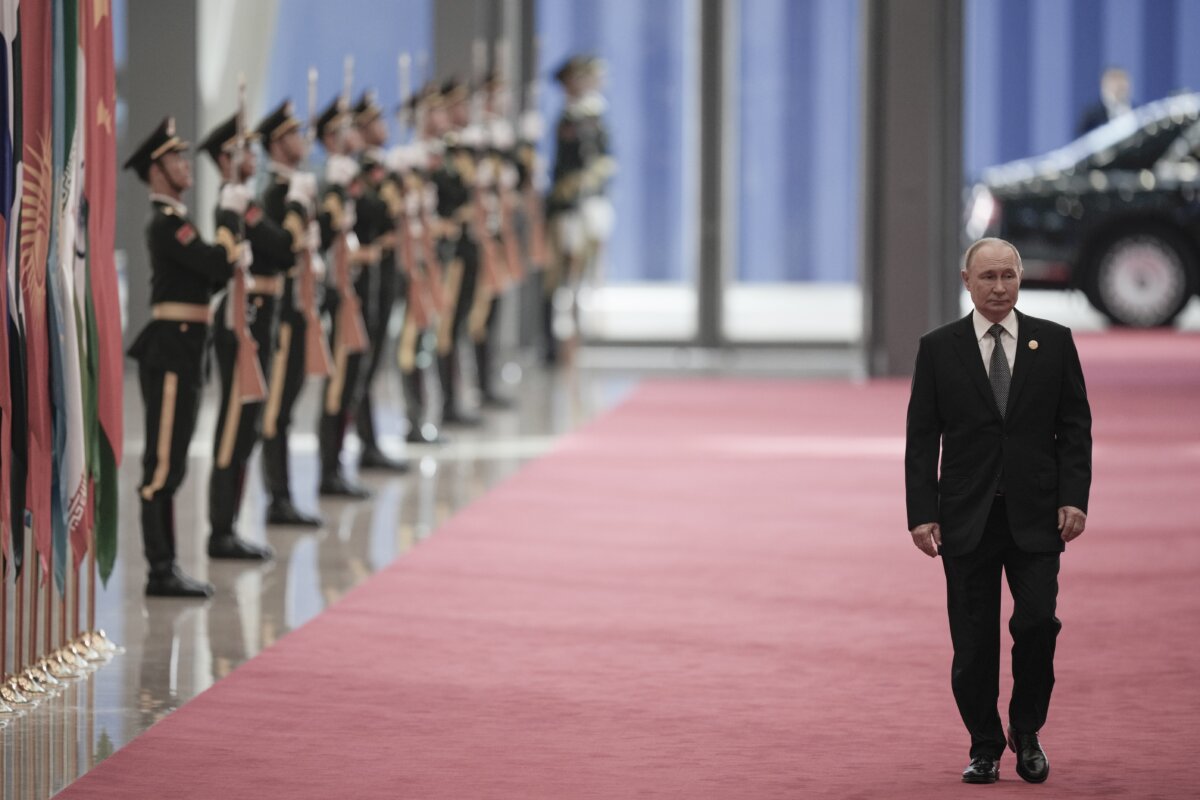
Lin said that while the CCP is not a direct combatant, its economic and technical support is a key factor in Russia’s ability to sustain the war.
Yeh Yao-yuan, a professor of international studies at the University of St. Thomas in Houston, concurred, saying the EU has now gathered far more evidence linking China to Russia’s defense industry.
“The move confirms that Beijing is actively fueling Russia’s invasion of Ukraine,” Yeh told The Epoch Times.
Yeh said the Chinese regime’s retaliatory measures are unlikely to achieve what Beijing had hoped.
“China’s sanctions have limited effect—the bloc’s defense industry was never deeply tied to the CCP to begin with, so the gesture is more symbolic than substantive,” Yeh said.
Lin said Beijing’s response serves as a short-term political signal while laying the groundwork for a longer-term structural economic competition between the two sides.
“In terms of tangible losses, the effect on the EU will likely be minor,” Lin said.
“But from the perspective of strategic interaction and institutional effects, the consequences will be far-reaching.”
Lin said China tends to rely on emblematic yet controlled measures—targeting specific companies or restricting market access—to exploit the varying economic dependencies among member states and drive a wedge between them.
“Although these actions are designed to remain within manageable bounds, in the long run they will deepen divisions in Europe over China policy,” he said.
“Because member states differ in their supply chain reliance and ties to the Chinese market, Beijing can exploit those gaps to fracture EU cohesion.”
‘Primary Enemy’
Despite these strategic pressures, Yeh said the current tit-for-tat is unlikely to fundamentally alter relations between Brussels and Beijing.
“The CCP has refrained from escalating beyond what the situation calls for,” Yeh said.
“Beijing’s recent restraint signals that it sees the economic impact of the EU’s sanctions as limited.”
In a similar vein, Lin said the EU’s actions fall short of a broader breakdown in bilateral ties.
“Deep economic interests and shared global governance concerns remain between the EU and China, making a full decoupling untenable,” Lin said.
Lin said the two sides are headed toward “selective engagement,” cooperating in some areas while competing or clashing in others.
“In the absence of a stable international order and amid growing economic uncertainty, neither side will settle its differences through open hostility,” Lin said.
“The union has committed to strategic autonomy and will no longer anchor the relationship in deepening cooperation, but rather in managing risk and rivalry.”
Still, Yeh cautioned that the fragile balance could shift as evidence of Chinese involvement in the Ukraine war continues to mount, hardening long-term opposition to Beijing within the EU.
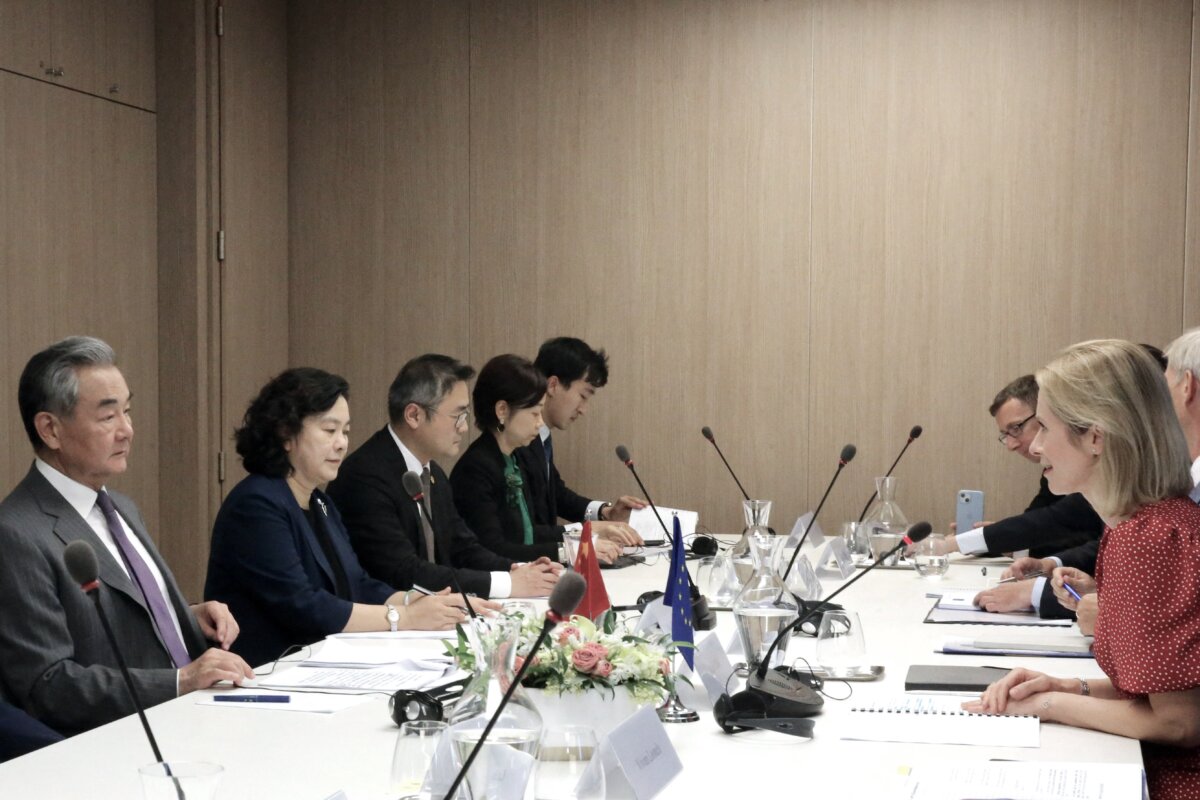
“The EU views Russia’s invasion of Ukraine as its gravest security threat, meaning any actor prolonging the violence risks being seen as a primary enemy by European citizens,” Yeh said.
“With Beijing’s support for Moscow coming under greater scrutiny, political backlash against the CCP will only grow more pronounced.”
 Friends Read Free
Copy
Facebook
Tweet
Friends Read Free
Copy
Facebook
Tweet