Germany has pledged to support Ukraine in its war against Russia with a new, $5.7 billion aid package and an agreement to help Kyiv develop its own long-range missile systems free of any Western-imposed limitations on their use.
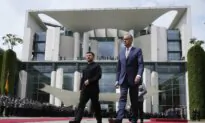
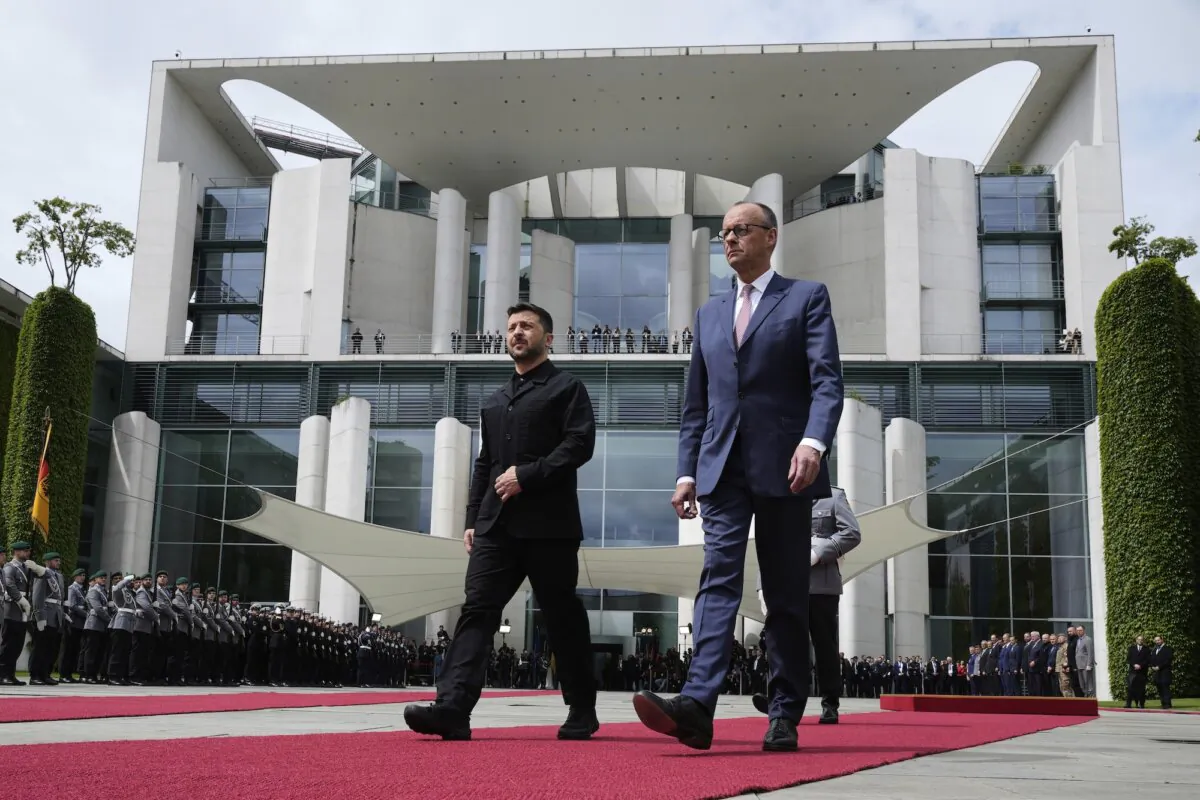
Speaking at a joint press conference with Ukraine President Volodymyr Zelenskyy in Berlin on May 28, German Chancellor Friedrich Merz heralded the onset of a “new form of military industrial cooperation” between the two countries that would include the joint production of missiles at existing plants in Ukraine that have the technical expertise to produce such weapons.
“Ukraine will be able to fully defend itself, including against military targets outside its own territory” with its own missiles, Merz said at the press conference.
“We want to enable Ukraine to counter Russian aggression. To that end, we are financing a considerable part of Ukraine’s Starlink coverage. We will jointly produce long-range weapons systems made in Ukraine. There will be no range restrictions,” Merz further clarified in a statement on social media platform X.
After Merz’s remarks, the defense ministers of Ukraine and Germany signed a memorandum covering direct German investment in Ukraine’s defense sector and a wider partnership with German arms makers.
Zelenskyy praised the move, noting that much of the joint investment will be in battle drone production, which he said in a statement on social media is “crucial” for saving Ukrainian soldiers’ lives.
“Thanks to Germany, we now have new agreements, for both systems and missiles,” he said. “This kind of support strips Russian terror of its meaning. And likewise, when we talk about new weapons support for our army, about greater range for our forces, we are talking about how to make Russia’s offensive actions meaningless.”
Some Western-supplied weapons to Ukraine have come with limits on their use—especially on striking targets deep inside Russia—due to concerns that such attacks could provoke Kremlin retaliation and drag NATO into the war.
Ukraine has long sought an end to such restrictions, saying that it should be allowed to strike Russian military targets beyond the front lines, such as ammunition depots, airfields, and command centers used to launch attacks on Ukrainian cities.
Besides military cooperation, Ukraine and Germany also signed new agreements on joint construction and industrial development more broadly, Zelenskyy said, adding that both sides agreed to relaunch high-level dialogue between the two countries to deliver results that are “truly substantial.”
The Kremlin reacted to the development by saying that the joint German–Ukrainian production of long-range missiles fanned the flames of the war.
Russian Foreign Minister Sergey Lavrov told Russian television that he sees the move as adding to tensions around the Russia–Ukraine war and accused Germany of becoming a party to the conflict.
It’s “an increase of tension, support for war, and Germany is directly drawn into this war,” Lavrov said.
A day earlier, on May 27, Merz said there were no longer any range restrictions on weapons supplied to Ukraine by its Western allies, drawing a rebuke from Kremlin spokesman Dmitry Peskov, who said any such decisions “run absolutely contrary” to aspirations for reaching a political settlement to the long-running conflict.
Although Peskov did not threaten any retaliatory steps, Moscow has previously hinted that Western backing for Ukrainian strikes deep inside Russia could trigger a military response.
During a May 19 phone call with President Donald Trump, Russian President Vladimir Putin said Moscow and Kyiv would work on drafting a memorandum on a potential peace deal—remarks that drew fresh criticism from Ukraine and European officials, who accused Russia of stalling and lacking any genuine interest in ending the war.
Russia has denied the accusations, maintaining it is not seeking to delay the peace process.
“The Russian draft of the memorandum has not yet been submitted,” Peskov told reporters on May 26. “Work is continuing. This is a serious draft, a draft of a serious document that demands careful checks and preparation.”
Zelenskyy said on May 28 that he and Merz also discussed diplomatic efforts to end the war, and thanked Germany for supporting Ukraine’s call for an unconditional cease-fire. He also called on Russia to finalize the promised memorandum.
“The world has been waiting over a week now for Russia to finalise its so-called ‘memorandum’ — what they need to stop killing people,” he wrote on social media.
Retired Lt. Gen. Keith Kellogg, Trump’s special envoy for Ukraine and Russia, who has been helping with mediation efforts, pressed Russia in a May 27 post to complete the memorandum, adding that Trump wants “to stop this war and end the killing.”
“Cease fire now,” Kellogg wrote.
Reuters contributed to this report.
 Friends Read Free
Copy
Facebook
Tweet
Friends Read Free
Copy
Facebook
Tweet